




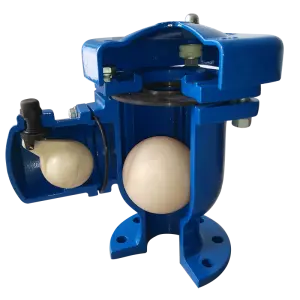
Air Release Valve is an important component used in water supply pipelines, long-distance transmission systems, pumping stations, and water treatment networks. By releasing unwanted air from pipelines, an Air Release Valve helps maintain stable hydraulic conditions and reduces problems caused by trapped air.
Although air inside a pipeline may seem insignificant, it can directly affect the actual flow condition of the system. Accumulated air can reduce the effective flow area, increase hydraulic resistance, create pressure fluctuations, and influence long-term pipeline performance.
In many cases, pipeline problems are not caused by insufficient pipe capacity or valve failure, but by air that remains inside the system and changes how water moves through the pipeline.
This raises an important question:Why can trapped air create such a significant impact on large water pipeline systems, and how does an Air Release Valve solve this problem?
Why Does Air Accumulate Inside Pipelines and Why Is Air Release Valve Needed?
Water pipelines do not always operate under completely stable conditions. During pipeline installation, filling, maintenance, or pressure changes, air may enter the system or separate from the water flow.
Because air is lighter than water, it naturally moves upward and tends to collect at specific locations, especially where the pipeline profile changes.
Common air accumulation areas include:
- Pipeline high points;
- Long rising sections;
- Elevation change locations;
- Areas near pumping equipment;
- Sections with unstable flow conditions.
If these air pockets remain inside the pipeline, they may continue affecting hydraulic performance and reduce the efficiency of the system.
An Air Release Valve provides a controlled method to remove unwanted air while allowing the pipeline to maintain normal operation. Its purpose is not simply to discharge air, but to help maintain a more stable relationship between water flow, pressure conditions, and pipeline performance.
How Does Air Release Valve Affect Pipeline Hydraulic Performance?
When air occupies part of the pipeline volume, the available space for water flow becomes smaller. This changes the actual hydraulic condition inside the pipe.
The possible effects include:
- Increased local flow velocity;
- Additional flow resistance;
- Reduced transmission efficiency;
- Unstable pressure behavior.
This influence can become more noticeable in long-distance water transmission pipelines because small hydraulic changes may accumulate over large distances.
Unlike water, air is compressible. When pressure changes occur, trapped air pockets can expand or compress, creating unstable conditions that are different from normal water flow.By removing accumulated air, an Air Release Valve helps the pipeline maintain more predictable hydraulic performance.
For systems such as:
- Municipal water supply networks;
- Long-distance transmission pipelines;
- Pumping stations;
- Water treatment facilities;
effective air management is an important part of maintaining reliable operation.
Why Are Pipeline High Points Important for Air Release Valve Installation?
The performance of an Air Release Valve depends not only on the valve design but also on where it is installed.
Since air naturally moves upward, pipeline high points are usually the most likely locations for air accumulation. Installing the valve at these positions allows it to remove air where it actually gathers.
Typical installation locations include:
- The highest points of transmission pipelines;
- Locations where pipelines change from rising to descending;
- Areas affected by terrain changes;
- Sections with expected pressure variation.
However, simply adding more air valves does not always improve the system. The installation location must match the actual pipeline profile.
A properly designed air management system should answer two questions:
- Where is air most likely to accumulate?
- How can that air be removed efficiently?
This is why pipeline layout and Air Release Valve selection should always be considered together.
How Does Air Release Valve Work During Different Operating Stages?
An Air Release Valve plays different roles during different pipeline operating conditions.
During the initial filling stage, a large amount of air inside the empty pipeline needs to be displaced. If this air cannot escape efficiently, the filling process may become slower and pressure conditions may become difficult to control.
During normal operation, smaller amounts of air may continue to separate from water because of pressure changes. These air pockets may gradually accumulate and affect pipeline performance if they are not released.
During drainage or sudden pressure changes, proper air management also helps maintain more stable conditions inside the pipeline.
Therefore, an Air Release Valve supports the complete operating cycle of a pipeline:
- Pipeline commissioning;
- Normal operation;
- Maintenance activities;
- Pressure change situations.
Why Is Air Release Capacity Important?
Choosing an Air Release Valve is not simply about selecting the largest possible discharge capacity. Different pipeline conditions create different air release requirements.
For example, a newly filled pipeline may require rapid removal of large air volumes, while a continuously operating pipeline may mainly need to release smaller amounts of accumulated air.
A suitable air release solution should consider:
- Pipeline diameter;
- Filling speed;
- Operating pressure;
- Flow conditions;
- System design requirements.
An oversized or unsuitable valve does not automatically provide better performance. The goal is to achieve effective air removal while maintaining stable pipeline operation.
Why Are Pumping Systems Sensitive to Trapped Air?
Pumping systems depend on stable hydraulic conditions. When air accumulates near pumps or inside transmission pipelines, it may influence system performance.
Possible impacts include:
- Unstable flow conditions;
- Increased pressure variation;
- Reduced operating efficiency;
- More difficult system control.
For long-distance pumping systems, even small hydraulic disturbances can become more noticeable as they move through the pipeline network.
By removing unwanted air, an Air Release Valve helps create smoother water movement and supports more reliable pump operation.
This is why air management should be considered as part of the overall hydraulic design rather than as an additional accessory.
What Problems Can Occur Without Proper Air Release?
Without suitable air management, pipelines may experience several operational challenges.
Reduced Hydraulic Efficiency
Air pockets reduce the effective water flow area and increase resistance inside the pipeline, which may affect system efficiency.
Pressure Fluctuation
Because air can compress and expand, trapped air may create unstable pressure conditions during operation.
Difficult Pipeline Commissioning
During initial filling, remaining air can slow down the process and make pressure control more difficult.
Increased Maintenance Requirements
Repeated air-related problems may require additional inspection and operational adjustments.
These issues show that air management is closely connected with the reliability of the complete pipeline system.
RMT Air Release Valve Solutions for Water Pipeline Applications
For municipal water supply, long-distance transmission pipelines, pumping stations, and water treatment systems, RMT provides Air Release Valve solutions based on different project requirements.
Different applications require consideration of pipeline layout, pressure conditions, installation locations, and operating environments.
Rather than focusing only on the valve itself, RMT considers how air management affects the overall reliability and efficiency of the pipeline system.
For large water infrastructure projects, proper air release helps reduce air-related hydraulic problems and supports stable long-term operation.
FAQ
1. What is the main function of an Air Release Valve?
An Air Release Valve removes unwanted air from water pipelines, helping maintain stable flow conditions and reducing problems caused by air accumulation.
2. Where should an Air Release Valve be installed?
Air Release Valves are commonly installed at pipeline high points, elevation changes, and locations where air is likely to collect.
3. Can trapped air reduce pipeline efficiency?
Yes. Trapped air can reduce effective flow area, increase resistance, and create unstable hydraulic conditions.
4. Is a larger Air Release Valve always better?
No. The correct valve size depends on pipeline diameter, pressure, filling speed, and actual operating conditions.
Conclusion
An Air Release Valve plays an important role in maintaining reliable water pipeline performance. Although trapped air may appear to be a small issue, it can influence flow stability, pressure behavior, and overall system efficiency.
The value of an air valve is not only releasing air from the pipeline. More importantly, it helps maintain predictable hydraulic conditions throughout the pipeline’s service life.
For water transmission and treatment systems, the key question is not simply whether an air valve is installed, but:
Can the Air Release Valve effectively remove accumulated air where it occurs and help the pipeline operate reliably over time?
That is the real engineering value of selecting the right Air Release Valve.
Post time: Aug-25-2026