




A Basket Strainer protects pumps, valves, meters, and other pipeline equipment by collecting solid particles before they travel downstream. However, when pressure loss across the strainer becomes excessive, flow can fall and equipment may not receive the pressure or volume it needs. The problem can increase energy consumption, interrupt processes, and create unnecessary maintenance work.
High pressure drop is not always caused by a dirty screen. Basket size, screen opening, flow rate, and the amount of debris in the fluid all affect performance. Identifying the cause before replacing components helps operators choose a practical solution and helps project teams specify a strainer that fits actual pipeline conditions.
What Pressure Drop Tells You About Strainer Performance
Pressure drop is the difference between the pressure measured before and after the strainer. A clean unit naturally creates some resistance because fluid must pass through the screen and around the internal basket. The aim is not to achieve zero pressure loss, but to keep it within the system’s acceptable operating range.
As particles collect on the screen, the open area available for flow decreases. Fluid has to pass through fewer openings, increasing resistance. If the blockage becomes severe, downstream flow may decline or pumps may need to work harder to maintain the required operating conditions.
Performance also changes with flow rate and fluid quality. A basket suitable for clean water may require frequent cleaning in a line carrying sand, rust, or scale. Therefore, assess pressure drop against actual flow and expected solids loading, not nominal pipe diameter alone.
Four Reasons Pressure Drop Becomes Excessive
Debris Accumulation on the Screen
The most common cause is the gradual collection of solid material inside the basket. Sediment, rust, scale, and installation residue can cover screen openings and restrict the flow path. The pressure difference may increase gradually as the basket collects more debris.
Accumulation depends on fluid quality, particle size, solids concentration, and operating hours. If cleaning restores normal pressure, debris is likely the main cause. If blockage returns quickly, review basket capacity and screen specification rather than simply shortening the cleaning interval.
Insufficient Effective Filtration Area
Connection size does not show whether the internal basket has enough filtration area. If effective area is too small, fluid velocity through the screen rises and resistance can increase. A compact basket may also hold less debris and need more frequent cleaning.
When selecting a Basket Strainer, check basket dimensions and open area alongside pipeline size. A larger flange alone does not guarantee lower pressure loss.
Screen Openings That Are Too Fine
Smaller screen openings can capture finer particles, but they also reduce the available flow area when other design factors remain unchanged. In a fluid with a high solids content, a fine screen may become blocked quickly and cause pressure drop to rise between maintenance intervals.
Choose the opening according to the particles that must be removed and the protection required downstream. The finest available mesh is not automatically the best choice, especially where solids loading is high.
Flow Conditions Above the Original Design Basis
Pump changes, higher production demand, or pipeline modifications can increase flow through an existing strainer. Higher flow generally increases resistance through the screen and internal flow passages.
If pressure drop rises with demand, compare current flow with the original design basis. The unit may no longer match the system’s operating requirements.
How to Diagnose the Cause Before Replacing the Strainer
Replacing the unit before identifying the cause can add cost without solving the problem. Use a consistent inspection to distinguish blockage from incorrect sizing or restrictions elsewhere in the line.
-
Measure inlet and outlet pressure: Take readings at the same operating flow conditions and compare the differential pressure over time. A single reading is less useful than a trend.
-
Inspect the basket safely: Isolate and depressurize the line according to site procedures before opening the housing. Check for deposits, damaged mesh, deformation, corrosion, or an incorrectly seated basket.
-
Compare readings before and after cleaning: A substantial reduction after cleaning points to debris accumulation. Little or no improvement suggests that sizing, flow conditions, or another restriction may be involved.
-
Confirm actual flow conditions: Check whether the current operating rate is higher than the original design value and whether process changes have increased the solids load.
-
Check adjacent equipment: Partially closed valves, blocked downstream components, and other pipeline restrictions can affect pressure readings. Do not attribute every pressure problem to the strainer.
Differential pressure monitoring helps in continuously operated systems or where contamination varies. Set an acceptable limit for the specific system instead of assuming one threshold suits every installation.
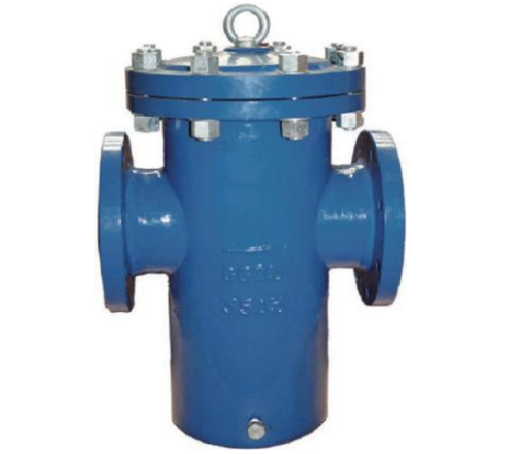
Clean, Replace the Basket, or Reconsider the Size?
Clean the basket when debris has accumulated but the component remains sound and correctly seated. If cleaning restores normal operation, replacing the complete strainer may be unnecessary.
Replace a basket with torn mesh, deformation, significant corrosion, or a sealing problem that allows bypass. If it blocks again soon after cleaning, review screen opening, effective area, and solids loading. A higher-capacity basket or different screen may be appropriate if it meets the filtration target and fits the housing.
| Operating symptom | What to investigate | Possible response |
|---|---|---|
| Pressure drop rises gradually | Debris accumulating on the screen | Clean and review the cleaning interval |
| Pressure remains high after cleaning | Basket area, flow rate, or another pipeline restriction | Recheck sizing and system conditions |
| Basket blocks soon after cleaning | High solids loading or screen too fine | Review screen opening and dirt-holding capacity |
| Mesh is damaged or distorted | Wear, corrosion, or unsuitable handling | Replace the basket and check material compatibility |
Information to Confirm When Specifying a Basket Strainer
A quotation request should describe the operating requirement, not just pipe diameter. Before selecting a Basket Strainer, prepare these details:
-
Fluid and operating conditions: Identify the medium, normal and maximum flow rate, operating pressure, and temperature.
-
Contaminant characteristics: Describe the type of solids, approximate particle size, and whether contamination is occasional or continuous.
-
Filtration requirement: State the required screen opening or the downstream equipment that needs protection. If the required mesh is unknown, provide the process details for technical review.
-
Pipeline connection: Confirm nominal size, flange standard, pressure rating, and installation orientation.
-
Maintenance constraints: Explain how often the line can be stopped and how much space is available to remove the basket.
This information helps verify flow capacity, filtration performance, and maintenance practicality before a unit is selected.
Considering a T-Type Basket Strainer for Water and Wastewater Lines
In water and wastewater pipelines, a Basket Strainer intercepts solids before they reach pumps, valves, meters, and other equipment. Establish the filtration target and expected solids load first, as wastewater conditions vary by site and treatment stage.
RMT Flowtech lists a T-type basket strainer for water and wastewater service. Its published product information states a DN200–DN1000 size range, PN16 pressure rating, flange standards including DIN2501, ISO2531, and BS4504, and basket material options of stainless steel 304 and 316. These listed details provide an initial reference, but the final selection should be checked against the current product drawing and the project’s actual operating conditions.
For recurring pressure loss, request basket dimensions, effective area, available screen openings, material compatibility, and clean-screen pressure-drop data. These details help verify suitability beyond pipe size alone.
Conclusion
Excessive pressure drop across a Basket Strainer may result from accumulated debris, insufficient filtration area, an overly fine screen, or flow conditions that have changed since the original selection. Cleaning can resolve temporary blockage, but recurring problems call for a review of basket capacity and system requirements.
A suitable selection balances filtration accuracy, flow capacity, pressure loss, material compatibility, and maintenance access. Confirming these factors before purchase helps protect downstream equipment while reducing avoidable operating interruptions.
FAQ
1. Does a larger Basket Strainer always have a lower pressure drop?
No. Pressure loss also depends on the internal basket dimensions, screen open area, flow rate, and housing design. The connection size alone cannot establish performance.
2. Can a damaged basket allow contaminants to pass downstream?
Yes. Torn mesh, deformation, or poor seating can create a bypass path. The basket should be inspected and replaced if it can no longer provide reliable filtration.
3. How often should a Basket Strainer be cleaned?
There is no universal interval. Cleaning frequency depends on contamination levels, flow conditions, and the acceptable pressure drop for the system. Differential pressure trends can help establish a suitable schedule.
4. What information is needed to request a Basket Strainer quotation?
Provide the fluid, flow rate, pressure, temperature, pipeline size, flange standard, filtration requirement, and expected solids load. These details help assess the appropriate housing and basket configuration.
Post time: Nov-26-2026