




Water and industrial fluid distribution networks are mission-critical assets that require continuous protection against impurities. From water supply operators to EPC contractors, ensuring long-term operational readiness is essential—especially when systems transport potable water or environmentally sensitive media. A Cast Iron Strainer is engineered to safeguard pipelines by removing solid contaminants while meeting regulatory, safety, and economic expectations in infrastructure development.
As global investments expand into water utilities, desalination, and industrial modernization, cast iron strainers have become strategic components that help maintain system resilience and compliance.
Why Cast Iron Strainers Are Vital for Infrastructure Resilience
Infrastructure owners and pipeline engineers must balance:
• Public safety
• Operational uptime
• Long-term asset sustainability
• Rising regulatory compliance standards
Solid particles may seem insignificant, yet they are responsible for:
• 30–50% of pump seal failures
• Frequent valve malfunction and leakage
• Increased power consumption due to turbulence
• Costly downtime during flow recovery
A Cast Iron Strainer prevents such risks at the system’s first protective checkpoint.
Compliance-Driven Performance for Water Utility Projects
In water distribution networks—especially those handling treated or potable water—engineering solutions must satisfy:
• Drinking water hygiene requirements
• Anti-contamination regulations
• Energy efficiency mandates
• ISO and AWWA pipeline quality standards
• Asset management frameworks such as ISO 55001
Cast iron strainers support public water operators with traceable material compliance and stable performance throughout long-term service life.
Core Role Across Water Infrastructure Phases
Cast iron strainers add value in multiple project stages:
1. New Pipeline Construction
• Screen construction debris before commissioning
• Prevent premature equipment wear-in
2. System Upgrades and Pump Station Expansion
• Provide additional protection for new machinery during integration
• Maintain flow quality in aging infrastructure
3. Routine Operation and Sustainability Optimization
• Support predictive maintenance strategies
• Lower hydraulic losses and electricity use
Their value extends beyond installation—they continuously reinforce system reliability.
Why Cast Iron Is the Material of Choice for Water Networks
Although stainless steel and special alloys are essential for corrosive chemicals or seawater, cast iron offers distinct benefits for domestic and municipal water:
• Proven track record in buried pipeline environments
• Ideal cost-performance ratio for scaled distribution grids
• Lower risk of cracking under stress compared to brittle alloys
• Superior acoustic dampening—reduces vibration transmission
• Stable metallurgical behavior ensures long lifespan
This makes cast iron the most widely used filtration body in public utility assets.
Design Configurations Based on Field Requirements
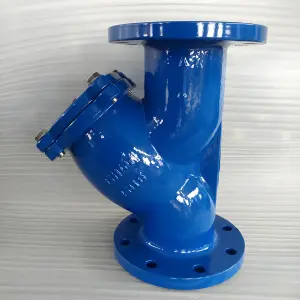
Y-Pattern Cast Iron Strainer
• Compact for pump rooms with tight spacing
• Best for moderate debris loads
• Easy venting and blow-off port installation
Basket-Pattern Cast Iron Strainer
• Increased contaminant holding for high-flow systems
• Reduced maintenance shutdown frequency
• Supports larger filtration surface area
Optional Features
• Quick-release cover for fast cleaning
• Epoxy internal coating for potable safety
• Stainless steel mesh inserts for extended screen life
Engineers determine structure based on project maintenance strategies and debris predictions.
Capabilities That Improve Network Efficiency
Cast Iron Strainers contribute directly to operational goals:
• Lower pump energy use due to reduced obstruction
• Improved operational continuity for treatment equipment
• Better control of water pressure zones
• Safety assurance for public water handling
• Supporting ESG and green infrastructure principles
They are a small investment with significant network-wide returns.
Installation and Field Adaptability
Infrastructure rarely offers ideal installation conditions. Cast iron strainers accommodate:
• Underground vault installation
• Vertical pipeline segments
• Connection to legacy flange profiles
• Retrofitting without extensive rework
• Long-distance accessibility for utility crews
Ease of maintenance is critical when facilities cannot shut down frequently.
Procurement Factors for Long-Term Performance
When selecting a Cast Iron Strainer for B2B projects, engineering teams should evaluate:
• Filtration rating vs. expected particle load
• Pressure class aligned with pipeline sections
• Coating certification for potable water or buried installation
• Accessibility for cleaning during live operations
• Replacement screen availability within supply chain
• Performance documentation:
– Hydrostatic pressure tests
– Coating inspection reports
– Full traceability marking
Procurement decisions should support efficient maintenance over decades of service life.
Lifecycle Risk Prevention and Cost Avoidance
Cast iron strainers help avoid:
• Emergency repair costs
• Service interruptions impacting public users
• Safety penalties due to contamination events
• Early equipment replacement due to abrasion fatigue
These are essential benefits in public utility accountability.
Conclusion
The Cast Iron Strainer is far more than a pipeline accessory—it is an operational safeguard for water and industrial fluid systems. Its durability, compliance compatibility, and economic performance ensure long-term value in critical infrastructure environments. As cities and industries pursue smarter, more resilient water systems, cast iron strainers remain foundational to asset protection and uninterrupted operation.
Choosing the right cast iron strainer means choosing security, sustainability, and reliability for current and future generations.
FAQ
Q1: Why is cast iron widely used for strainers in water systems?
It provides strong durability, low lifecycle cost, and excellent performance in treated water environments.
Q2: Can cast iron strainers be applied in buried pipelines?
Yes. With corrosion-resistant coatings, they are suitable for underground installation.
Q3: How often does a cast iron strainer need to be cleaned?
Intervals depend on debris levels and filtration ratings; maintenance is typically scheduled alongside pump servicing.
Q4: What certifications should a cast iron strainer comply with?
Hydrostatic tests, potable water coating approvals, and international flange standards such as DIN, ANSI, and JIS.
Post time: Dec-16-2025