




A DIN3352 F4 Gate Valve may spend most of its service life fully open, yet its internal components still need to perform reliably when the pipeline has to be isolated. In water distribution, treatment facilities, industrial utility systems, and other pipeline applications, repeated shutoff cycles can gradually reveal problems that are not obvious during initial installation. Operating torque may increase, sealing may become less consistent, or the stem and gate may experience unnecessary stress if the valve is operated under unsuitable conditions.
Understanding what happens inside the valve during opening and closing is therefore more useful than judging a gate valve only by its external dimensions. The relationship between the stem, gate, resilient seat, body cavity, and pipeline conditions determines whether the valve can continue to provide reliable isolation after repeated operation.
How a DIN3352 F4 Gate Valve Moves from Open to Closed
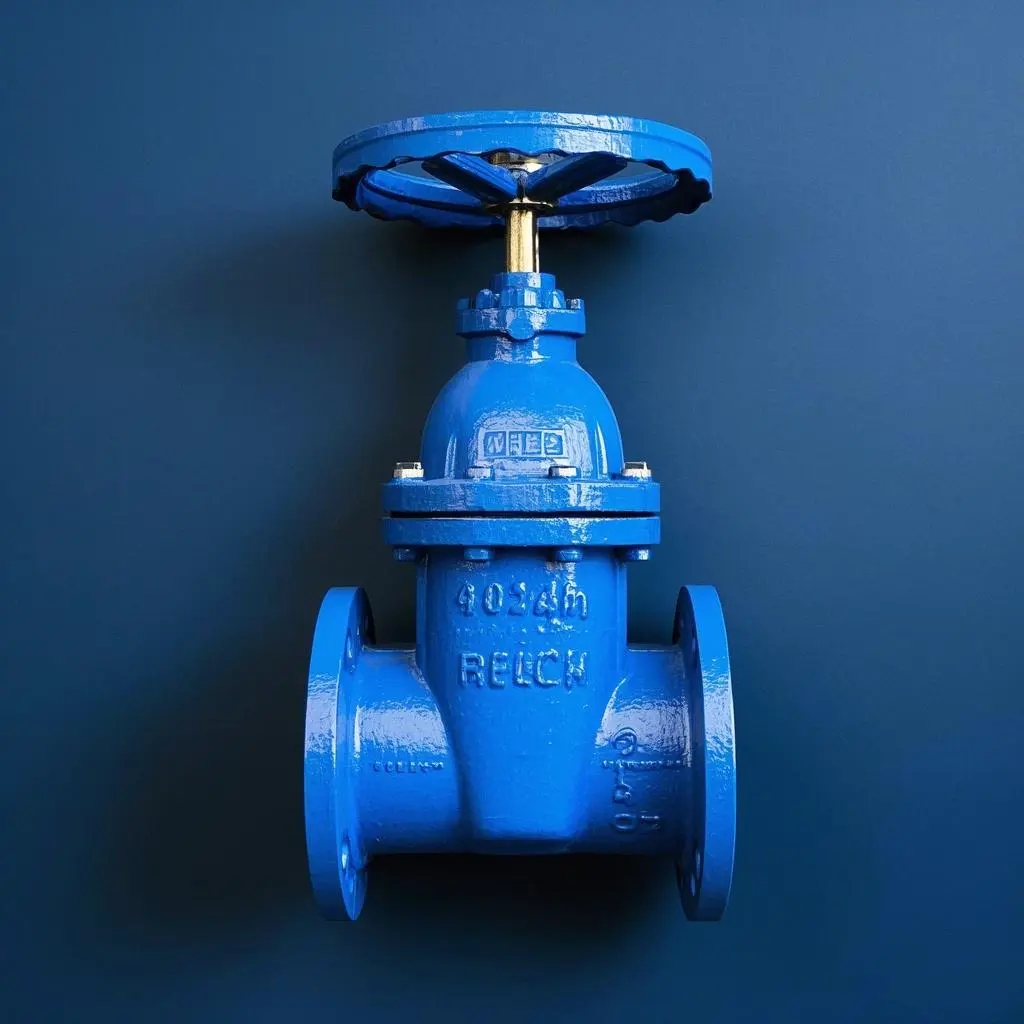
A DIN3352 F4 Gate Valve uses a gate that moves vertically inside the valve body. When the handwheel is turned, the stem transfers the rotational movement into linear movement of the gate. The gate gradually moves toward the seating area until it contacts the resilient sealing surfaces.
This is different from a butterfly valve, where the disc rotates through the flow passage. A gate valve is primarily intended for isolation rather than continuous flow regulation. In normal pipeline service, it is generally operated between fully open and fully closed positions.
During opening, the gate needs to move clear of the flow passage without creating unnecessary interference with the body or sealing surfaces. During closing, the final part of the movement becomes particularly important because the gate must establish sufficient contact with the resilient seat to isolate the medium.
The quality of this movement depends not only on the valve itself but also on installation alignment, operating conditions, internal cleanliness, and the condition of the stem and sealing components.
Why the Resilient Seat Matters During Repeated Operation
The resilient seat is one of the most important elements affecting shutoff performance. Instead of relying only on rigid metal-to-metal contact, the gate uses an elastic sealing material to create a close interface with the valve body.
When the gate reaches the closed position, the resilient material can accommodate small surface irregularities and maintain contact with the sealing surfaces. This helps the valve achieve reliable isolation without requiring extremely precise metal sealing surfaces.
However, resilient seating does not mean that the sealing material is immune to wear. Repeated operation can expose the seat to friction, particles, pressure differences, and mechanical contact. If debris becomes trapped between the gate and seat, the valve may require greater operating force and may not achieve the expected shutoff condition.
This is why repeated cycling should be considered together with the actual pipeline environment. A valve installed in relatively clean water service may experience very different internal conditions from one exposed to suspended particles or contaminated fluid.
What Changes When the Valve Is Operated Repeatedly?
Every opening and closing cycle creates mechanical movement between several components. The stem rotates, the gate moves vertically, and the sealing surfaces repeatedly come into contact.
Over time, several conditions may become relevant:
- Increased operating torque
- Wear of resilient sealing surfaces
- Stem or stem-thread wear
- Accumulation of particles inside the body
- Changes in sealing performance
- Damage caused by incorrect operation or excessive force
Not every increase in operating resistance means that the valve itself has failed. Pipeline pressure can affect the force required to move the gate, while deposits or external corrosion can also influence operation.
For this reason, troubleshooting should start with the actual operating conditions rather than immediately replacing internal components. If the valve becomes difficult to close, engineers should consider whether the problem is related to pressure differential, debris, installation conditions, stem condition, or genuine component wear.
Why Partial Opening Can Create Problems
Gate valves are designed primarily for isolation. Keeping the gate partially open for flow regulation can expose the internal components to conditions they were not primarily designed to handle.
When the gate is partially open, the flow passes through a restricted area. Higher local velocity and turbulence can increase mechanical stress and may contribute to erosion or vibration depending on the medium and operating conditions.
The problem can become more significant when the medium contains suspended solids. Instead of simply passing through a fully open valve, particles may interact with partially exposed sealing surfaces and accelerate wear.
For systems that require frequent flow regulation, engineers should therefore consider whether another valve design is more appropriate. A DIN3352 F4 Gate Valve is generally more suitable when the main requirement is dependable pipeline isolation.
How Pipeline Conditions Affect Shutoff Performance
A gate valve does not operate independently of the pipeline. Pressure, temperature, medium quality, installation position, and upstream conditions can all influence its behavior.
For example, closing a valve against a significant pressure difference can require more operating effort than closing it under balanced conditions. If the valve is forced when the operating torque is already high, the stem or other transmission components may be exposed to unnecessary mechanical stress.
Pipeline cleanliness is another important factor. Foreign particles can remain between the gate and resilient seat during closing. Even when the valve appears mechanically normal, trapped material can prevent the sealing surfaces from making proper contact.
This is why flushing and commissioning procedures should not be treated as separate from valve performance. A correctly manufactured valve can still experience sealing problems if the pipeline contains debris introduced during construction or maintenance.
What Engineers Should Check When a Gate Valve Becomes Hard to Operate
When a DIN3352 F4 Gate Valve becomes noticeably harder to operate, replacing the valve should not always be the first response. A structured inspection can help identify the actual cause.
First, confirm whether the operating condition has changed. Compare current pipeline pressure and process conditions with the original design requirements. Next, check whether the valve is being operated under an excessive pressure differential or in a way that places unnecessary load on the stem.
The surrounding pipeline should also be inspected. Pipe misalignment, external loads, or installation stress can affect valve body positioning and may make internal movement more difficult.
If the external conditions appear normal, attention can then move to the stem, operating mechanism, sealing components, and internal cleanliness. This approach helps distinguish between an operating-condition problem and genuine valve-component wear.
RMT DIN3352 F4 Gate Valve for Water Pipeline Projects
For project orders, RMT can work with customers to confirm the operating conditions, dimensions, connection standards, material requirements, and other technical details before production. This is particularly useful when a project requires multiple valve sizes or when the valves must match existing pipeline equipment.
If you are specifying a DIN3352 F4 Gate Valve for a new pipeline or replacement project, provide the required DN, pressure rating, connection standard, medium, temperature, and installation conditions. RMT can then help confirm the appropriate configuration before production.
FAQ
1. Can a DIN3352 F4 Gate Valve be installed horizontally or vertically?
Installation orientation depends on the specific project configuration and operating arrangement. Before installation, the valve drawing and manufacturer’s instructions should be checked against the actual pipeline layout, especially where access to the handwheel or operating mechanism is limited.
2. What documents should be requested for a DIN3352 F4 Gate Valve project?
Depending on the project, useful documentation may include dimensional drawings, material information, applicable standards, pressure-test records, inspection documents, and connection details. The exact documentation package should be confirmed before production rather than after shipment.
3. How should replacement valves be matched to an existing pipeline?
Do not match the replacement only by DN. Check pressure rating, face-to-face dimension, flange or connection standard, operating method, medium, temperature, and available installation space. Matching these parameters reduces the risk of modification work during replacement.
4. When should a project consider a customized valve configuration?
Customization may be appropriate when the standard configuration does not fully match the project’s connection dimensions, pressure requirements, operating environment, documentation requirements, or other engineering specifications. The requirements should be confirmed before production so the configuration can be evaluated against the actual project conditions.
Conclusion
A DIN3352 F4 Gate Valve is not simply a component that opens and closes a pipeline. Its long-term shutoff performance depends on how the gate, resilient seat, stem, body, and operating mechanism interact under real pipeline conditions.
Repeated operation can expose problems related to pressure differential, debris, installation stress, sealing wear, or operating practices. Understanding these factors helps engineers distinguish between normal operating resistance and signs that require investigation.
For project selection, the key is to look beyond DN and pressure rating. Connection standards, dimensions, medium, temperature, operating conditions, materials, and testing requirements should all be confirmed before production.
RMT’s DIN F4 NRS resilient seated gate valve range provides configurations for water pipeline applications, with project-specific technical requirements available for confirmation before manufacturing.
Post time: Sep-29-2026