




A Ductile Iron Air Valve is commonly installed at pipeline high points, pumping stations, and water-distribution systems where trapped air needs to be released or admitted as operating conditions change. In many projects, engineers pay close attention to valve size, pressure rating, and air-release performance, while the environment around the valve receives much less consideration.
For a Ductile Iron Air Valve installed inside an underground chamber, that surrounding environment can directly affect long-term durability. High humidity, condensation, groundwater infiltration, temporary flooding, and poor drainage may keep the valve body, cover, bolts, and coating wet for extended periods. Even when the pipeline itself carries clean water, external conditions can gradually influence the valve’s service life.
This is why Ductile Iron Air Valve selection should not stop at DN and pressure class. Body material, surface protection, chamber condition, drainage, accessibility, and future maintenance all need to be considered together when the valve is expected to remain in service for many years.
Why Does a Ductile Iron Air Valve Still Need Surface Protection?
A Ductile Iron Air Valve uses ductile iron because the material provides good mechanical strength, toughness, and suitability for pressure-containing components. These properties make it practical for water-industry valve bodies that must withstand internal pressure, installation loads, and long service periods.
However, ductile iron is not naturally immune to corrosion. If the protective coating is scratched, chipped, or otherwise damaged, exposed metal can gradually corrode when moisture and oxygen remain in contact with the surface. In a dry mechanical room, minor damage may progress slowly, but a wet underground chamber can create far more persistent exposure.
For this reason, coating should be treated as part of the valve’s functional protection rather than as a cosmetic finish. The ductile iron body provides structural strength, while the protective layer helps isolate the metal from the surrounding environment. The performance of one depends partly on the condition of the other.
Why Are Underground Conditions Important for a Ductile Iron Air Valve?
A buried Ductile Iron Air Valve may appear protected because it is not directly exposed to sunlight, rain, or outdoor weather, yet underground chambers can create their own durability problems. Limited ventilation may allow moisture to remain for long periods, while temperature differences can repeatedly produce condensation on the valve body and cover.
Groundwater seepage, damaged chamber covers, nearby pipeline leakage, and blocked drainage can make the situation more severe. Mud and sediment may remain around the valve, holding moisture against the coating and making some areas slow to dry. Cover joints, flange edges, bolts, and irregular cast surfaces are particularly easy to overlook during routine inspection.
This means chamber condition and valve durability are closely connected. Two identical Ductile Iron Air Valves may experience very different long-term conditions if one is installed in a dry, well-drained chamber while the other is repeatedly exposed to standing water.
How Should a Ductile Iron Air Valve Be Checked Before Installation?
Some long-term corrosion problems begin before the valve enters service. Transportation, lifting, storage, positioning, and installation work can damage the protective surface even when the valve body itself remains mechanically sound.
Before installation, the valve body, cover, flange areas, lifting points, and edges should be checked for scratches, chipped coating, or impact damage. Small defects may appear unimportant at the time, but once the valve is placed in a damp underground chamber, those exposed areas can become local starting points for corrosion.
This inspection is especially valuable for buried installations where future access may be limited. Repairing minor coating damage before commissioning is generally simpler than dealing with a larger deteriorated area after years of service. Where touch-up is required, the repair method should follow the project coating requirements rather than simply covering visible rust with an unrelated surface finish.
Why Flooding Creates a Different Problem From Normal Humidity
High humidity and temporary flooding should not be treated as the same condition. A humid chamber mainly exposes the valve to moisture and condensation, while flooding may completely immerse external surfaces, bolts, joints, and nearby connections.
When the water level drops, sediment and contaminants can remain on the valve. Repeated wetting and drying may then create localized deterioration that is difficult to see beneath deposits. Flooding can also make future inspection more difficult because the chamber itself becomes a maintenance problem.
The internal pressure rating of a Ductile Iron Air Valve does not describe how well the surrounding installation will tolerate poor external drainage. PN6, PN10, or PN16 refers to the pressure-containing requirement of the valve, while chamber flooding is an environmental condition that must be considered separately.
For locations with known groundwater or drainage issues, external protection and chamber design should therefore be reviewed together.
Why the Complete Material Combination Matters
A Ductile Iron Air Valve is not made from only one material. The body, cover, float, fasteners, seals, and other components all perform different functions and face different service conditions.
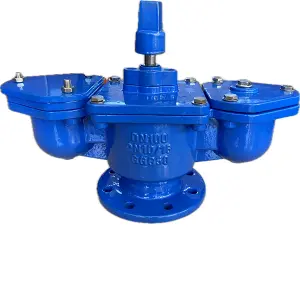
RMT’s Double Orifice Air Valve uses Ductile Iron 450-10 for the valve body and cover, stainless steel 304 for the float ball and selected fasteners, and EPDM and NBR in sealing positions. This combination reflects the different demands placed on structural, moving, fastening, and sealing components.
However, the use of stainless steel in some areas does not make the entire valve corrosion-proof. The ductile iron body still relies on suitable surface protection, while elastomeric components need to remain compatible with the medium and operating temperature. Long-term durability therefore depends on how the complete material system performs in the real installation environment.
Why Can a Ductile Iron Air Valve Be Overlooked During Maintenance?
A Ductile Iron Air Valve usually operates automatically, which means maintenance teams may interact with it less frequently than with manually operated gate or butterfly valves. As long as the water system appears to function normally, the valve may remain out of sight for long periods.
This creates a practical maintenance risk. The air-management function may still appear normal while external corrosion, coating damage, sediment accumulation, or deteriorating fasteners slowly develop around the valve.
Routine chamber inspection should therefore include more than checking whether the valve leaks. Useful observations include the condition of the coating, evidence of standing water, blocked drainage, sediment around the body, rust near cover joints or fasteners, and signs that the chamber has flooded since the previous inspection.
The objective is not frequent disassembly. It is early identification of environmental conditions that may shorten the valve’s service life if they remain uncorrected.
Why the Same Ductile Iron Air Valve May Need Different Project Considerations
Two projects may both specify a DN100 Ductile Iron Air Valve at the same pressure rating, but their long-term installation requirements can still be different.
One valve may be installed in a dry water-treatment facility with easy access and regular inspection. Another may be located in a buried chamber where groundwater enters seasonally and maintenance access is limited. Their hydraulic specifications may look similar, but the external durability risks are not the same.
Before finalizing the project, it is useful to confirm chamber drainage, temperature, medium, expected humidity, maintenance access, and known flooding conditions in addition to DN and working pressure. This avoids assuming that selecting the correct body material automatically solves every long-term installation issue.
RMT Ductile Iron Air Valve for Water Pipeline Projects
RMT provides a Ductile Iron Air Valve through its Double Orifice Air Valve series for water pipeline applications. The product range covers DN50 to DN200 and provides PN6, PN10, and PN16 pressure options. The valve is designed according to EN1074-4, while the body and cover use Ductile Iron 450-10. Stainless steel and elastomeric materials are used in other functional areas according to their operating requirements.
For project supply, RMT can review both the pipeline conditions and the actual installation environment before production. Instead of confirming only DN and pressure rating, the valve specification can also consider medium, operating temperature, chamber condition, drainage, access, and long-term maintenance requirements.
If your project requires a Ductile Iron Air Valve, provide RMT with the DN, working pressure, medium, operating temperature, pipeline application, installation environment, chamber condition, and required quantity. These details allow the technical team to confirm the project requirements more completely before production and reduce the risk of overlooking site conditions that may affect long-term service.
Conclusion
A Ductile Iron Air Valve must withstand more than internal pipeline pressure. For buried and chamber-installed systems, long-term durability can also be influenced by condensation, poor drainage, coating damage, flooding, and limited maintenance access.
Reliable service therefore depends on the combination of valve material, protective coating, installation environment, and inspection conditions. RMT can support Ductile Iron Air Valve configuration based on both hydraulic requirements and actual site conditions, helping the valve remain better matched to long-term water-pipeline operation.
FAQ
1. Can a Ductile Iron Air Valve corrode in a wet chamber?
Yes. Ductile iron provides good mechanical strength, but exposed metal can still corrode if the protective coating is damaged and moisture remains in contact with the surface for long periods.
2. Why is chamber drainage important for a Ductile Iron Air Valve?
Good drainage reduces standing water, sediment buildup, and long-term moisture around the valve. It also makes inspection and maintenance easier.
3. Does visible surface rust mean the air valve must be replaced?
Not necessarily. The affected area, corrosion depth, coating condition, structural integrity, and actual valve performance should be evaluated before deciding whether repair or replacement is necessary.
4. What information should be provided for a Ductile Iron Air Valve project?
Useful information includes valve size, working pressure, medium, temperature, pipeline application, chamber condition, installation environment, maintenance access, and required quantity.
Post time: Sep-22-2026