




In modern pipeline engineering, the ability to manage thermal expansion, vibration, pressure fluctuations, and installation misalignment is essential for long-term system stability. A ductile iron expansion joint provides a durable and flexible solution for water supply networks, HVAC systems, wastewater plants, industrial piping, and municipal engineering projects.
Why Ductile Iron Expansion Joints Matter in Industrial Pipeline Systems
Pipelines expand, contract, and shift during operation due to temperature changes, ground movement, hydraulic shock, and equipment vibration. If these forces are not properly absorbed, they may cause pipe strain, flange cracks, or even system failure. Ductile iron expansion joints are engineered to reduce these risks by allowing controlled pipe movement while maintaining a secure, leak-free connection.
For B2B buyers in the fields of water utilities, industrial facilities, construction engineering, and equipment manufacturing, selecting a high-quality expansion joint is critical for ensuring long-term safety and reducing maintenance expenses.
What Makes Ductile Iron an Ideal Material for Expansion Joints
Ductile iron offers excellent mechanical properties that significantly outperform traditional gray cast iron, especially in demanding environments.
• High tensile strength and elongation, reducing the risk of cracking
• Strong corrosion resistance when paired with epoxy or fusion-bonded coatings
• Excellent vibration damping performance
• High pressure-bearing capacity suitable for municipal and industrial pipelines
• Long service life, even in buried or underwater conditions
• Stable mechanical behavior across temperature variations
These advantages make ductile iron a top choice for manufacturing high-performance expansion joints used in water transmission lines, fire protection systems, and industrial fluid networks.
Key Functions of a Ductile Iron Expansion Joint
A ductile iron expansion joint is not just a connector; it plays multiple roles in pipeline operation.
• Absorbs thermal expansion and contraction caused by temperature fluctuations
• Compensates for axial, lateral, and angular movement
• Reduces pipeline stress at pumps, valves, bends, and flange connections
• Minimizes vibration from rotating equipment and hydraulic shock
• Prevents misalignment during installation or structural settlement
• Protects pipelines from overload, cracking, or leakage
Its multifunctional design helps maintain system safety while extending pipeline and equipment lifespan.
Typical Structure of a Ductile Iron Expansion Joint
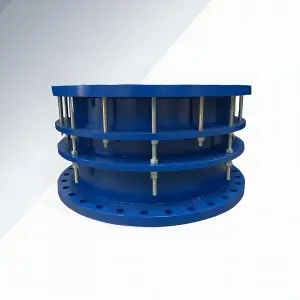
Although different manufacturers may offer variations, most ductile iron expansion joints include the following components:
• Ductile iron body and flanges
• Gland rings or follower flanges
• High-strength tie rods or bolts
• EPDM, NBR, or natural rubber sealing gaskets
• Protective epoxy coating
• Telescopic sleeve or adjustable joint length
This combination allows the joint to handle movement while being restrained by the tie rods to prevent over-extension under pressure.
Common Applications Across Industrial Sectors
Ductile iron expansion joints are widely used in multiple industries due to their durability and flexible behavior.
• Municipal water supply and distribution networks
• Wastewater treatment pipelines and pumping stations
• HVAC chilled water pipes in commercial buildings
• Fire protection systems in industrial facilities
• Power plant cooling water circuits
• Marine and offshore piping systems
• Mining slurry and industrial process pipelines
• Irrigation and agricultural water delivery systems
Their versatility allows engineering teams to manage pipeline movement and vibration across a wide range of operational environments.
Performance Advantages for Long-Term Infrastructure Projects
Ductile iron expansion joints offer significant benefits for long-term pipeline performance. They help engineers manage unpredictable site conditions, reduce stress on infrastructure, and improve overall system resiliency.
Improved Safety
By preventing pipeline deformation and absorbing vibration, expansion joints reduce the risk of flange failure or pipeline burst.
Reduced Maintenance Costs
Their long lifespan and corrosion-resistant materials minimize the need for frequent inspection and replacement.
Higher Efficiency
By limiting vibration and stress, expansion joints help maintain stable flow characteristics and reduce pump load.
Installation Flexibility
They allow for easier pipe alignment and compensate for installation tolerances in large-scale engineering projects.
Installation Considerations for Engineering Teams
Proper installation is essential to ensure optimal performance and safety.
• Make sure tie rods are correctly tensioned to handle pressure thrust
• Install joints near pumps and valves to absorb vibration
• Ensure flange surfaces are clean and gaskets properly seated
• Avoid over-extension beyond the allowable travel length
• Apply corrosion-resistant coatings if used in buried or marine environments
• Verify operating pressure and temperature compatibility
Correct installation ensures long-term reliability and compliance with engineering standards.
Choosing the Right Ductile Iron Expansion Joint for Your Project
Before selecting an expansion joint, engineering and procurement teams should evaluate several key factors.
• Nominal diameter and flange compatibility
• Maximum working pressure rating
• Required movement range (axial, lateral, angular)
• Type of fluid—water, wastewater, chemicals, or slurry
• Installation environment—underground, indoor, marine, or high-temperature
• Coating requirements—epoxy, FBE, or customized coatings
• Need for restrained or unrestrained design
• Expected project lifespan and maintenance intervals
Making the correct selection helps reduce operational risks and improves overall system stability.
Summary
A ductile iron expansion joint is an essential component for industrial and municipal pipeline systems. Its ability to absorb thermal expansion, installation misalignment, and vibration makes it invaluable for maintaining pipeline safety and extending equipment lifespan. For B2B buyers in water utilities, industrial engineering, and construction sectors, selecting a reliable ductile iron expansion joint helps ensure long-term operational efficiency, lower maintenance costs, and improved infrastructure performance.
FAQ
1. What is the main purpose of a ductile iron expansion joint?
It compensates for pipe movement, thermal expansion, vibration, and installation misalignment to protect the pipeline from stress and damage.
2. Are ductile iron expansion joints suitable for high-pressure applications?
Yes. Ductile iron provides superior strength and can handle high internal pressure when paired with properly rated tie rods and gaskets.
3. What types of water systems commonly use ductile iron expansion joints?
Municipal water supply lines, wastewater plants, fire protection systems, cooling water circuits, and industrial process pipelines frequently use them.
4. How long does a ductile iron expansion joint last?
With proper installation and protective coating, they can operate reliably for 20–50 years depending on environmental conditions.
Post time: Dec-04-2025