




In modern industrial pipeline systems, managing air efficiently is critical to maintaining stable flow, protecting equipment, and extending system lifespan. A flanged air valve plays a key role in releasing trapped air and admitting air when necessary, especially in water supply, wastewater, and industrial fluid transmission networks. For B2B buyers, understanding how flanged air valves work and where they add value is essential for selecting reliable, long-term solutions.
What Is a Flanged Air Valve and Why It Matters
A flanged air valve is a pipeline component designed to automatically release accumulated air or admit air during pressure fluctuations. Unlike threaded or compact air valves, the flanged design allows for stronger connections, higher pressure tolerance, and easier integration into large-diameter pipeline systems.
From an engineering and procurement perspective, this valve type is widely used in municipal infrastructure, industrial plants, and large-scale fluid transport projects due to its durability and standardized installation method.
Key functions include:
● Releasing air pockets during pipeline filling to prevent flow blockage
● Admitting air during draining to avoid vacuum formation
● Protecting pipelines from pressure surges and structural damage
These functions directly impact operational safety and maintenance costs, making flanged air valves a strategic component rather than a minor accessory.
Structural Characteristics of Flanged Air Valves
Understanding the internal and external structure of a flanged air valve helps B2B buyers evaluate performance and lifespan.
Typical structural elements include:
● Valve body, usually made from ductile iron or carbon steel
● Float mechanism or kinetic air release device
● Sealing components made from EPDM, NBR, or similar elastomers
● Flanged ends compliant with international standards such as ANSI, DIN, or BS
The flanged connection ensures uniform load distribution and reliable sealing, particularly in high-pressure or large-diameter systems. Compared with threaded air valves, flanged models are more suitable for long-term continuous operation and demanding environments.
Common Types of Flanged Air Valves
Flanged air valves are not one-size-fits-all. Different designs serve different operating conditions.
The most commonly used types include:
● Single Orifice Air Valve
Designed primarily for releasing small air pockets under pressurized conditions. Suitable for stable systems with minimal air accumulation.
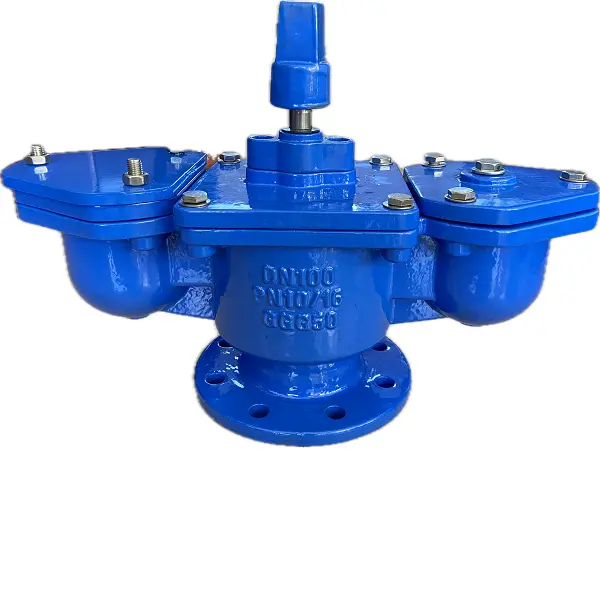
● Double Orifice Air Valve
Combines air release and air admission functions. It allows large volumes of air to escape during filling and admits air during draining.
● Combination Air Valve
Integrates kinetic and automatic air release functions into one unit. This is the most widely specified type in municipal water and wastewater projects.
For B2B buyers, combination flanged air valves often provide the best balance between performance, system protection, and lifecycle cost.
Key Application Scenarios in B2B Projects
Flanged air valves are widely specified across multiple industries where system reliability is critical.
Typical application fields include:
● Municipal water supply networks
● Wastewater treatment plants
● Industrial cooling water systems
● Power generation facilities
● Oil, gas, and chemical processing pipelines
In these scenarios, trapped air can lead to reduced flow efficiency, increased energy consumption, and even pipeline failure. Installing properly sized flanged air valves helps mitigate these risks at a relatively low capital cost.
Performance Criteria That Matter to Procurement Teams
For B2B buyers, selecting a flanged air valve is not just about dimensions—it is about long-term performance and risk control.
Important evaluation factors include:
● Pressure rating and operating range
● Compatibility with pipeline standards and flange specifications
● Sealing reliability under fluctuating pressure
● Corrosion resistance and coating quality
● Maintenance accessibility and spare parts availability
Procurement teams often prioritize suppliers that can provide detailed technical documentation, test certificates, and traceability, especially for government or large infrastructure projects.
Installation and Maintenance Considerations
Correct installation directly affects the effectiveness of a flanged air valve.
Best practices include:
● Installing the valve at pipeline high points
● Ensuring proper flange alignment and gasket selection
● Allowing sufficient clearance for inspection and servicing
● Periodically checking float movement and seal integrity
From a lifecycle perspective, flanged air valves generally offer lower maintenance frequency compared to smaller threaded models, making them suitable for hard-to-access installations.
Why Flanged Air Valves Are a Long-Term Value Investment
Although flanged air valves may have a higher upfront cost than smaller alternatives, they often deliver superior value over time. Reduced pipeline failures, improved flow efficiency, and lower emergency maintenance costs translate into measurable operational savings.
For B2B buyers managing large-scale systems, this makes flanged air valves a strategic component rather than a consumable item.
Conclusion
A flanged air valve is a critical safeguarding component in industrial and municipal pipeline systems. Its robust connection, reliable air management capability, and adaptability to large-diameter pipelines make it an essential choice for B2B projects that prioritize safety, efficiency, and durability. By understanding valve types, performance criteria, and application scenarios, procurement professionals can make informed decisions that support long-term system reliability.
FAQ: Flanged Air Valve
What is the main advantage of a flanged air valve compared to threaded types?
A flanged air valve offers stronger mechanical connection, higher pressure tolerance, and better suitability for large-diameter pipelines.
Where should a flanged air valve be installed in a pipeline system?
It is typically installed at high points in the pipeline where air accumulation is most likely to occur.
Are flanged air valves suitable for wastewater applications?
Yes, combination flanged air valves are commonly used in wastewater systems due to their ability to handle large air volumes and contaminated environments.
How often does a flanged air valve require maintenance?
Maintenance frequency depends on operating conditions, but periodic inspection of seals and internal components is usually sufficient.
Post time: Dec-25-2025