




Industrial pipeline networks operate under continuous demand to transport treated or process fluids with maximum uptime and minimal impurity interference. Solid contaminants — including rust fragments, sand, scale particles, and production residue — remain the most common cause of pump failures, valve wear, and unstable fluid delivery. A Flanged Strainer is engineered as a frontline defense, delivering high-strength filtration and secure pipe connection for mission-critical applications across multiple industries.
Beyond basic filtration, flanged strainers are essential elements of risk management strategies in large fluid networks, ensuring system continuity, energy efficiency, and regulatory compliance.
Why Flanged Strainers Play a Strategic Role in Modern Fluid Engineering
Engineering teams rely on flanged strainers because:
• System safety must take priority over production throughput
• Pump performance depends on controlled particle loading
• Valves and flowmeters require debris-free operation to remain accurate
• Energy use increases when pipelines experience obstruction
• High-value equipment must be safeguarded for long lifecycle operation
By removing contaminants early, flanged strainers protect assets and reduce total operational expenditures (OPEX).
Operational Design: How a Flanged Strainer Enhances System Stability
Installed upstream of precision equipment, a flanged strainer intercepts solids using an internal screen or basket.
Its rigid, bolted connections provide:
• Pressure-resistant sealing for industrial pipelines
• Resistance to vibration and hydraulic shock
• Leak protection for hazardous or regulated media
This structural integrity enables reliable use in environments where threaded connections are prohibited or insufficient.
Industry-Driven Technology Configurations
Flanged strainers are not a single standard product — configuration varies by engineering necessity.
Y-Style Flanged Strainer
• Suitable for clean utility fluids
• Frequently used in booster pump systems
• Optimization focus: Lower differential pressure
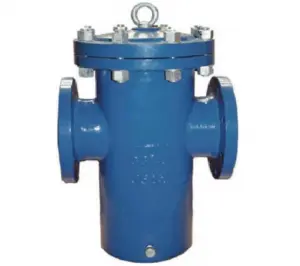
Basket-Style Flanged Strainer
• Designed for high contamination levels
• Used in critical process and sea-water circuits
• Optimization focus: Maximum debris holding capacity
Each selection strategy considers maintenance accessibility and system vulnerability.
Industrial Projects Where Flanged Strainers Are Mandatory
• Water transmission pipelines — sediment prevention across long-distance networks
• District cooling/heating — safeguarding chillers and heat exchangers
• Petrochemical refining — preventing catalyst contamination and downtime
• Marine & offshore — seawater filtration prior to cooling systems
• Metallurgy & mining — debris control in slurry support fluid lines
• Fire protection supply — reliability for safety-critical pumping
Wherever downtime costs are substantial, flanged strainers are integrated by default.
Fluid Quality and Energy Efficiency Benefits
Filtration reduces:
• Pump load caused by blockage
• Energy waste from turbulent flow
• Cavitation risk under suction-side stress
• Wear on moving mechanical components
Energy managers increasingly view flanged strainers as part of sustainability strategy — not only a mechanical component.
Materials, Coatings, and Engineering Standards
Choosing the right construction improves safety and lifecycle cost:
• Ductile iron — municipal pipelines, HVAC
• Carbon steel — industrial utilities and petrochemical plants
• Stainless steel (304/316) — corrosion resistance for seawater, food grade, and chemicals
• Duplex alloy options — aggressive offshore and desalination environments
Engineering Selection Factors: Reducing Risk Before Installation
Procurement should base decisions on:
• Flow rate and acceptable differential pressure range
• Solid impurity characteristics (size, hardness, concentration)
• Cleaning interval expectations and personnel access
• Safety demands for venting and draining ports
• Need for inline basket removal vs. system shutdown
• Structural support against pipeline vibration
Failure to evaluate these factors may shorten equipment life or raise energy expenditure.
Maintenance Strategy: Predict, Not React
Best practices for maintenance and cleaning include:
• Routine inspection based on contamination profiling
• Spare screen inventory planning for uninterrupted operation
• Monitoring pressure difference for blockage prediction
• Cleaning cycles synchronized with facility shutdown schedules
A proactive maintenance strategy significantly reduces costly emergency events.
Smart Monitoring: Digital Enhancement of Traditional Filtration
Evolving technology allows optional sensor integration:
• Pressure differential transmitters detect clogging in real-time
• Data sent to control rooms for digital alerting
• Preventive maintenance planning via system analytics
• Remote access for unmanned facilities
This moves strainers toward a predictive maintenance ecosystem.
Case-Based Value Outlook for B2B Buyers
Organizations gain:
• Lower operational downtime risk
• Extended service life of downstream assets
• Reduced energy consumption
• Fewer safety incidents from pipeline malfunction
• Rapid ROI compared to major mechanical repairs
A small device stops big problems.
Conclusion
The Flanged Strainer is a critical pipeline safeguard — not merely a filtering accessory. Its strength, filtration effectiveness, and maintenance compatibility make it indispensable to industrial operations with zero-failure tolerance. As water, energy, and manufacturing systems evolve toward automation and sustainability, the importance of protecting process integrity is becoming increasingly strategic.
Flanged strainers deliver exactly that protection, ensuring fluid systems stay clean, efficient, and resilient.
FAQ
Q1: What sets a Flanged Strainer apart from other strainers?
Its bolted flange design supports higher pressure, better sealing, and longer-term durability.
Q2: How to choose between a Y-style and basket-style strainer?
Y-style for lower debris load; basket-style for high flow and heavy contamination environments.
Q3: Can a Flanged Strainer improve equipment energy efficiency?
Yes — by preventing blockages and reducing pump and valve stress.
Q4: What industries require flanged strainers as standard practice?
Waterworks, petrochemical, power plants, offshore maritime, and HVAC systems.
Post time: Dec-11-2025