




Pipeline systems are exposed to different mechanical forces during operation. Temperature changes, pressure fluctuations, equipment movement, and fluid flow can all influence pipeline stability. When a pipeline expands or contracts, the resulting movement must be accommodated without placing excessive stress on connected equipment or support structures.
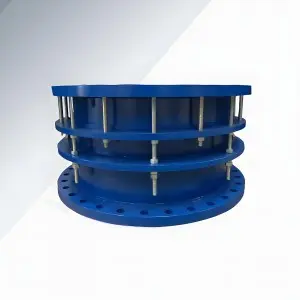
A Force Transmission Pipeline Expansion Joint plays an important role in managing this relationship. Unlike an expansion joint used only to absorb movement, a force transmission design also transfers specific loads through its structural components. Understanding how it interacts with anchors, guides, and supporting structures is essential for designing a reliable pipeline system.
Why Pipeline Support Design Matters
Pipeline supports do more than hold pipes in position. They help control movement, maintain alignment, and transfer mechanical loads to the surrounding structure. Their arrangement directly affects how forces travel through the pipeline during normal operation and changing conditions.
Thermal expansion is one of the main reasons support design requires careful attention. As the temperature of a pipeline increases, its material expands. If the movement is restricted without a suitable compensation arrangement, stress may develop at pipe connections, valves, pumps, and other equipment. Pressure also creates forces that need to be considered. In certain pipeline configurations, pressure acting on an expansion joint can generate a thrust force. If this force is not properly managed, it may place additional demands on anchors and connected structures.
This is where a Force Transmission Pipeline Expansion Joint becomes relevant. It can accommodate specified pipeline movement while transmitting defined forces through its load-bearing components. The support system must be designed around these functions rather than treating the expansion joint as an isolated component.
How Force Transmission Expansion Joints Work with Supports
A force transmission expansion joint typically incorporates structural components that allow it to transfer axial loads while accommodating the movement permitted by its design. The exact construction depends on the product type and application, but the objective is to establish a controlled mechanical relationship between connected pipeline sections.
Anchors and guides perform different functions within this arrangement. Anchors are designed to restrain pipeline movement at designated locations and transfer calculated loads to the supporting structure. Their capacity and foundation requirements must account for the forces generated by operating pressure, thermal conditions, and the expansion joint configuration.
Guides help maintain pipeline alignment and control lateral movement. They allow the pipe to move in the intended direction while limiting unwanted displacement. Without suitable guidance, pipeline movement may become unpredictable and introduce bending loads into components that are not intended to carry them.
A Force Transmission Pipeline Expansion Joint must therefore be coordinated with both types of support. The joint’s movement capacity, load-transfer function, and installation position should match the pipeline’s support arrangement.
For practical design reviews, several aspects deserve attention:
-
Anchor positioning: Determine where axial loads should be restrained and transferred. Anchor locations must correspond to the calculated load paths rather than being selected only for installation convenience.
-
Guide spacing: Arrange guides to maintain alignment and prevent excessive lateral movement. Their positions should reflect the pipeline geometry and the movement allowed by the expansion joint.
-
Load capacity: Check whether supports, foundations, and connected structures can withstand the expected forces under normal and relevant operating conditions.
-
Movement clearance: Ensure that nearby structures, equipment, and pipework do not obstruct the joint’s permitted movement.
These considerations help establish a coordinated support system instead of allowing each component to be designed independently.
Managing Axial Forces Without Restricting Required Movement
One common design challenge is balancing force transmission with movement compensation. A pipeline needs enough freedom to accommodate thermal expansion or other specified displacement, but uncontrolled movement can damage connections and disturb alignment.
A Force Transmission Pipeline Expansion Joint addresses this by combining movement accommodation with a defined load-transfer arrangement. However, its performance depends on how the surrounding pipeline is supported.
If an anchor is undersized, incorrectly positioned, or inadequately connected to its foundation, it may not withstand the loads transmitted through the joint. Conversely, excessive restraint in the wrong location can prevent the pipeline from moving as intended and increase stress elsewhere in the system. The design process should begin with an understanding of the pipeline’s operating conditions. Engineers need to identify the expected temperature range, working pressure, movement direction, connection arrangement, and loads acting on the system. These inputs help determine the appropriate joint configuration and support requirements.
It is also important to distinguish between the forces that the joint is designed to transmit and the forces that the pipeline structure must independently withstand. A force transmission component does not eliminate the need for proper structural calculations. Instead, it provides a controlled way to manage specific loads within the overall system.
Installation Factors That Influence Support Performance
Even a correctly selected expansion joint can perform poorly if the installation arrangement does not follow the design requirements. Misalignment, unsuitable support locations, and insufficient movement clearance can all affect its operation.
Before installation, the pipeline centerline, connection dimensions, anchor positions, and guide arrangement should be checked against the approved drawings. The joint should not be forced into position to compensate for inaccurate pipe fabrication or incorrect spacing. The installation team should also confirm that temporary supports are suitable for the construction stage. Some loads during lifting, positioning, and connection work may differ from those encountered during normal operation. Temporary arrangements should be reviewed before they are removed.
Other important installation checks include:
-
Confirming that the joint is installed in the specified orientation.
-
Checking that connected pipe sections are properly aligned.
-
Verifying that anchors and guides are installed at their designated positions.
-
Ensuring that surrounding components do not restrict the designed movement.
-
Following the manufacturer’s instructions for handling, assembly, and final inspection.
These checks reduce the risk of transferring unintended loads to the joint or surrounding pipeline components.
Selecting a Joint Based on the Complete Pipeline System
Choosing a Force Transmission Pipeline Expansion Joint should involve more than matching the nominal pipe diameter. The joint must suit the operating pressure, temperature, required movement, connection type, and expected mechanical loads. The surrounding support arrangement is equally important. A joint selected without considering anchor capacity, guide positioning, and structural conditions may create installation or operating difficulties even if its basic dimensions are correct.
Engineers should also consider maintenance access and the possibility of future pipeline modifications. A practical design should allow the joint and nearby support components to be inspected without requiring unnecessary dismantling of connected equipment. For complex systems, coordination between pipeline designers, structural engineers, and equipment specialists helps ensure that movement compensation and force transmission are addressed together. This reduces the likelihood of conflicting design assumptions and improves consistency between drawings, component selection, and site installation.
Conclusion
A Force Transmission Pipeline Expansion Joint affects more than the movement of a single pipeline section. Its load-transfer function influences anchor design, guide placement, structural capacity, and installation requirements. When these elements are planned together, the pipeline can accommodate its intended movement while maintaining a controlled load path. Effective support design therefore depends on understanding the expansion joint as part of the complete pipeline system.
FAQs
1. What is the main difference between a standard expansion joint and a force transmission type?
A standard expansion joint primarily accommodates specified movement. A force transmission type also incorporates structural features intended to transfer defined loads through the joint.
2. Why are anchors important when installing a force transmission expansion joint?
Anchors provide designated restraint points and transfer calculated pipeline loads to the supporting structure. Their capacity and positioning must match the system design.
3. Can an expansion joint compensate for incorrect pipeline alignment?
No. An expansion joint should not be used to correct fabrication or installation errors. The pipeline should be properly aligned before the joint is installed.
4. What information is needed when selecting this type of expansion joint?
Important information includes pipe diameter, working pressure, operating temperature, required movement, connection details, load conditions, and the supporting structure arrangement.
Post time: Nov-04-2026