




Expanding a sewage treatment plant involves more than installing additional tanks, pumps, or treatment equipment. New pipelines must connect with existing networks, flow routes may change, and construction often takes place while parts of the facility remain operational. Effective valve isolation is therefore essential to separating work areas from operating systems and controlling unnecessary disruption.
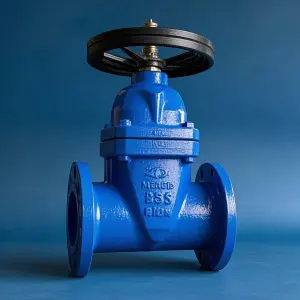
A Gate Valve For Sewage Treatment Plant can provide pipeline isolation when its design and operating conditions match the application. During expansion projects, its role is particularly relevant at selected pipeline connections, transfer lines, and process boundaries.
Why Expansion Projects Require Careful Valve Isolation
An established treatment plant usually has a defined pipeline layout and familiar operating procedures. Expansion introduces new branches, additional treatment units, and connections between existing and newly installed infrastructure. These changes can make previously straightforward isolation arrangements more complicated.
The main challenge is to separate the correct pipeline section without unnecessarily interrupting other treatment processes. For example, connecting a new treatment unit to an existing transfer line may require work near an operating pipeline. If the isolation boundary is poorly planned, the work could affect a larger part of the facility than intended.
Expansion also changes the relationship between valves and surrounding equipment. A valve that was accessible before construction may become difficult to reach after new pipe racks, platforms, or treatment structures are installed. Temporary connections can further complicate the layout if their positions and operating states are not documented.
Using Gate Valves During Phased Construction
Phased construction allows a treatment plant to add capacity in stages instead of shutting down the entire facility. To make this approach practical, the project needs a clear separation between operating pipelines, construction areas, and equipment that has not yet entered service.
A Gate Valve For Sewage Treatment Plant may be installed at a suitable isolation point to separate part of a pipeline during connection work or staged commissioning. Gate valves generally operate by moving a gate into or out of the flow passage. They are typically intended for fully open or fully closed service rather than continuous flow regulation, unless the particular design is approved for throttling.
Valve locations should support both the construction sequence and the final pipeline arrangement. A convenient temporary position may become inaccessible after permanent equipment is installed. Reviewing access, operating clearance, and future maintenance needs early can prevent avoidable changes later in the project.
Several practical steps help coordinate isolation with construction:
-
Define the isolation boundary: Identify the exact pipeline section that must be separated for each task. The boundary should limit disruption to unrelated treatment processes and make the required operating sequence clear.
-
Coordinate new and existing pipelines: Review where new branches connect to active lines and determine how those connections can be isolated during installation.
-
Preserve valve accessibility: Check whether operators can reach, identify, and operate each valve after platforms, pipe supports, and surrounding equipment are completed.
-
Document temporary arrangements: Record temporary pipework, valve positions, and changes to flow routes. Update drawings as construction progresses so operating personnel can work from accurate information.
Connecting New Pipelines Without Unnecessary Shutdowns
Connecting new infrastructure to an existing network is often one of the most demanding stages of a plant expansion. Depending on the connection location, the work may affect influent transfer, intermediate treatment, sludge handling, or treated-water discharge. The consequences of interrupting flow vary according to the process involved.
Before establishing an isolation plan, project teams should identify the pipeline’s function, the source of its flow, and the equipment or processes that depend on it. They should also determine whether an alternative route can maintain essential operations while the connection is completed. A bypass may be practical in some situations, but its feasibility depends on available capacity, space, process requirements, and operating procedures. A Gate Valve For Sewage Treatment Plant can form part of the isolation arrangement where its design is suitable for the wastewater and pipeline conditions. However, closing a valve does not automatically make the isolated section safe to work on. Residual liquid, trapped pressure, leakage, and flow entering from connected branches must all be considered.
The isolation sequence should be established before work begins. Where required, approved procedures may include locking and tagging valves, draining the section, relieving pressure, and verifying that the intended isolation has been achieved. Additional isolation measures may be necessary depending on the risk assessment and applicable safety standards. Construction planning should also account for temporary site conditions. Scaffolding, lifting equipment, and temporary pipework can restrict access to valves or make normal operating sequences impractical.
Matching Valve Placement to the Expanded Network
Valve placement affects how easily a treatment plant can isolate individual sections after expansion. The objective is not simply to install more valves, but to create useful isolation boundaries that reflect the network’s operating needs.
The expanded pipeline layout should be reviewed by functional area, such as treatment stages, pumping zones, transfer routes, and connections between old and new infrastructure. Each proposed isolation point should have a clear purpose. In some locations, independent isolation may allow maintenance or construction to proceed without interrupting adjacent processes. In others, additional valves may provide little benefit if they do not create a practical separation point.
-
Which process sections must continue operating when another section is isolated?
-
Can operators identify and access the valves without entering congested or restricted areas?
-
Will permanent structures or new equipment obstruct valve operation?
-
Does the arrangement support the planned testing, startup, and commissioning sequence?
-
Are isolation boundaries clearly shown in the final pipeline drawings?
Valve selection must also reflect the actual service conditions. Sewage may contain suspended solids, fibrous material, and corrosive constituents, depending on its source and treatment stage. These characteristics can affect sealing performance, material compatibility, obstruction risk, and maintenance requirements.
When selecting a Gate Valve For Sewage Treatment Plant, engineers should therefore review pipeline size, operating pressure, connection type, valve materials, sealing arrangement, installation orientation, and operating frequency. The expected wastewater conditions are especially important where debris could accumulate around the closing components. The appropriate design should be determined from the application’s requirements rather than the valve category alone.
Commissioning and Handover After Expansion
Mechanical installation is only one part of completing an expanded pipeline system. Before the new arrangement enters normal service, commissioning should verify that the connections, isolation points, and operating procedures work as intended.
Depending on project specifications, valve checks may include confirming identification labels, inspecting accessible operating mechanisms, verifying operating direction, and completing required pressure or leakage tests. Testing should follow the manufacturer’s instructions and applicable project standards. The handover process is equally important. Updated pipeline drawings should show new branches, valve locations, and isolation boundaries. Operating personnel also need clear instructions explaining how the expanded network affects existing procedures. Any temporary connections used during construction should be removed or formally documented before the system returns to its intended operating configuration.
A Gate Valve For Sewage Treatment Plant is more effective when operators understand its position and purpose within the wider network. Accurate records and clear identification reduce uncertainty during future isolation work and help maintenance teams avoid operating the wrong valve.
Planning for Long-Term Operational Flexibility
Expansion changes a treatment plant’s future maintenance and operating requirements as well as its immediate construction needs. Isolation arrangements should therefore support both the commissioning stage and the continued operation of the completed facility.
Reviewing valve locations early, coordinating construction phases, and documenting the final layout can help limit avoidable disruption. Gate valves can contribute to this approach when their design is appropriate for the service and their positions create useful pipeline boundaries. Selection should consider wastewater characteristics, connection requirements, accessibility, and expected operating conditions.
Conclusion
Valve isolation is a key consideration in sewage treatment plant expansion because it separates construction activities from operating processes and helps control disruption at pipeline connections. Appropriate gate valve placement, clear operating procedures, and accurate commissioning records support a smoother transition to the expanded network. The most effective arrangement is one that meets immediate construction needs while remaining practical for long-term operation.
FAQs
1. Can gate valves be used for continuous wastewater flow control?
Gate valves are generally designed for fully open or fully closed service. Continuous throttling should only be considered when the specific valve design is suitable for that duty.
2. What should be reviewed before connecting a new pipeline to an existing line?
The review should cover the pipeline’s function, isolation boundaries, flow dependencies, available alternative routes, access conditions, and the procedures required to complete the connection safely.
3. How does valve accessibility affect plant expansion?
Accessible valves are easier to identify and operate during construction, commissioning, and future maintenance. Their positions should be checked against the completed layout, not just the initial installation plan.
4. Why should valve arrangements be documented after expansion?
Updated records help operators understand the new pipeline configuration, identify isolation points, follow the correct operating sequence, and maintain consistency between the installed system and its documentation.
Post time: Oct-29-2026