




Valves used in industrial pipelines may need to open and close repeatedly as operating conditions change. In these situations, long-term performance depends on more than the ability to shut off flow. Operating torque, sealing contact, pressure fluctuations, and component wear can all affect reliability over time. A valve that performs well during occasional operation may respond differently when subjected to frequent cycling. A double eccentric flange butterfly valve is designed with an offset between the stem axis, disc center, and sealing arrangement. This geometry changes how the disc moves relative to the seat during opening and closing.
Why Frequent Operation Changes Valve Performance
Every opening and closing cycle involves mechanical movement and interaction between the disc and sealing surfaces. During opening, the disc must move away from its closed sealing position while resisting the forces acting on it. During closing, the disc returns to the seat, where the sealing components must establish sufficient contact to restrict leakage. Repeated cycles can gradually change the condition of these contact surfaces, especially when the valve operates under high differential pressure or handles abrasive media.
Frequent operation may influence several aspects of performance:
-
Operating torque: Pressure differences, seal friction, bearing condition, and actuator sizing can affect the force required to move the disc. Torque requirements may also change as components wear.
-
Sealing consistency: Repeated contact can affect sealing surfaces, while particles trapped between the disc and seat may cause localized damage.
-
Mechanical stability: Stem alignment, bearing wear, mounting quality, and actuator performance influence whether the disc follows its intended movement.
-
Maintenance requirements: The more frequently a valve cycles, the more important it becomes to monitor changes in operating behavior rather than relying only on a fixed maintenance interval.
These effects do not occur at the same rate in every installation. A valve operating with clean water at moderate pressure may experience different wear patterns from one handling suspended solids or corrosive fluids. Cycling frequency should therefore be evaluated alongside actual service conditions.
How Double Eccentric Geometry Influences Repeated Movement
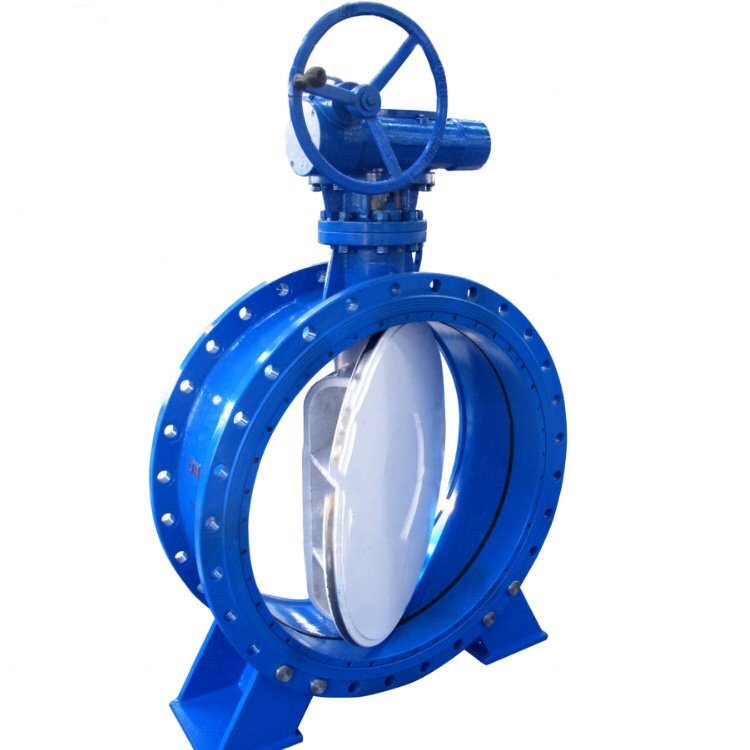
The defining feature of a double eccentric butterfly valve is its offset geometry. The stem axis is displaced relative to the disc center and the relevant sealing geometry. As the disc rotates away from the closed position, this arrangement changes the way the disc separates from the seat.
In a conventional concentric design, the disc and seat maintain a different relationship during rotation, which can create more continuous contact between sealing surfaces. In a double eccentric design, the offset helps the disc move away from the seat more readily after opening begins. Depending on the specific design, this can reduce sliding contact and friction during part of the operating cycle. This distinction matters during frequent operation because wear is influenced not only by the number of cycles but also by the nature of contact during movement. Reducing unnecessary rubbing can help preserve sealing surfaces and support more consistent operation over time.
However, double eccentric geometry does not eliminate all friction or guarantee a longer service life. Contact still occurs as the valve approaches its closed position, and the sealing mechanism varies by model. Seat material, disc finish, pressure rating, and manufacturing tolerances all influence actual performance. The flange connection also plays a role in the overall installation. Proper alignment and suitable gasket compression help maintain a stable connection between the valve and pipeline. Poor alignment or excessive external stress can affect valve movement and sealing performance, even when the internal geometry is well designed.
What Determines Performance Under Repeated Cycling?
The suitability of a valve for frequent operation cannot be established from its eccentric design alone. Several operating conditions determine how well it performs in service.
Differential pressure and flow conditions
Pressure acting across the disc affects the torque needed to operate the valve. Under higher differential pressure, the actuator may need to overcome greater hydraulic forces. Flow velocity and turbulence can also influence vibration and disc loading, particularly when the valve operates partly open. A double eccentric flange butterfly valve should therefore be evaluated against the pressure conditions expected during both opening and closing. If the valve is used for throttling rather than simple isolation, its allowable operating range and flow characteristics must also be considered.
Seat material and fluid characteristics
The seat must withstand the mechanical and chemical demands of the process. Different elastomers and metal-seated arrangements respond differently to temperature, pressure, abrasion, and chemical exposure. Suspended particles may become trapped at the sealing interface, while corrosive media may gradually degrade unsuitable materials. For this reason, selecting a valve for frequent cycling requires matching the sealing arrangement to the fluid, rather than assuming that all double eccentric designs offer the same resistance to wear.
Actuator selection and control
An actuator that provides insufficient torque may struggle to complete the closing stroke, while inappropriate sizing or control settings can create unnecessary mechanical stress. Rapid closure may also produce pressure surges in some pipeline systems. When evaluating an actuator, engineers should consider the valve’s required operating torque across the full stroke, the available safety margin, the intended cycling frequency, and the control system’s operating speed. The manufacturer’s torque data and operating limits should guide the final selection.
Signs That Repeated Operation Is Affecting the Valve
Performance changes may develop gradually, so monitoring operating behavior is often more useful than waiting for visible leakage. A valve may continue to open and close even when its sealing performance or mechanical condition is beginning to deteriorate.
-
A noticeable increase in operating torque or actuator current compared with normal conditions.
-
Inconsistent closing behavior, including incomplete travel or changes in the final closed position.
-
Leakage that appears after repeated cycles or becomes more pronounced under particular pressure conditions.
-
Unusual vibration, noise, or signs of movement around the stem, actuator, or flange connection.
These symptoms do not identify a single cause. For example, rising torque may result from increased differential pressure, seat friction, bearing problems, or actuator issues. Leakage may be associated with debris, seat damage, incorrect adjustment, or operating conditions outside the valve’s intended range.
Troubleshooting should therefore begin by checking the process conditions and control settings, followed by inspection of the actuator, stem assembly, sealing components, and installation. Before internal inspection, the pipeline must be isolated and depressurized according to the applicable safety procedures.
How to Match the Valve to Its Operating Duty
A double eccentric flange butterfly valve may be suitable for applications that require regular isolation or controlled operation, but the selection should reflect the actual duty rather than the valve category alone.
Before choosing a model, clarify the following factors:
-
Operating cycle: Establish how often the valve will operate, whether it will remain in intermediate positions, and whether the process requires rapid or gradual movement.
-
Process conditions: Confirm the working pressure, differential pressure, temperature range, fluid composition, and potential presence of solids.
-
Sealing requirements: Determine the acceptable leakage level and whether a resilient or metal-seated configuration is appropriate.
-
Actuation requirements: Verify torque requirements, control accuracy, fail-safe needs, and compatibility with the available power and control system.
-
Maintenance access: Ensure that the installation allows inspection and servicing of the actuator, stem, and sealing components.
These checks are particularly important when the valve is being considered as a replacement for an existing model. Similar nominal diameter and flange dimensions do not necessarily mean that two valves have the same torque requirements, flow behavior, or sealing performance.
Conclusion
Frequent operation places repeated demands on a butterfly valve’s sealing surfaces, drive system, and mechanical components. Double eccentric geometry can reduce sliding contact during opening and support reliable movement, but long-term performance still depends on pressure conditions, seat materials, actuator sizing, fluid characteristics, and installation quality. Evaluating these factors together provides a more reliable basis for selecting a valve than relying on design terminology alone. Appropriate specification and routine monitoring can help maintain sealing consistency and identify developing problems before they lead to unexpected downtime.
FAQ
1. Is a double eccentric butterfly valve suitable for frequent opening and closing?
It can be, provided the specific model is designed for the required cycling duty. Differential pressure, sealing materials, actuator capacity, and operating speed should all be checked against the manufacturer’s specifications.
2. Does double eccentric design prevent seat wear?
No. The offset geometry can reduce sliding contact during part of the disc’s movement, but wear can still occur because of repeated seating, abrasive particles, unsuitable materials, or excessive operating forces.
3. Can a double eccentric flange butterfly valve be used for flow regulation?
Some models can regulate flow within their specified operating range. Suitability depends on the valve’s flow characteristics, pressure conditions, and the manufacturer’s guidance. Not every butterfly valve is intended for continuous throttling.
4. What should be checked first when operating torque increases?
First compare current operating conditions with normal pressure and control settings. Then check the actuator, stem movement, bearings, and sealing components as appropriate. Increased torque should not automatically be attributed to seat wear without further inspection.
Post time: Oct-20-2026