




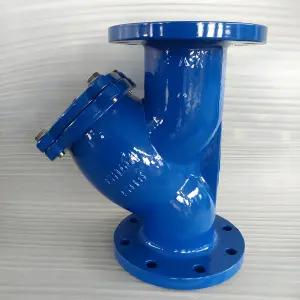
A Y-type Strainer is designed to help prevent these problems by filtering unwanted particles from fluid systems before they reach sensitive equipment. With its compact Y-shaped body and internal filter screen, it provides an effective solution for removing suspended solids while maintaining stable fluid flow. In industrial piping systems, even small amounts of solid particles can affect the performance and service life of downstream equipment. Rust, welding residues, sand, scale, and other impurities may enter pipelines during installation, operation, or maintenance. If these contaminants reach pumps, control valves, meters, or other precision components, they can cause blockage, wear, unstable operation, and increased maintenance requirements.
How Does a Y-type Strainer Work?
A Y-type Strainer uses a removable perforated or mesh filter element installed inside a Y-shaped housing. When fluid enters the strainer, it passes through the filter screen while solid particles are trapped inside the strainer chamber.
The filtered fluid continues through the pipeline, while accumulated contaminants remain inside the screen area until cleaning or replacement is required. This simple mechanical separation process does not require external power, making the Y-type Strainer a reliable component for many industrial fluid systems.
The angled design of the body creates a collection area for captured particles. Compared with some straight-through filtration designs, the Y-shaped structure allows the filter element to be installed at an angle, helping maintain a compact installation profile while providing effective filtration.
The performance of a Y-type Strainer depends largely on the filter screen opening size, flow conditions, and the characteristics of the transported medium. A smaller mesh opening can capture finer particles but may also create higher pressure loss as contaminants accumulate. Therefore, filtration efficiency and system flow requirements must be considered together.
Why Are Contaminants a Problem in Pipeline Systems?
Contaminants inside pipelines may appear harmless, but they can create significant problems over time. Many industrial components are designed with precise clearances and moving parts, meaning even relatively small particles can interfere with normal operation.
Pumps are particularly sensitive to solid contaminants. Particles entering the pump can accelerate wear on internal components, reduce efficiency, and increase the risk of unexpected downtime. Control valves and flow meters may also be affected because debris can prevent proper movement or interfere with accurate measurement.
In systems that handle water, chemicals, oil, or other industrial fluids, contamination may come from different sources, including:
-
Installation residues: Welding fragments, pipe scale, dust, and construction debris may remain inside pipelines after installation.
-
Operating conditions: Corrosion products and deposits can form inside pipes during long-term use.
-
External sources: Maintenance activities or changes in system conditions may introduce unwanted particles.
By capturing these contaminants before they reach critical equipment, a Y-type Strainer helps improve system stability and reduce the impact of pipeline impurities.
How Does a Y-type Strainer Protect Equipment?
The primary function of a Y-type Strainer is to act as a protective barrier between the pipeline and downstream components. Its role is especially important in systems where equipment reliability and continuous operation are critical.
Protecting Pumps and Valves from Particle Damage
Pumps, control valves, and regulating devices often contain components that require smooth movement and accurate positioning. When solid particles enter these components, they may cause surface damage, sticking, or reduced sealing performance.
Installing a Y-type Strainer upstream helps remove these particles before they enter sensitive equipment. This reduces unnecessary wear and supports more stable operation.
Maintaining More Reliable System Performance
Contamination can gradually affect system efficiency. A valve that does not close properly, a meter that provides inaccurate readings, or a pump operating under increased resistance may reduce overall system performance.
By controlling the amount of debris moving through the pipeline, a Y-type Strainer helps maintain cleaner fluid conditions. This contributes to more predictable operation and reduces interruptions caused by contamination-related problems.
Key Factors When Selecting a Y-type Strainer
Choosing a suitable Y-type Strainer requires consideration of the complete operating environment rather than only the nominal pipe size. Different applications may require different materials, filter ratings, and structural designs.
Important selection factors include:
-
Filtration requirements: The filter screen opening should match the level of particle protection required by the downstream equipment.
-
Pressure and temperature conditions: The strainer body and internal components must withstand the system’s operating pressure and temperature range.
-
Flow rate and pressure loss: The selected strainer should provide sufficient filtration while minimizing unnecessary resistance to flow.
-
Material compatibility: The body and filter element materials should be suitable for the transported medium to avoid corrosion or premature deterioration.
-
Maintenance requirements: The design should allow convenient access to the filter element for cleaning or replacement.
A filter that is too fine may increase pressure loss and require more frequent cleaning, while a filter that is too coarse may not provide sufficient protection. Finding the right balance is essential for reliable operation.
How Does Filter Design Affect Performance?
The internal filter element is one of the most important parts of a Y-type Strainer. Its construction directly affects filtration efficiency, pressure drop, and maintenance frequency. A filter screen with smaller openings can capture finer particles, but it also provides less open area for fluid movement. As contaminants accumulate, the pressure difference across the strainer may increase. If the pressure loss becomes too high, system efficiency can be affected.
The size and shape of the filtration area also influence performance. A properly designed filter element provides enough surface area to collect contaminants without causing excessive restriction. This allows the strainer to maintain effective filtration while supporting stable flow conditions. The sealing structure between the filter element and housing is also important. Poor sealing may allow unfiltered fluid to bypass the screen, reducing the protective function of the strainer.
Installation and Maintenance Considerations
Correct installation is essential for ensuring that a Y-type Strainer performs as expected. The installation direction should follow the flow arrow marked on the body, allowing fluid to pass through the filter element correctly. The strainer is commonly installed before equipment that requires protection, such as pumps, valves, and meters. However, the exact location depends on the system design and maintenance requirements.
Regular inspection and cleaning are also necessary. As contaminants accumulate, the filter screen may become blocked, increasing pressure loss and reducing flow capacity. Monitoring pressure differences across the strainer can help identify when cleaning is required. Maintenance intervals depend on the fluid quality, operating conditions, and amount of contamination present in the system. A well-maintained Y-type Strainer can continue providing effective protection throughout its service life.
Choosing the Right Y-type Strainer for Your Application
A Y-type Strainer is an important component for maintaining cleaner pipelines and protecting downstream equipment from unwanted particles. However, its effectiveness depends on selecting a design that matches the actual operating conditions.
When evaluating a suitable strainer, consider the fluid characteristics, required filtration level, pressure and temperature conditions, installation environment, and maintenance needs. The right combination of filter design and operating compatibility allows the strainer to provide reliable protection without creating unnecessary flow resistance. For industrial piping systems, a properly selected Y-type Strainer can help reduce equipment wear, maintain stable performance, and support longer service intervals. Understanding how the product works and how it interacts with the pipeline is essential for achieving the best results.
Conclusion
A Y-type Strainer protects pipeline equipment by removing solid contaminants before they reach pumps, valves, meters, and other sensitive components. Its simple structure, reliable filtration method, and flexible installation options make it widely used in many industrial fluid systems. However, effective filtration depends on choosing the correct screen size, material, pressure rating, and installation method. By considering these factors together, users can select a Y-type Strainer that provides efficient contamination control while maintaining stable pipeline performance.
Frequently Asked Questions
1. Where is a Y-type Strainer usually installed?
A Y-type Strainer is commonly installed upstream of equipment that requires protection, such as pumps, control valves, and meters. The exact location depends on the pipeline design and system requirements.
2. How often should a Y-type Strainer be cleaned?
Cleaning frequency depends on the type of fluid, contamination level, and operating conditions. Systems with more impurities may require more frequent inspection and cleaning.
3. Can a Y-type Strainer reduce pipeline flow?
Yes, every strainer creates some pressure loss because fluid must pass through the filter element. Proper selection of screen size and flow capacity helps minimize unnecessary resistance.
4. What is the difference between a Y-type Strainer and a filter?
A Y-type Strainer usually provides mechanical removal of larger solid particles through a screen, while filters may be designed for finer particle removal and more precise filtration requirements. The suitable choice depends on the required level of contamination control.
Post time: Oct-13-2026