




A Y Type Strainer captures rust, sand, welding slag, and pipeline debris to protect pumps, valves, flow meters, and heat exchangers.
How Does a Y Type Strainer Protect Pipeline Equipment?
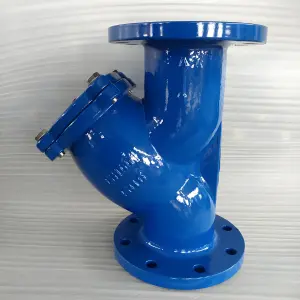
A Y Type Strainer is a pipeline filtration device designed to remove solid impurities from a flowing medium. Its main components include a strainer body, an inclined chamber, a removable screen, a cover, and sealing elements. As the medium enters the body, it passes through the internal screen and continues downstream, while rust, sand, welding slag, scale, and other larger particles are retained inside the strainer chamber.
The inclined branch forms a Y-shaped structure with the main flow passage. This compact arrangement reduces installation space while allowing convenient screen removal and debris cleaning. Compared with a larger basket strainer, a Y Type Strainer is easier to install in pump rooms, equipment inlet lines, upstream sections of control valves, and utility pipelines where space is limited.
Its primary functions include:
- Capturing solid impurities in pipelines;
- Protecting pump impellers and mechanical seals;
- Reducing scratches on valve seats and sealing surfaces;
- Preventing blockage in control valve passages;
- Limiting the effect of debris on flow meter accuracy;
- Protecting heat exchangers and process equipment;
- Reducing abnormal shutdowns of downstream components.
In water supply, drainage, HVAC, fire water, pumping station, industrial circulation, and water treatment systems, a Y Type Strainer is commonly installed upstream of debris-sensitive equipment as the first stage of solid-particle protection.
Why Do New Pipelines Also Require a Strainer?
Pipeline debris is not limited to old systems or poorly maintained networks. New pipelines may also contain a considerable amount of solid residue from manufacturing, transportation, installation, and commissioning.
Common sources include:
- Welding slag produced during pipe fabrication;
- Metal chips created by cutting and drilling;
- Sand and soil entering through open pipe ends;
- Rust formed during storage and transportation;
- Fragments of sealing tape, gaskets, or packaging materials;
- Coating particles detached from internal surfaces;
- Scale loosened during hydrostatic testing;
- Debris introduced during repair or modification work.
Initial flushing can remove some contamination, but it cannot guarantee that the entire pipeline is completely clean. After the system begins operating, flowing water may continue to carry rust, scale, and deposits released from the pipe wall.
The function of a Y Type Strainer is therefore not limited to commissioning. It continues to capture newly generated impurities during long-term operation and prevents these particles from repeatedly reaching downstream equipment.
How Do Solid Particles Affect Pump Operation?
Pump impellers, shaft seals, bearings, and internal passages are designed to operate under relatively clean and stable flow conditions. When sand, metal fragments, or scale enters the pump, these materials may strike and wear internal components.
Possible long-term effects include:
- Impeller erosion;
- Reduced pump flow and head;
- Mechanical seal wear or leakage;
- Increased operating vibration;
- Abnormal bearing loads;
- Restricted internal passages;
- Gradually increasing energy consumption;
- More frequent inspection and maintenance.
In circulation and booster systems, small particles may pass through the pump repeatedly. Although a single contact may cause limited damage, continuous abrasion can gradually affect the impeller surface and sealing area.
Installing a Y Type Strainer at the pump inlet or upstream of related equipment allows most solid particles to be intercepted before they enter the pump, creating cleaner and more stable operating conditions.
When the strainer is installed on the pump suction side, however, its pressure loss must be controlled. Excessive screen blockage can reduce available suction pressure and negatively affect pump operation.
Why Are Control Valves and Flow Meters More Sensitive to Debris?
Control valves, pressure-reducing valves, flow meters, and automatic control devices often contain narrow flow passages, pilot holes, or precision moving parts. Even relatively small particles may interfere with their normal operation.
Debris entering a valve may cause:
- Particles becoming trapped between the seat and closing element;
- Incomplete closure and internal leakage;
- Scratches on sealing surfaces;
- Restricted stem or disc movement;
- Increased operating torque;
- Blocked pilot passages;
- Unstable actuator response;
- Reduced flow-control accuracy.
Particles entering a flow meter may accumulate around its sensing area and affect measurement stability. In instruments with rotating parts or restricted passages, hard particles may directly damage internal components.
Installing a Y Type Strainer upstream of this equipment reduces the solid content in the flowing medium, helping valves and instruments maintain more stable movement and measurement performance.
Why Should Screen Openings Not Simply Be as Small as Possible?
The screen is the core filtration component of a Y Type Strainer. It must balance debris interception with adequate flow capacity.
If the screen openings are too large, potentially damaging particles may continue downstream. If they are too small, the screen may clog quickly and create excessive pressure loss.
The screen opening size and structure are influenced by:
- The size and quantity of impurities;
- The maximum particle size acceptable to downstream equipment;
- Pipeline flow rate and velocity;
- Medium viscosity;
- Allowable system pressure loss;
- Continuous operating time;
- Ease of screen cleaning;
- Corrosion and scaling inside the pipeline.
Perforated stainless steel screens are commonly used in water supply and drainage systems because they provide both mechanical strength and corrosion resistance. Where finer filtration is required, an additional wire mesh may be used, but its effect on blockage rate and maintenance frequency must also be considered.
The most suitable filtration level is not necessarily the finest one. It should protect downstream equipment without placing excessive restrictions on pipeline flow.
Why Does a Blocked Strainer Reduce System Flow?
When the screen is clean, water passes through most of the available openings and the pressure drop remains relatively limited. As debris accumulates, the effective open area decreases, while local velocity and flow resistance increase.
A blocked strainer may cause:
- Lower downstream flow;
- Reduced outlet pressure;
- Increased pump load or energy consumption;
- Unstable water supply to process equipment;
- A growing differential pressure across the strainer;
- Abnormal local flow noise;
- Irregular automatic control response.
Without timely cleaning, the strainer itself may become a significant restriction in the pipeline.
In continuously operating systems or applications requiring stable flow, pressure gauges or differential-pressure monitoring devices can be installed upstream and downstream of the strainer. A continuous increase in differential pressure usually indicates that the screen has collected a large amount of debris and requires inspection.
Where Is a Y Type Strainer Commonly Installed?
A Y Type Strainer is generally installed upstream of equipment that may be affected by solid particles.
Pump and Equipment Inlets
The strainer captures rust, sand, and construction residue before they enter pumps, heat exchangers, and process equipment.
Upstream of Control and Pressure-Reducing Valves
It protects pilot passages, valve seats, and moving components, reducing the risk of blockage, internal leakage, and unstable operation.
Before Flow Meters and Instruments
It improves the cleanliness of the medium entering the instrument and reduces the effect of particle accumulation on measurement accuracy and sensing elements.
HVAC Circulation Systems
It removes corrosion products, scale, and installation debris, protecting circulation pumps, heat exchangers, and terminal control equipment.
Fire Water and Building Water Supply Systems
It reduces the amount of debris reaching fire pumps, control valves, and associated equipment, supporting stable operation during testing and service.
Water Treatment and Industrial Circulation Systems
It can be installed upstream of pumps, control equipment, dosing units, and heat exchangers to provide solid-particle protection at different treatment stages.
RMT Y Type Strainer for Pipeline Equipment Protection
RMT focuses on valves and pipe fittings for water supply, drainage, wastewater treatment, pumping stations, fire protection, and industrial water systems.
The RMT Y Type Strainer can be configured according to pipeline diameter, pressure rating, flange standard, screen structure, filtration level, coating requirements, and medium conditions. Its compact Y-shaped structure is suitable for installation in pump rooms, equipment inlet lines, and control pipelines, providing reliable solid-particle protection for pumps, valves, flow meters, heat exchangers, and other equipment.
The actual performance of a Y Type Strainer depends on more than body size. Screen opening size, effective filtration area, installation direction, system differential pressure, and maintenance access all affect its operation. Matching these factors with actual service conditions helps balance equipment protection, pipeline flow capacity, and long-term system stability.
FAQ
1. What Types of Debris Can a Y Type Strainer Remove?
It can capture rust, sand, welding slag, scale, metal fragments, sealing-material residue, and other solid particles larger than the screen openings.
2. Where Is a Y Type Strainer Usually Installed?
It is commonly installed upstream of pumps, control valves, pressure-reducing valves, flow meters, heat exchangers, and process equipment.
3. Does a Y Type Strainer Cause Pressure Loss?
A clean strainer creates a certain but relatively limited pressure drop. As debris accumulates on the screen, flow resistance increases, so cleaning should be carried out according to differential-pressure and flow changes.
4. How Can Operators Tell When a Y Type Strainer Needs Cleaning?
Reduced downstream flow, lower outlet pressure, increased pump load, or a noticeable rise in differential pressure across the strainer may indicate excessive debris accumulation.
Conclusion
A Y Type Strainer is an important pipeline component used to capture solid impurities and protect pumps, valves, flow meters, and other equipment. Its inclined chamber and removable screen provide a practical balance between compact installation, debris collection, and convenient maintenance.
In water supply, drainage, HVAC, fire water, pumping station, industrial circulation, and water treatment pipelines, a properly installed Y Type Strainer can reduce wear, blockage, internal leakage, and measurement problems caused by particles.
By matching the correct screen opening, body material, pressure rating, and installation method to the actual system, a Y Type Strainer can provide continuous protection for downstream equipment while maintaining reliable pipeline flow.
Post time: Aug-04-2026