




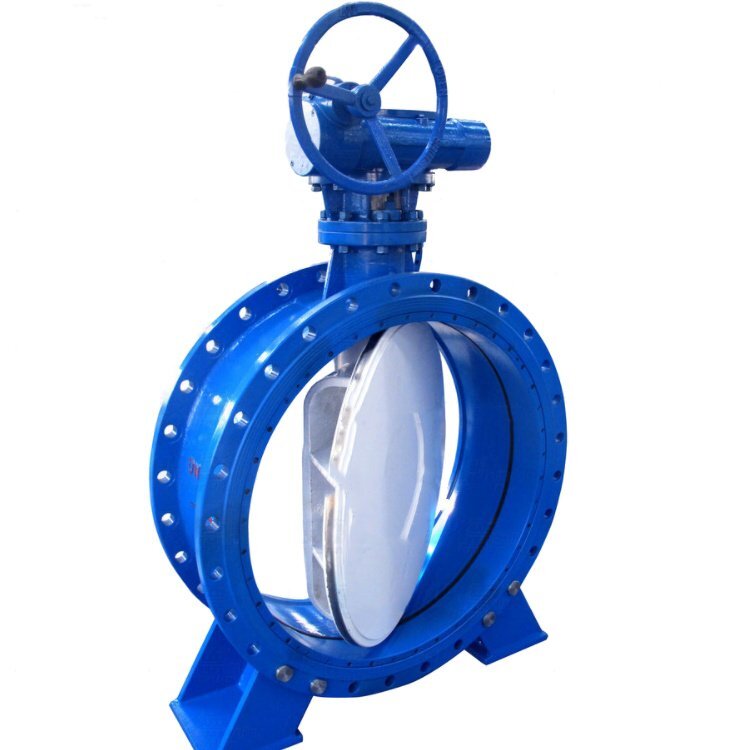
A Double Eccentric Butterfly Valve is widely used in water supply, drainage, wastewater treatment, pump stations, industrial water systems, and municipal pipeline projects. It is mainly designed for pipeline applications that require reliable shutoff, stable operation, and lower sealing wear, especially in medium and large-diameter pipelines.
Compared with a centerline butterfly valve, a Double Eccentric Butterfly Valve uses an eccentric shaft structure. The shaft is offset from both the centerline of the valve body and the centerline of the sealing surface. This design allows the disc to move away from the seat more quickly during opening and closing, reducing friction between the disc and the sealing surface.
What Makes the Double Eccentric Structure Different?
The core feature of a Double Eccentric Butterfly Valve is its double eccentric design. In a standard centerline butterfly valve, the disc rotates around the centerline, and the sealing surface may remain in contact with the seat for much of the movement, creating friction.
In a double eccentric structure, the shaft is offset in two directions. When the valve starts to open, the disc moves away from the seat more quickly. When the valve closes, the disc presses against the seat near the final closing position to form a seal.
This movement brings several practical advantages:
- Less friction between the disc and the seat;
- Lower sealing surface wear;
- Smoother opening and closing;
- Better long-term sealing stability;
- Better suitability for larger pipelines;
- Lower operating torque compared with constant-contact designs.
This is why Double Eccentric Butterfly Valves are often selected for engineering systems that require long service life and repeated operation.
Why Is It Suitable for Large-Diameter Pipelines?
Large-diameter pipelines need valves that can provide reliable control while remaining practical for installation. A full-size gate valve may be heavier and require more installation space, while a butterfly valve has a more compact structure.
A Double Eccentric Butterfly Valve is suitable for large-diameter pipelines because:
- The valve body is relatively compact;
- The disc structure supports quick flow control;
- It requires less installation space than many gate valve designs;
- The valve can be operated with a gearbox or actuator;
- The flow passage can support high-volume water transmission;
- Maintenance is more convenient in pump stations and valve chambers.
In municipal water supply, drainage, and treatment plant pipelines, large valves need to balance performance, space, operation, and maintenance. A Double Eccentric Butterfly Valve is often selected because it provides reliable shutoff while keeping the overall structure more compact.
Applications in Water Supply Systems
In water supply systems, valves are commonly used to control pipeline sections, isolate equipment, support maintenance, and manage flow direction. A Double Eccentric Butterfly Valve can be installed in main pipelines, pump stations, water treatment plants, and distribution networks.
Common water supply applications include:
- Main water transmission pipelines;
- Outlet pipelines of water treatment plants;
- Pump discharge pipelines;
- Distribution pipeline sections;
- Reservoir and tank connection pipelines;
- Valve chambers in municipal networks;
- Industrial clean water systems.
In these systems, the valve may remain open for long periods and close only during maintenance or emergency isolation. It may also operate more frequently in pump stations or treatment systems for flow control. The double eccentric structure helps reduce seat wear during repeated opening and closing.
Applications in Wastewater and Drainage Projects
Wastewater and drainage systems have more complex working conditions because the medium may contain sediment, suspended solids, organic matter, and corrosive gases. Valves used in these systems need strong valve bodies, suitable coatings, and reliable sealing structures.
A Double Eccentric Butterfly Valve can be used in many wastewater and drainage applications, especially where the pipeline diameter is large and the system requires isolation or flow control.
Typical applications include:
- Wastewater treatment plant pipelines;
- Sewage pump stations;
- Drainage pressure pipelines;
- Industrial wastewater systems;
- Stormwater pumping projects;
- Process water pipelines in treatment facilities.
For wastewater projects, buyers should pay attention to coating quality, sealing material, valve body corrosion resistance, and maintenance convenience. If the medium contains a high amount of solids or fibers, the actual working conditions should be carefully checked before selection.
What Is the Difference Between a Double Eccentric Butterfly Valve and a Centerline Butterfly Valve?
Both Double Eccentric Butterfly Valves and centerline butterfly valves can be used in water pipeline systems, but their structures and performance focus are different.
A centerline butterfly valve has a simpler structure. It is commonly used in general water systems, low to medium pressure applications, and projects that focus on compact installation and cost control.
A Double Eccentric Butterfly Valve is more suitable for projects that require lower sealing wear, better durability, and reliable operation in larger or more complex pipelines.
A simple comparison:
- Centerline butterfly valve: simpler structure, commonly used in general water systems;
- Double Eccentric Butterfly Valve: less friction between the disc and the seat;
- Centerline butterfly valve: suitable for many standard low-pressure applications;
- Double Eccentric Butterfly Valve: more suitable for larger pipelines and repeated operation;
- Centerline butterfly valve: usually more economical;
- Double Eccentric Butterfly Valve: better long-term performance in demanding projects.
For engineering buyers, the final choice should depend on pipeline size, pressure, medium, operation frequency, sealing requirements, and maintenance plan.
Why Is It Suitable for Pump Stations?
Pump stations usually require valves that can handle flow changes, pressure fluctuations, and repeated operation. When pumps start or stop, pipeline pressure and flow conditions may change quickly. Valves installed near pumps must operate reliably and withstand these working conditions.
A Double Eccentric Butterfly Valve is suitable for pump stations because:
- It can provide reliable isolation before or after pumps;
- It can be equipped with a gearbox or electric actuator;
- It is suitable for medium and large-diameter pipelines;
- Its compact structure saves installation space;
- The double eccentric structure reduces sealing wear;
- It supports smoother operation under changing flow conditions.
In pump station design, valves are not only used to open or close the water flow. They also support equipment maintenance, system safety, and operational flexibility.
What Operating Conditions Are Better Suited for a Double Eccentric Butterfly Valve?
A Double Eccentric Butterfly Valve is not selected simply because its structure is “more advanced.” It is selected because it is better suited for pipeline systems that require stable opening and closing, longer sealing life, and reliable operation. In real engineering projects, a valve does not work alone. It often operates under complex conditions such as pump start-stop cycles, pressure fluctuation, full-load pipeline operation, maintenance isolation, and occasional regulation.
If a project only involves a small-diameter, low-pressure clean water pipeline with very low operation frequency, a standard butterfly valve may already meet the requirement. However, if the pipeline diameter is large, the valve needs to withstand higher water pressure, or the valve is installed in a key position such as a pump station, main pipeline of a water plant, or wastewater treatment system, the advantages of the double eccentric structure become more obvious.
Typical working conditions include:
- Medium and large-diameter main water supply pipelines;
- Pump station inlet and outlet pipelines;
- Main process pipelines in water plants and wastewater treatment plants;
- Pipeline sections that require regular opening and closing;
- Systems that are sensitive to sealing wear;
- Large-diameter valves that require lower operating torque;
- Locations with limited space but reliable shutoff requirements;
- Pipeline systems that still require stable shutoff after long-term operation.
The key value of a Double Eccentric Butterfly Valve is not only that it can open and close. More importantly, it reduces long-term friction between the disc and the seat. For water engineering projects that need to operate for many years, this structure can reduce the risk of premature sealing surface wear, helping lower the cost of future leakage, repair, and replacement.
RMT Double Eccentric Butterfly Valve for Pipeline Projects
For water supply and drainage pipeline projects, valve selection should match real engineering conditions. RMT focuses on valves and pipe fittings for water supply, drainage, wastewater, pump stations, and industrial pipeline systems. A Double Eccentric Butterfly Valve can be selected according to pipeline size, pressure rating, flange standard, medium type, coating requirement, and operation method.
In municipal water supply networks, treatment plants, sewage pump stations, and industrial water systems, the valve should provide stable operation, reliable sealing, and long service life. For projects involving larger pipelines or repeated operation, the double eccentric structure can help reduce sealing wear and improve operating reliability.
FAQ
1. What is a Double Eccentric Butterfly Valve used for?
A Double Eccentric Butterfly Valve is used for flow control and shutoff in water supply, drainage, wastewater, pump station, and industrial pipeline systems, especially in medium and large-diameter pipelines.
2. What are the advantages of the double eccentric structure?
The double eccentric structure allows the disc to move away from the seat more quickly during opening, reducing friction and sealing wear. This helps improve durability and long-term sealing performance.
3. Is a Double Eccentric Butterfly Valve suitable for wastewater systems?
Yes. If the valve body, coating, sealing material, and internal structure are suitable for the medium and operating environment, a Double Eccentric Butterfly Valve can be used in wastewater systems.
4. Why is the operation method important when choosing a Double Eccentric Butterfly Valve?
Because large-diameter valves require higher operating force, the operation method directly affects site usability. Gearbox, electric actuator, or pneumatic actuator selection should be based on valve size, operation frequency, control method, and maintenance conditions.
Conclusion
A Double Eccentric Butterfly Valve is a practical valve choice for large-diameter water supply, drainage, wastewater, pump station, and industrial pipeline systems. Its double eccentric structure helps reduce friction, lower sealing wear, and improve long-term operating reliability.
For projects that require compact installation, reliable shutoff, smooth operation, and better durability, choosing the right Double Eccentric Butterfly Valve can improve pipeline control, reduce maintenance risk, and support stable long-term system operation.
Post time: Jul-16-2026