




In a pipeline system, contamination rarely affects only one component. Solid particles carried by flowing liquid can move from one section of the network to another, potentially interfering with pumps, control valves, flow meters, and other equipment. The consequences depend on the type of contaminant, the equipment’s internal design, and the conditions under which the system operates. A T-type Basket Strainer helps address this risk by intercepting solid particles before they travel further downstream. Its value is not simply that it removes debris, but that it provides a physical filtration point within a larger equipment protection strategy.
Different Equipment Faces Different Contamination Risks
Pumps, for example, depend on suitable fluid conditions and unobstructed flow paths. Solid debris may interfere with internal clearances or contribute to wear, depending on the pump type and the characteristics of the particles. In systems handling water or wastewater, construction residue, rust fragments, and suspended solids may be relevant sources of contamination.
Valves face a different set of concerns. Particles can become trapped around internal moving parts or sealing surfaces, potentially affecting movement or preventing the intended sealing condition. The actual risk depends on the valve structure and the size and hardness of the contaminants. A filtration arrangement that reduces the amount of solid material reaching a valve can therefore support more dependable operation. Flow meters and other instruments may also be affected. Some devices rely on defined internal passages or particular flow conditions to provide reliable measurements. Accumulated debris can interfere with these conditions or increase the need for inspection.
These differences explain why a T-type Basket Strainer should be evaluated as part of the equipment arrangement. Its purpose is to intercept suitable particles before they reach vulnerable components, but it cannot guarantee protection against every form of contamination or mechanical failure.
How Filtration Supports Equipment Protection
A basket strainer provides a screening element through which the fluid passes while retained particles remain inside the basket. The housing connects to the pipeline, creating a designated location for separating suitable solid contaminants from the flowing medium. The protection provided depends on the relationship between the screen openings and the particles present in the fluid. Particles larger than the effective openings may be retained, while smaller particles can pass through. Filtration should therefore be matched to the actual contamination risk and the requirements of the downstream equipment.
The strainer’s position is equally important. If the objective is to protect a pump, valve, or instrument, the filtration point must be arranged so that the relevant fluid passes through it before reaching that component. Branch connections and alternative flow paths should also be considered; otherwise, some equipment may remain exposed to contaminants that bypass the strainer. A T-type Basket Strainer can serve as a common protection point for several downstream components when the pipeline layout and operating requirements support that arrangement. However, one central filtration point is not automatically sufficient for an entire system. Equipment with more demanding cleanliness requirements may need additional protection or a different filtration method.
Matching Filtration Needs to Downstream Equipment
Three considerations help establish this relationship:
-
Equipment sensitivity: Identify components that contain narrow passages, moving parts, sealing surfaces, or measurement elements that may be affected by solid debris. Review the equipment manufacturer’s requirements where available instead of assuming that all components need the same filtration level.
-
Contaminant characteristics: Consider whether the fluid may carry large fragments, fine particles, fibrous material, or a mixture of solids. Particle size, hardness, concentration, and shape can influence whether a basket screen is an appropriate solution.
-
Consequences of interruption: Assess what happens if contamination causes a component to malfunction. An interruption affecting a critical pump or control valve may have different operational consequences from one involving a less critical branch.
These considerations do not require inventing a universal screen size or filtration rating. Instead, they establish the information needed to determine whether a particular strainer can meet the system’s requirements. Where equipment specifications define a maximum allowable particle size or filtration requirement, those specifications should guide the decision.
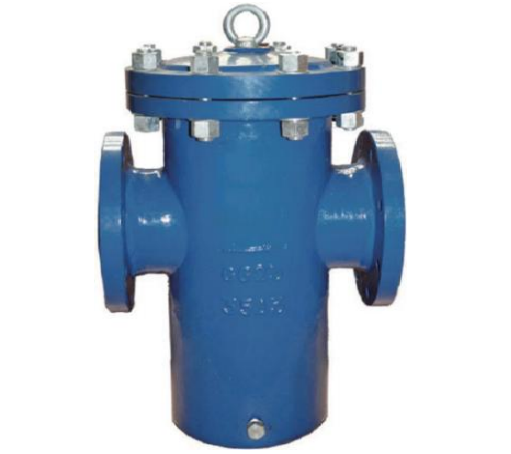
Why the Filtration Point Matters in a Pipeline Network
The first question is whether the strainer protects the equipment that actually needs it. A strainer installed downstream of a sensitive component cannot protect that component from particles that have already passed through it. Similarly, a filter placed on one branch will not protect equipment supplied through a separate, unfiltered route.
The second consideration is accessibility. A basket strainer needs to be inspected and, when necessary, opened so that retained material can be removed. If the installation makes this work difficult, maintenance may take longer or inspections may be delayed. Space requirements should therefore be considered alongside hydraulic and equipment protection requirements.
The third consideration is the operating pattern of the system. A pipeline with a relatively stable supply may present a different contamination profile from one that experiences frequent shutdowns, repairs, or changes in source conditions. These differences influence where inspection is most useful and whether a single filtration point remains adequate as the system evolves. Rather than adding strainers indiscriminately, the goal is to establish a filtration arrangement that addresses identifiable contamination pathways.
Recognizing the Limits of Basket Filtration
A basket strainer is a mechanical screening device, not a universal treatment solution. It is designed to retain particles that meet its screening characteristics, but it does not necessarily remove dissolved substances, microorganisms, or particles smaller than the effective openings.
This distinction matters when downstream equipment has requirements that exceed what a basket screen can provide. Fine filtration, chemical treatment, or other separation processes may be necessary for particular applications. A basket strainer may form one stage of a broader treatment arrangement, but it should not be assumed to replace those other processes. Accumulated debris also changes the operating conditions. As retained material occupies the available screening area, flow resistance may increase. If the resulting restriction becomes significant, downstream equipment may receive less flow than expected. The actual effect depends on the amount and nature of the debris, the screen configuration, and the system’s operating conditions.
For this reason, equipment protection involves both appropriate filtration and a defined inspection strategy. The strainer should be selected for its intended duty, while the operating plan should establish how its condition will be assessed. If repeated contamination occurs, identifying the source may be more effective than relying only on more frequent cleaning.
Applying T-type Basket Strainers to Real Pipeline Requirements
RMT Flowtech’s T-type Basket Strainer is listed for water and wastewater applications. These details provide a starting point when assessing whether the product is compatible with a particular pipeline. RMT can review project requirements to help evaluate product compatibility with the intended application. Providing the pipeline size, operating pressure, medium, expected contamination, connection standard, and the equipment requiring protection gives the engineering review a more useful basis than selecting a strainer by nominal diameter alone.
However, nominal size and pressure rating alone do not establish whether a strainer will protect every downstream component. The assessment should also consider the fluid, expected contaminants, required particle retention, operating flow, available installation space, and maintenance access. Where a pump, valve, or instrument has specific filtration requirements, those requirements should be checked against the proposed strainer configuration.
Conclusion
Protecting downstream equipment requires a clear understanding of how solid contamination can affect different components throughout a pipeline system. A T-type basket strainer can provide a practical screening point when its filtration capability, installation location, and operating limits match the application. By connecting equipment requirements with contamination risks, engineers can develop a more appropriate protection strategy without assuming that one filtration solution will address every problem.
FAQ
1. What Is the Difference Between a T-type Basket Strainer and a Fine Filtration System?
A T-type basket strainer is generally used to retain solid particles within the capabilities of its screening element. Fine filtration systems are designed for applications requiring smaller particle retention, so the appropriate solution depends on the fluid quality requirements and downstream equipment.
2. Can a T-type Basket Strainer Be Used in Water and Wastewater Applications?
Yes, suitable T-type basket strainers can be used in water and wastewater systems. The actual application depends on the fluid characteristics, expected solids, operating conditions, and compatibility of the selected materials and configuration.
3. How Can Pipeline Changes Affect an Existing Strainer Installation?
Changes such as adding equipment, modifying branch connections, or increasing system capacity can alter flow distribution and filtration requirements. The existing arrangement should be reassessed to determine whether it remains suitable for the revised pipeline layout.
4. What Information Helps When Requesting a T-type Basket Strainer Quote?
Useful information includes the nominal pipe size, pressure rating, fluid medium, connection standard, operating conditions, and filtration requirements. Providing these details helps establish whether the proposed configuration is appropriate for the intended application.
Post time: Oct-27-2026