




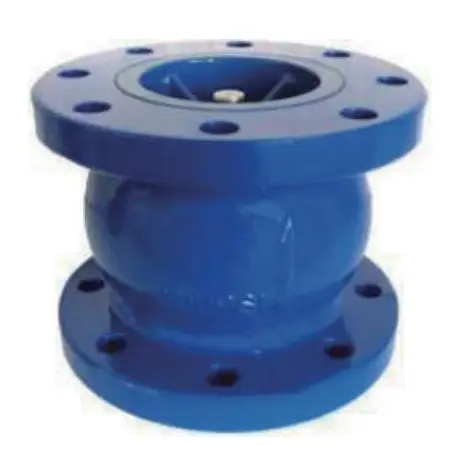
Silent Check Valve helps maintain pipeline stability by controlling reverse flow and reducing pressure fluctuations caused by sudden flow changes. It is widely used in pumping systems, water supply networks, and industrial pipeline applications where reliable operation is required.
Why Check Valve Performance Matters Beyond Backflow Prevention
A check valve is often considered a simple pipeline component because its main function is to allow fluid flow in one direction while preventing reverse flow. However, in many water supply and pumping systems, preventing backflow is only one part of the requirement.
The closing behavior of a check valve can directly influence pipeline pressure stability. When a pump stops suddenly or the flow condition changes rapidly, the fluid inside the pipeline does not immediately stop moving. Due to fluid inertia, the water column may continue traveling forward and then begin moving in the opposite direction.
If the check valve does not respond quickly enough, reverse flow can develop before the valve fully closes. When the valve finally closes against this moving flow, the sudden change in velocity may create pressure fluctuations, commonly known as water hammer.
Water hammer can affect more than the valve itself. Repeated pressure surges may place additional stress on:
- Pipeline connections;
- Flange sealing areas;
- Pipe supports;
- Pumping equipment;
- Other installed components.
For this reason, modern pipeline design focuses not only on whether a check valve can stop reverse flow, but also on how smoothly and quickly it responds when operating conditions change.
Why Does Check Valve Closing Speed Affect Pipeline Pressure?
The closing process of a check valve involves the interaction between fluid movement and the mechanical response of the valve components.
When the flow direction is stable, the valve remains open and allows the medium to pass through. When the flow decreases, the valve needs to move toward the closed position before significant reverse flow develops.
A slower closing valve may allow:
- Greater reverse flow velocity;
- Longer valve travel distance before closing;
- Higher impact when the disc reaches the seat;
- Increased pressure variation within the pipeline.
However, faster closing alone does not automatically mean better performance. If the closing movement is too aggressive, it may also create mechanical impact inside the valve.The goal of a well-designed check valve is to achieve controlled and timely closing. The valve should respond quickly enough to limit reverse flow while avoiding unnecessary mechanical stress.
This balance between hydraulic response and mechanical movement is one of the key reasons why Silent Check Valve designs are used in many pressure-sensitive pipeline systems.
How Does a Silent Check Valve Reduce Pressure Shock?
A Silent Check Valve is designed with a focus on shorter valve travel and faster response compared with some traditional check valve structures.Many conventional swing check valves use a rotating disc mechanism. During operation, the disc moves around a hinge point, and the closing movement can be affected by inertia, flow conditions, and installation position.
A Silent Check Valve typically uses an axial movement design, where the valve disc moves along the flow direction. This design allows the valve to react more quickly when forward flow decreases.
The shorter closing distance helps reduce:
- Reverse flow development;
- Disc impact during closing;
- Pressure fluctuations;
- Mechanical stress on internal components.
By reducing the time between flow reduction and valve closure, the valve helps maintain smoother pipeline operation, especially in systems where sudden pump shutdowns or flow changes may occur.
Why Are Pumping Systems More Sensitive to Check Valve Performance?
Pumping systems are one of the most common applications where check valve performance becomes critical.During normal operation, the pump creates pressure that pushes the fluid through the pipeline. The check valve remains open while allowing the designed flow direction.
However, when the pump suddenly stops because of power failure, equipment protection, or operational control, the fluid does not stop instantly. The remaining kinetic energy inside the pipeline may cause the fluid column to move backward.
If the check valve closes too slowly, the returning flow can increase before the valve reaches the closed position. This may result in:
- Pressure spikes;
- Pipeline vibration;
- Increased stress on connections;
- Reduced system stability.
A Silent Check Valve helps manage this transition by responding faster to changes in flow conditions. This is especially valuable in pump stations, water distribution systems, and long-distance pipelines where pressure fluctuations can travel through large sections of the network.
Factors That Influence Silent Check Valve Performance
Although the valve design is important, actual performance also depends on the overall pipeline system.
Several factors should be considered when applying a Silent Check Valve:
Flow Velocity
The valve needs sufficient flow velocity to open properly and maintain stable operation. If the flow is too low, the valve may not fully open, increasing pressure loss. If the flow is too high, internal components may experience greater hydraulic impact.
Installation Position
The location of the valve within the pipeline can influence flow conditions. Valves installed close to pumps, elbows, or other components may experience more complex flow patterns.
Proper installation planning helps the valve operate under more stable hydraulic conditions.
Pipeline Pressure
Different pressure conditions require suitable valve structures and materials. The valve should be selected according to the actual operating pressure and system requirements rather than only the pipeline size.
Medium Conditions
Water quality and operating environment may also affect valve performance. Suspended particles, corrosion conditions, or other medium characteristics should be considered when designing the pipeline solution.
Why Silent Check Valve Selection Should Consider the Complete System
A check valve does not work independently. Its performance depends on how it interacts with the pump, pipeline, pressure conditions, and other equipment.For example, a valve that performs well in a short building water system may not have the same requirements as a valve installed in a long-distance transmission pipeline.
A complete evaluation should consider:
- Flow conditions;
- Pressure changes;
- Pump operating characteristics;
- Pipeline layout;
- Maintenance requirements.
This system-based approach helps ensure that the valve provides reliable protection rather than simply meeting basic product requirements.
RMT Silent Check Valve Supply Capability
RMT provides Silent Check Valve solutions for water supply, drainage, and industrial pipeline applications.With valve manufacturing experience, RMT supports customers through application communication, technical confirmation, manufacturing, inspection, and delivery coordination.
For different pipeline conditions, RMT works with customers to understand project requirements and provide suitable valve solutions based on operating conditions.
RMT focuses on supplying reliable valve products that help improve pipeline stability, reduce operational risks, and support long-term system performance.For projects involving pumping stations, water distribution networks, and industrial pipelines, selecting a suitable Silent Check Valve is not only about preventing reverse flow. It is also about helping the complete pipeline system operate more smoothly under changing conditions.
FAQ
1. What is a Silent Check Valve used for?
A Silent Check Valve is used to prevent reverse flow while helping reduce pressure fluctuations caused by sudden changes in pipeline operation. It is commonly applied in water supply, pumping, and industrial pipeline systems.
2. How does a Silent Check Valve help reduce water hammer?
By closing quickly when forward flow decreases, a Silent Check Valve helps limit reverse flow before the valve reaches the closed position, reducing the pressure impact caused by sudden flow reversal.
3. What is the difference between a Silent Check Valve and a swing check valve?
A Silent Check Valve usually uses a shorter axial movement design, while a swing check valve uses a rotating disc structure. The different movement methods influence closing response, installation requirements, and pressure behavior.
4. What should be considered when applying a Silent Check Valve?
Important factors include flow velocity, pipeline pressure, installation position, pump characteristics, medium conditions, and overall system design.
Conclusion
A Silent Check Valve is not only a component for preventing reverse flow. Its closing characteristics can significantly influence pipeline pressure stability, equipment protection, and long-term system reliability.
In pumping and water distribution systems, controlling pressure changes is an important part of maintaining safe operation. By combining suitable valve design with proper application understanding, Silent Check Valves can help reduce hydraulic impact and improve pipeline performance.
RMT provides Silent Check Valve solutions supported by technical communication, manufacturing control, and project-based supply capabilities, helping customers develop more reliable pipeline systems for long-term operation.
Post time: Sep-08-2026