




Pump shutdown may last only a few seconds, but the hydraulic changes inside a pressurized pipeline can be significant. As forward flow slows and begins to reverse, a conventional check valve may close abruptly, creating mechanical impact, pressure fluctuation, and possible water hammer.
A Slow Closing Check Valve is designed to manage this transition more smoothly. By controlling disc movement during closure, it helps limit reverse flow, reduce sudden impact, and improve pressure stability after pump shutdown.
This article explains how a Slow Closing Check Valve works, where it is most useful, what factors affect its performance.
What Is a Slow Closing Check Valve?
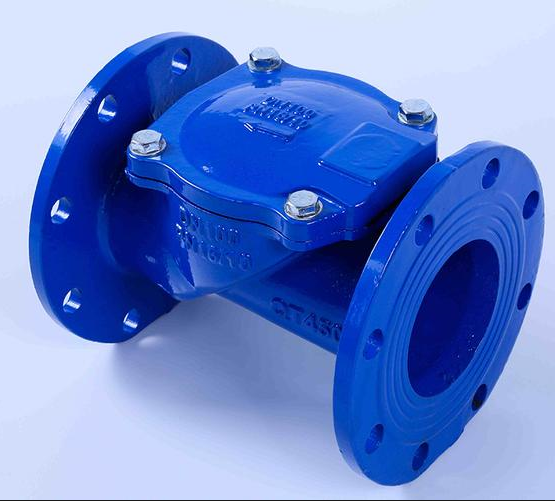
A Slow Closing Check Valve is a non-return valve mainly used on pump discharge lines and pressurized water pipelines. Like a conventional check valve, its basic function is to allow flow in one direction and prevent reverse flow when the direction of the medium changes. The key difference is that the closing process is controlled rather than relying entirely on reverse flow to force the disc rapidly against the seat.
Depending on the valve design, hydraulic damping, counterweights, lever mechanisms, or other closing-control devices may be used to regulate disc movement.
The main purpose is not simply to solve the problem of whether the valve can close. More importantly, it controls how the valve closes.
In large pump stations, long-distance water transmission pipelines, or high-flow systems, the moving water column still has considerable inertia after the pump stops. If the check valve closes too quickly, significant transient pressure may occur. If it closes too slowly, excessive reverse flow may develop. Therefore, the real function of a slow closing check valve is to balance reverse-flow velocity, closing time, and final seating.
Why Can Conventional Check Valves Create Significant Closing Impact in Some Pump Stations?
Stopping a pump does not mean that the water inside the pipeline stops immediately.
Consider a long-distance water transmission main operating at a relatively high flow rate. When the pump suddenly loses power, the pressure supplied by the pump drops rapidly, but the water column continues moving forward for a short period because of inertia. As flow velocity decreases, downstream pressure may eventually push the water back toward the pump station.
A conventional check valve normally depends on this change in flow direction to drive the disc toward the closed position. If the disc is relatively heavy, the closing travel is long, or reverse flow develops rapidly, the water may already have reached a considerable reverse velocity before the disc fully closes.
When the valve finally shuts and abruptly stops the reversing water, a significant pressure change can occur.
This is why the suitability of a Slow Closing Check Valve cannot be determined only by normal operating pressure. Pump shutdown behavior, normal flow velocity, pipeline length, elevation difference, and water-column inertia are also important.
Controlled Closing Matters More Than Simply Closing Slowly
The term “Slow Closing” can easily create the impression that the slower the valve closes, the better the result. This is a common misunderstanding.
If the closing time is too long, a significant reverse flow may develop after the pump stops. When the disc eventually reaches the seat, the valve still has to stop this reverse-moving water, and the final impact may not be lower than that of a conventional check valve.
For this reason, some slow closing check valves use a two-stage closing strategy.
For example, when forward flow first begins to decrease, the disc may move relatively quickly toward the closed position. As it approaches the seat, hydraulic damping then reduces the speed during the final part of the stroke. This helps prevent excessive reverse velocity from developing while also reducing the impact when the disc finally contacts the seat.
When evaluating slow-closing performance, it is therefore more useful to consider:
- How the disc moves while forward flow is decreasing;
- Whether the final closing stroke is hydraulically damped;
- Whether the damping rate can be adjusted for system conditions;
- How quickly reverse velocity develops after pump shutdown;
- Whether the valve closing time matches the actual hydraulic transient of the pipeline.
These factors are more meaningful than simply asking how many seconds the valve takes to close.
Which Pipeline Systems Benefit Most from a Slow Closing Check Valve?
Not every water pipeline requires a slow closing check valve.
For short pipelines with low velocity, small pumps, and little pressure fluctuation after shutdown, a conventional check valve may provide adequate backflow protection.
A Slow Closing Check Valve is more relevant under the following conditions.
High-Flow Pump Stations
As pump discharge flow increases, the momentum of the moving water also becomes greater. When the pump stops, the transition from forward flow to zero flow and potentially reverse flow can have a stronger effect on system pressure.
In these systems, controlled check valve closure becomes more important.
Long-Distance Water Transmission Pipelines
Longer pipelines contain a larger moving water mass. In systems with significant elevation changes, hydraulic behavior after pump shutdown may also become more complex than in short pipelines.
Systems with Frequent Pump Starts and Stops
If pumps start and stop several times each day, the check valve repeatedly experiences opening, flow deceleration, reverse flow, and closure.
Repeated mechanical impact can accelerate wear on the disc and seat and may also increase pipeline vibration.
Systems Sensitive to Pressure Fluctuation
Flow meters, pressure instruments, pumps, flange connections, and other pipeline components can all be affected by significant transient pressure.
Controlling check valve closure can reduce part of the pressure surge generated during the shutdown process.
Why Severe Water Hammer Cannot Be Solved by a Slow Closing Check Valve Alone
A Slow Closing Check Valve can reduce pressure surges associated with abrupt check valve closure, but it is not a universal solution for every water hammer problem.
In very long water transmission systems, pipelines with large elevation differences, or major pumping stations, transient pressure may be caused by several factors, including sudden power failure, trapped air at pipeline high points, rapidly operated valves, and the inertia of a large water column.
Such systems may also require:
- Surge vessels or pressure stabilization equipment;
- Pressure relief valves;
- Air release and vacuum valves;
- Variable-frequency pump control;
- Controlled pump shutdown procedures;
- Optimization of pipeline diameter and velocity;
- Hydraulic transient analysis.
A more accurate way to understand the valve is that the Slow Closing Check Valve improves the check valve’s own closing behavior, while overall water hammer control must consider the complete pipeline system.
This is particularly important in large pumping stations. Simply increasing the valve closing time does not always solve pressure problems and, in some cases, may increase reverse-flow risk.
Sealing Performance Still Determines Whether the Valve Can Reliably Prevent Backflow
Although the slow-closing mechanism is an important feature, backflow prevention ultimately depends on the disc and seat.
If the sealing surface is damaged, the disc is not properly aligned, or sand, welding slag, rust scale, and other debris become trapped between the sealing surfaces, internal leakage can occur even if the closing movement is very smooth.
Construction debris deserves particular attention when commissioning a newly installed pump station or pipeline. Welding residue, metal particles, sand, and other contaminants left inside the system may enter the check valve during the first operating cycles if the pipeline has not been adequately flushed.
During long-term operation, sealing-material aging, shaft wear, and restricted disc movement should also be monitored.
The closing-control mechanism and the sealing system should therefore be considered equally important: one determines how the valve closes, while the other determines whether it can actually stop reverse flow once closed.
RMT Slow Closing Check Valve for Water Systems
RMT provides check valves, gate valves, butterfly valves, air valves, strainers, and pipe fittings for municipal water supply, drainage, water treatment, pumping stations, irrigation, and industrial water systems.
The Slow Closing Check Valve is mainly used in pipelines that require reliable backflow prevention together with controlled valve closure after pump shutdown.
Valve size, working pressure, flow velocity, sealing material, slow-closing mechanism, flange standard, corrosion protection, and installation conditions should all correspond to the actual operating conditions of the pipeline. In pumping stations and long-distance transmission systems, properly controlled closing characteristics can help reduce mechanical impact and improve certain transient pressure conditions during pump shutdown.
FAQ
1. What Is the Main Difference Between a Slow Closing Check Valve and a Conventional Check Valve?
A conventional check valve mainly closes automatically when flow reverses. A slow closing check valve adds a closing-control mechanism that regulates disc movement, particularly during the final closing stage, to reduce sudden impact and certain pressure surges.
2. Is a Longer Closing Time Always Better?
No. Closing too quickly can increase pressure surge, but closing too slowly may allow excessive reverse velocity to develop. The appropriate closing characteristic should match pipeline length, flow velocity, pump behavior, and system pressure conditions.
3. Where Is a Slow Closing Check Valve Commonly Used?
It is mainly used at pump discharges, long-distance water transmission pipelines, municipal water systems, water treatment plants, irrigation systems, and industrial circulating-water pipelines where reverse flow and pump-shutdown impact need to be controlled.
4. Can Water Hammer Still Occur After Installing a Slow Closing Check Valve?
Yes. The valve mainly helps manage pressure surges associated with check valve closure. Severe hydraulic transients may also require surge vessels, air-control equipment, relief devices, pump-speed control, or other system-level measures.
Conclusion
The real value of a Slow Closing Check Valve is not simply that it closes more slowly than a conventional check valve. Its value lies in controlling disc movement more appropriately while the pump stops, forward velocity decreases, and the flow begins to reverse.
For high-flow pump stations, long-distance water transmission systems, municipal water networks, and industrial water pipelines, valve selection should not be based only on nominal diameter and pressure rating. Flow velocity, pump shutdown characteristics, pipeline length, elevation difference, and actual transient pressure conditions are equally important.
Only when the valve’s closing characteristics match the hydraulic conditions of the system can a Slow Closing Check Valve effectively combine backflow prevention, reduced mechanical impact, and improved pressure stability during pump shutdown.
Post time: Aug-11-2026