




A Soft Seal Butterfly Valve is often selected for water pipelines because its resilient sealing system can provide tight shut-off without requiring metal-to-metal contact. When leakage appears, the first reaction is often to inspect the EPDM seat or sealing ring for cracks, cuts, or visible wear. However, a sealing element can look almost normal and the valve can still fail to achieve the expected shut-off.
The reason is that sealing depends on more than the physical condition of the rubber. The disc must reach the correct position, the sealing surfaces must contact evenly, the pipeline must not distort the valve body, and the elastomer must still provide sufficient resilience. Small changes in any of these conditions can create a leakage path without leaving obvious damage on the seat.
For this reason, leakage diagnosis on a Soft Seal Butterfly Valve should begin with the complete sealing system rather than automatically replacing the rubber component.
Soft Seal Butterfly Valve Leakage Is Often a Contact Problem
A resilient seat works by creating controlled contact between the disc and the sealing surface. When the valve reaches the closed position, the elastomer deforms slightly and fills small surface variations, helping create a continuous seal around the circumference.
The important word is continuous. The seat does not need to be visibly torn for leakage to occur. If one section receives less compression than another, water can pass through the weaker contact area.
Uneven contact may develop because of installation alignment, disc position, shaft movement, actuator adjustment, foreign material, or dimensional changes after long-term operation. This explains why visual inspection alone is sometimes misleading. A rubber sealing ring can appear intact while its actual contact pressure is no longer uniform around the valve.
In practice, the question should therefore change from “Is the seat damaged?” to “Is the entire sealing circumference still making the correct contact?”
Pipeline Alignment Can Affect the Valve Before Operation Begins
Some leakage problems originate during installation rather than after years of use.
When the two pipeline flanges are not properly aligned, installers may use flange bolts to pull the piping into position. This can transfer mechanical stress into the valve body. Large-diameter butterfly valves are particularly sensitive to installation conditions because relatively small alignment errors can create meaningful loads across a large structure.
If the valve body is distorted, even slightly, the relationship between the disc, shaft, seat, and sealing ring may change. The valve may still open and close, but the disc may no longer contact the sealing surface evenly.
Several installation conditions deserve attention:
- Flange faces should be correctly aligned before tightening.
- Pipe weight should be supported by the pipeline structure rather than the valve.
- Bolts should be tightened evenly rather than concentrating load on one side.
- The disc should have sufficient clearance from the surrounding pipeline.
- Final valve operation should be checked after installation, not only before installation.
This is particularly important when a Soft Seal Butterfly Valve passes a factory pressure test but begins leaking shortly after being installed. In that situation, installation stress should be investigated before assuming that the sealing component itself is defective.
Why “Fully Closed” on the Actuator Does Not Always Mean Fully Sealed
Another common source of leakage is the relationship between actuator travel and the actual disc position.
An electric actuator, gearbox, or mechanical stop can indicate that the valve has reached the closed position, but this does not automatically confirm that the disc has reached the correct sealing position inside the valve.
If the stop setting is slightly incorrect, the disc may stop just before sufficient sealing contact is achieved. The opposite problem is also possible: excessive closing travel may apply unnecessary compression to the resilient seal and increase operating torque.
This distinction is especially important after:
- actuator replacement;
- gearbox maintenance;
- limit-switch adjustment;
- stem or shaft work;
- commissioning of a new automatic control system.
When leakage appears after work has been performed on the operating mechanism, the actuator stop and actual disc position should be checked before replacing the seat.A well-functioning Soft Seal Butterfly Valve depends on coordination between the mechanical valve and the operating device. Treating these as separate components can make troubleshooting more difficult.
Small Particles Can Create Leakage Without Permanently Damaging the Seat
Water systems are not always as clean as they appear. Rust scale, pipe debris, sand, coating fragments, and other particles may enter the valve during commissioning or normal operation.
If a particle becomes trapped between the disc and soft sealing surface, it can create a small local gap. The valve may leak even though the EPDM itself remains largely undamaged. After the valve is opened and the particle moves away, the sealing performance may return to normal.
This type of intermittent leakage is one reason why repeated opening and closing sometimes appears to “solve” a sealing problem. In reality, the operating cycle may simply have removed the obstruction from the sealing interface.
However, abrasive particles can eventually create permanent wear if the problem occurs repeatedly. Systems with recurring debris should therefore investigate the source rather than relying on repeated valve cycling as a long-term solution.
Pipeline flushing before commissioning and maintaining suitable upstream filtration where required can reduce this type of sealing problem.
Why EPDM Can Lose Sealing Performance Without Cracking
Soft sealing materials depend on elasticity. The rubber must deform during closing and recover when the valve opens.
Over time, this behavior can change even when the surface still looks acceptable.
Long-term compression may reduce the material’s ability to recover fully. Temperature, medium compatibility, operating frequency, and aging can also influence its mechanical properties. The result may be a sealing ring that appears visually intact but no longer provides the same contact force as when it was new.
This is especially relevant for valves that remain closed for long periods. Continuous compression in one position can affect the way the elastomer responds when the valve is cycled again.
For this reason, seal evaluation should not rely only on visible cracks or cuts. Changes in hardness, permanent deformation, uneven contact marks, and loss of resilience may provide more useful information when diagnosing long-term leakage.
Double-Eccentric Motion Can Reduce Unnecessary Seal Wear
The relationship between the disc and the sealing surface also affects the service life of a soft-seated butterfly valve.
In a double-eccentric design, the shaft and disc geometry allow the sealing surfaces to separate relatively quickly after the valve begins opening. This reduces continuous rubbing compared with a design where the disc remains in stronger contact with the seal through more of its movement.
The benefit becomes more important as valve size increases because repeated friction across a large sealing circumference can gradually affect both operating torque and seat condition.
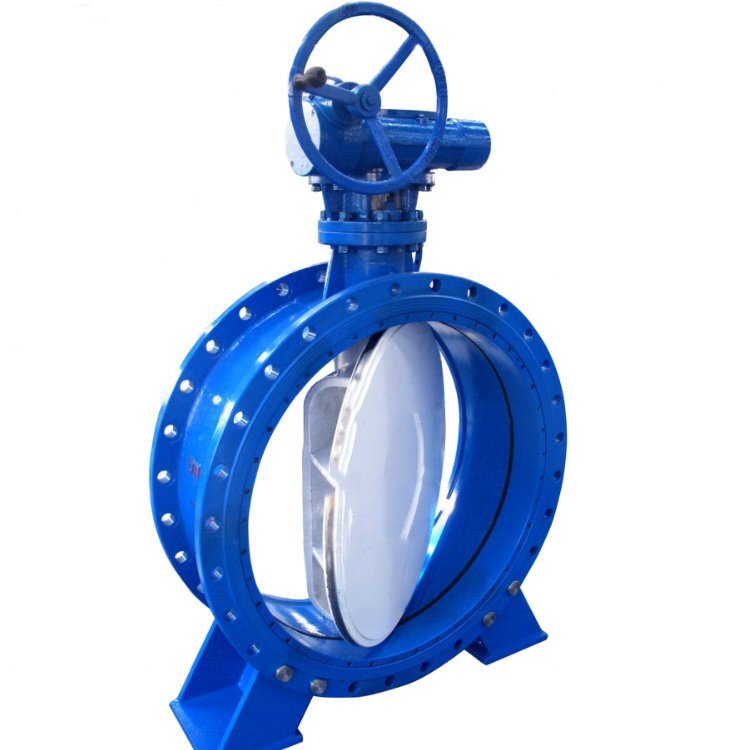
RMT’s current butterfly valve product uses a double-eccentric flanged design with an EPDM sealing ring. The product page states that the geometry is intended to reduce friction between the disc and seat during operation while maintaining sealing performance.
This design can help control wear, but it does not remove the need for correct installation, actuator setting, and periodic inspection.
A Better Troubleshooting Sequence for Soft Seal Butterfly Valve Leakage
When a Soft Seal Butterfly Valve begins leaking, immediately replacing the sealing ring can waste time if the root cause lies somewhere else. A more useful troubleshooting sequence is to move from system conditions toward the actual sealing component.
First, confirm whether the valve is really reaching the intended closed position. Check gearbox travel, actuator stops, limit settings, shaft movement, and any recent work on the operating mechanism.
Next, inspect pipeline alignment and external loads. Look for flange misalignment, unsupported piping, uneven bolt loading, or installation stress that may affect the valve body.
The sealing area should then be checked for debris, sediment, coating fragments, and uneven contact marks. Only after these conditions have been excluded should the elastomer itself be evaluated for aging, deformation, abrasion, or permanent damage.
This sequence is useful because it distinguishes a damaged seal from a seal that is working under the wrong conditions.
RMT Soft Seal Butterfly Valve for Water Pipeline Projects
RMT provides a Soft Seal Butterfly Valve solution through its Double Eccentric Flanged Butterfly Valve range. The current product uses a ductile iron body and disc, EPDM sealing components, an SS304 valve seat and shaft, and bronze or brass bushings. Available driving methods include worm gear and electric operation.
The current product page lists DN300–DN2400 sizes, PN10 and PN16 pressure ratings, BS5155 as the design and test standard, and EN1092-2 flange connections. Water is listed as the applicable medium, with a stated temperature range of 0–80°C.
For project supply, these parameters should be confirmed together rather than separately. Valve size, operating pressure, flange standard, medium, installation orientation, operating method, and actuator requirements can all influence the final configuration.
If your project requires a Soft Seal Butterfly Valve, provide RMT with the DN, working pressure, medium, flange standard, operating method, actuator requirement, installation conditions, and quantity. This allows the technical team to review the sealing and connection configuration before production and reduce the risk of installation or operating mismatches later.
FAQ
1. Can a Soft Seal Butterfly Valve leak even if the EPDM seal has no visible damage?
Yes. Leakage may result from uneven seat compression, disc misalignment, incorrect actuator stops, trapped particles, pipeline distortion, or reduced elastomer resilience even when no obvious crack is visible.
2. Why should actuator settings be checked when a butterfly valve leaks?
The actuator may indicate a closed position before the disc has reached the correct sealing position. Incorrect stop or limit settings can therefore prevent full shut-off.
3. Can flange misalignment cause a Soft Seal Butterfly Valve to leak?
Yes. Significant installation stress can affect valve body alignment and change the relationship between the disc and sealing surface, leading to uneven sealing contact.
4. What information should be provided for a Soft Seal Butterfly Valve project?
Useful information includes valve size, working pressure, medium, flange standard, operating method, actuator requirements, installation conditions, and required quantity.
Conclusion
Leakage from a Soft Seal Butterfly Valve does not automatically mean the sealing ring has failed. The real cause may be uneven compression, incorrect disc position, pipeline alignment, trapped debris, actuator adjustment, or changes in elastomer condition.
A more effective approach is to evaluate the sealing system as a whole before replacing components. For water pipeline projects, RMT can support Soft Seal Butterfly Valve configuration and technical confirmation based on actual connection, pressure, operating, and installation requirements.
Post time: Sep-18-2026