




In industrial and municipal pipeline systems, selecting the right type of valve is critical for ensuring operational efficiency, safety, and longevity. Among the various valve options, the seated gate valve stands out for its ability to provide reliable shutoff and precise flow isolation in demanding environments. For B2B decision-makers, engineers, and procurement specialists, understanding the purpose, design, and applications of seated gate valves is essential for optimizing system performance and minimizing maintenance costs.
What Is a Seated Gate Valve?
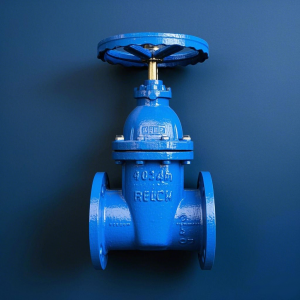
A seated gate valve is a type of linear motion valve that uses a gate and seating mechanism to control fluid flow. The “seat” refers to the surface within the valve body against which the gate presses to stop flow completely. Unlike standard gate valves that may rely on flexible or wedge-shaped gates, seated gate valves have a clearly defined sealing interface, enhancing leak prevention and operational reliability.
Key characteristics include:
● Linear motion operation with a full or partial stroke to open or close the valve
● Metal-to-metal or soft-seat sealing depending on design requirements
● Suitable for low, medium, and high-pressure systems
● Full bore design minimizing flow resistance and pressure drop
How Seated Gate Valves Work
Seated gate valves operate on a straightforward principle. The valve gate moves up or down to either allow fluid to pass or block the pipeline. When the gate contacts the valve seat, a tight seal is formed that prevents leakage.
Features that differentiate seated gate valves from other gate valves include:
● Enhanced sealing: The dedicated seat ensures consistent shutoff
● Bidirectional capability: Can effectively block flow in both directions in most designs
● Durable contact surfaces: Metal or reinforced seats extend service life
● Smooth linear operation: Reduces wear and tear on the gate and seat
These characteristics make seated gate valves particularly valuable in systems where leak prevention is critical, such as water distribution, chemical processing, and industrial utilities.
Common Applications in B2B Industrial Systems
Seated gate valves are widely used across multiple industries due to their versatility and dependable sealing properties:
● Water Supply and Wastewater Systems: For isolating pipeline sections during maintenance or emergencies
● Oil and Gas Industry: Managing flow in process pipelines, storage tanks, and transport systems
● Chemical and Petrochemical Facilities: Handling corrosive or high-temperature fluids with appropriate material selection
● Power Generation Plants: Isolation of auxiliary systems and cooling water circuits
● Industrial Manufacturing: Controlling liquids or gases in production lines where leak prevention is critical
In all these applications, seated gate valves ensure that pipelines can be reliably isolated for maintenance, emergency shutdowns, or system expansion.
Advantages of Using Seated Gate Valves
For B2B applications, seated gate valves offer several advantages that enhance operational reliability and reduce lifecycle costs:
● Tight Shutoff Performance: Seated gate valves provide superior sealing compared to non-seated designs, reducing the risk of leakage and contamination
● Versatile Material Options: Available in cast iron, ductile iron, stainless steel, and carbon steel, suitable for diverse industrial applications
● Durability in Harsh Environments: Resistant to corrosion, abrasion, and high-pressure fluctuations
● Reduced Maintenance Requirements: The precise seating minimizes wear, decreasing the frequency of repairs or replacements
● Energy Efficiency: Full bore and low-pressure drop designs help maintain system efficiency
These advantages make seated gate valves a preferred choice for projects requiring high reliability and long-term operational stability.
Seated Gate Valve Types and Configurations
Seated gate valves are available in various designs to suit different pipeline requirements:
● Solid Wedge Seated Gate Valves: Provide uniform sealing and durability for stable operating conditions
● Flexible Wedge Seated Gate Valves: Accommodate thermal expansion and reduce seat stress in fluctuating temperatures
● Parallel Seat Valves: Enable bidirectional sealing and high precision for critical applications
● Rising and Non-Rising Stem Designs: Rising stem valves offer visual position indication, while non-rising stem valves save space in confined installations
Selecting the correct type ensures that the valve performs optimally under the specific operating conditions.
Conclusion
Seated gate valves are a vital component in industrial and municipal piping systems, offering reliable flow isolation, superior sealing, and operational durability. Their specialized seat design, material versatility, and ability to handle demanding conditions make them a trusted solution for engineers, procurement managers, and system operators. Selecting the appropriate seated gate valve ensures efficient, safe, and long-lasting pipeline performance, supporting both operational reliability and lifecycle cost savings in B2B applications.
FAQ
Q1: What is the main function of a seated gate valve?
The main function is to provide reliable flow isolation with minimal leakage through a dedicated seating mechanism.
Q2: Are seated gate valves suitable for high-temperature or corrosive fluids?
Yes, provided the valve materials and seat design are selected appropriately for the operating conditions.
Q3: Which industries commonly use seated gate valves?
Water supply, wastewater, oil and gas, chemical processing, power generation, and industrial manufacturing.
Q4: How should seated gate valves be maintained for optimal performance?
Regular operation, inspection of the seat and stem, lubrication of moving parts, and alignment checks during scheduled maintenance.
Post time: Feb-05-2026