




Gate valves are one of the most widely used valves in industrial, municipal, and commercial piping systems. They are primarily designed for on/off flow control, allowing fluid to either pass freely or be completely blocked. Understanding the different types of gate valves is essential for engineers, procurement specialists, and plant operators to select the right valve for specific applications. This article explores what the three main types of gate valves are, their unique features, applications, and benefits.
What Is a Gate Valve?
A gate valve is a linear motion valve that uses a flat or wedge-shaped gate to control fluid flow. When the valve is fully open, the gate is completely lifted, allowing fluid to flow with minimal resistance. When fully closed, the gate presses against the valve seat, creating a tight seal that prevents any leakage. Gate valves are ideal for isolation purposes but are generally not used for throttling because partial opening can damage the gate and seats.
Gate valves are commonly made from materials such as cast iron, ductile iron, stainless steel, carbon steel, and bronze, making them suitable for a wide range of applications including water supply, oil and gas, chemical processing, and power plants.
The Three Types of Gate Valves
Gate valves can be broadly classified into three main types based on their design and construction:
-
Solid Wedge Gate Valve
-
Flexible Wedge Gate Valve
-
Split Wedge (or Parallel Slide) Gate Valve
Each type offers unique characteristics, advantages, and limitations that make it suitable for specific applications.
1. Solid Wedge Gate Valve
A solid wedge gate valve has a single-piece gate, typically made of metal or cast iron. The gate moves perpendicular to the flow direction and creates a seal by pressing directly against the valve seats.
Key Features:
● One-piece wedge design for simple construction
● High structural strength and durability
● Excellent for clean, non-abrasive fluids
Advantages:
● Reliable shut-off performance under normal operating conditions
● Lower cost compared to more complex wedge designs
● Suitable for high-pressure systems where minimal leakage is critical
Limitations:
● Less tolerant of thermal expansion or pipe misalignment
● Not ideal for fluids containing sediment or abrasive particles, as the rigid gate can become stuck
● Can be difficult to operate if the valve is frequently cycled
Common Applications:
● Water supply systems
● Steam pipelines
● Oil and gas transmission pipelines
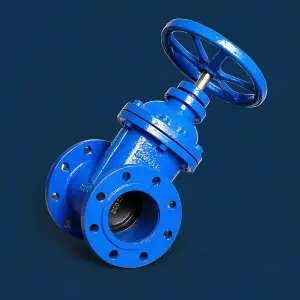
2. Flexible Wedge Gate Valve
The flexible wedge gate valve is designed to overcome the limitations of the solid wedge. The gate is slightly tapered or designed to flex under pressure, which allows it to adapt to changes in temperature, pressure, and minor misalignment in the pipeline.
Key Features:
● Single-piece but flexible wedge for better sealing performance
● Ability to adjust for thermal expansion and pipe misalignment
● Reduced risk of jamming compared to solid wedge valves
Advantages:
● Provides a tighter seal even under varying operating conditions
● Handles slight misalignment without damaging the seat or wedge
● Suitable for fluids with minor sediment
Limitations:
● Slightly more expensive than solid wedge valves
● Not ideal for very abrasive or corrosive fluids without special materials or coatings
Common Applications:
● Municipal water distribution
● Wastewater treatment
● Moderate-temperature steam and industrial process lines
3. Split Wedge or Parallel Slide Gate Valve
The split wedge gate valve, also called a parallel slide gate valve, consists of two gate pieces that are guided in parallel within the valve body. Unlike solid or flexible wedges, the two pieces can move independently, allowing them to adapt to thermal expansion, pressure fluctuations, and misalignment.
Key Features:
● Two-piece wedge (split or parallel) design
● Excellent sealing under high pressure and temperature variations
● Can accommodate abrasive or particulate-laden fluids with proper seat materials
Advantages:
● Superior performance in systems with thermal cycling or frequent operation
● Resistant to sticking or jamming even with minor pipeline misalignment
● Suitable for high-pressure and high-temperature applications
Limitations:
● Higher manufacturing cost than solid and flexible wedge valves
● Requires precise installation and maintenance to ensure optimal sealing
Common Applications:
● High-pressure steam systems
● Petrochemical and oil refining
● Industrial process pipelines with abrasive fluids
Key Considerations When Choosing a Gate Valve
Selecting the right gate valve depends on several factors:
● Fluid type and cleanliness: Solid wedges are best for clean fluids, while flexible or split wedges handle minor debris.
● Pressure and temperature conditions: Split wedge valves perform well under high pressure and temperature variations.
● Frequency of operation: Flexible and split wedge valves are more suitable for systems requiring frequent opening and closing.
● Pipe alignment and thermal expansion: Flexible and split wedges can tolerate misalignment and thermal stresses better than solid wedges.
● Cost and maintenance: Solid wedge valves are generally less expensive but may require more maintenance in challenging conditions.
By carefully evaluating these factors, engineers and procurement specialists can ensure that the selected valve provides reliable operation and long-term value.
Benefits of Using Gate Valves
Gate valves, regardless of type, offer several advantages in industrial and municipal applications:
● Full bore flow: Minimal pressure drop when fully open
● Positive shut-off: Reliable isolation for maintenance or emergency shutdowns
● Versatility: Suitable for water, steam, oil, gas, and other fluids
● Durable construction: Long service life with proper material selection and maintenance
When combined with the appropriate gate type, these benefits make gate valves a cost-effective and dependable solution for large-scale piping systems.
Conclusion
Understanding the three types of gate valves—solid wedge, flexible wedge, and split wedge (parallel slide)—is essential for selecting the right valve for any industrial or municipal application. Each type has unique advantages, from simplicity and cost-effectiveness to adaptability under pressure, temperature, and minor misalignment. Choosing the correct gate valve ensures reliable shut-off, long-term durability, and optimal system performance.
Whether you are designing a municipal water network, an industrial process line, or a high-pressure steam system, understanding these three types of gate valves helps in making informed decisions that reduce maintenance, improve reliability, and optimize operational efficiency.
FAQ
Q1: Can gate valves be used for throttling applications?
No, gate valves are designed for on/off flow control and are not recommended for throttling, as partial opening can damage the wedge and seats.
Q2: What is the difference between flexible wedge and split wedge gate valves?
Flexible wedge valves have a single-piece gate that flexes slightly for thermal expansion, while split wedge valves have two independent gate pieces that move separately to adapt to misalignment and high-pressure conditions.
Q3: Which type of gate valve is best for abrasive fluids?
Split wedge or parallel slide gate valves are preferred for abrasive fluids when paired with appropriate seat materials.
Q4: Are all gate valves bidirectional?
Most modern gate valves, especially split and flexible wedge types, are bidirectional, allowing fluid flow in either direction without affecting sealing performance.
Post time: Jan-15-2026