




In modern industrial and municipal pipeline systems, valves are not just auxiliary components—they are critical elements that directly affect safety, efficiency, and long-term operational stability. Choosing the right valve type can significantly reduce downtime, leakage risks, and maintenance costs. Among many valve options, the plug valve remains a widely used solution in applications where dependable isolation and fast operation are essential. Understanding the purpose of a plug valve is therefore a key consideration for engineers, EPC contractors, and procurement professionals involved in system design and equipment selection.
What Is a Plug Valve?
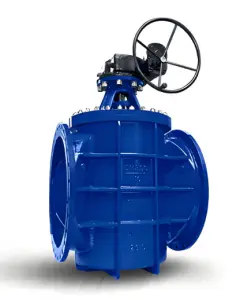
A plug valve is a quarter-turn valve that controls fluid flow using a cylindrical or tapered plug with one or more ports. When the plug rotates so that its port aligns with the pipeline, the valve opens and allows flow. When rotated 90 degrees, the solid portion of the plug blocks the passage, stopping the flow completely.
Unlike multi-turn valves, plug valves operate quickly and have a relatively simple internal structure. This simplicity makes them robust, easy to operate, and suitable for both manual and automated systems. Plug valves are commonly used in water systems, chemical processing, oil and gas facilities, and industrial utilities.
The Primary Purpose of a Plug Valve
The primary purpose of a plug valve is to provide reliable on–off isolation in a pipeline. Plug valves are not mainly designed for fine flow regulation; instead, they are used where secure shutoff, fast response, and minimal leakage are required.
Their core purposes include:
● Completely isolating sections of piping during maintenance or emergencies
● Ensuring tight shutoff to prevent leakage or cross-contamination
● Allowing rapid operation through quarter-turn motion
● Maintaining stable performance under varying pressure conditions
Because of these functions, plug valves are often installed at critical points where flow must be stopped quickly and safely.
How a Plug Valve Works
The working principle of a plug valve is straightforward. The plug fits closely within the valve body, creating a sealing surface. When rotated, the plug either aligns or blocks the flow path.
Key operational characteristics include:
● Quarter-turn operation for fast open and close cycles
● Direct flow path, which can reduce turbulence in open position
● Minimal internal cavities, lowering the risk of media buildup
● Compatibility with manual levers or automated actuators
This simple mechanism contributes to the valve’s durability and makes it especially suitable for frequent operation.
Key Advantages of Plug Valves in B2B Applications
From a B2B perspective, plug valves offer several advantages that support system reliability and lifecycle cost control:
● Tight Sealing Performance: Properly designed plug valves provide dependable shutoff with low leakage rates
● Simple Construction: Fewer internal parts reduce mechanical failure risks
● Fast Operation: Ideal for emergency shutdown and frequent on–off service
● Low Maintenance Requirements: Especially in non-lubricated designs
● Wide Media Compatibility: Suitable for liquids, gases, and slurries
These advantages make plug valves a practical solution in both infrastructure projects and industrial plants.
Typical Applications of Plug Valves
The purpose of a plug valve becomes clearer when considering its real-world applications across different industries:
● Water Supply and Wastewater Systems: Used for pipeline isolation, treatment units, and distribution networks
● Oil and Gas Industry: Applied in upstream, midstream, and downstream systems for hydrocarbon flow control
● Chemical Processing Plants: Suitable for corrosive or viscous fluids when lined with appropriate materials
● Power Generation Facilities: Installed in cooling water, auxiliary, and service pipelines
● Mining and Slurry Handling: Effective in abrasive environments where durability is required
In these sectors, plug valves are valued for their ability to maintain tight shutoff even under challenging operating conditions.
Plug Valves Compared with Other Valve Types
Understanding the purpose of a plug valve also requires comparing it with alternative valve solutions:
● Compared to gate valves, plug valves offer faster operation and better suitability for frequent cycling
● Compared to ball valves, plug valves handle abrasive or contaminated media more effectively
● Compared to butterfly valves, plug valves typically provide tighter shutoff in small to medium pipe sizes
These differences help engineers and procurement teams select plug valves when reliability and isolation are the primary goals.
Materials and Design Options
Plug valves are available in a wide range of materials and configurations to suit different system requirements:
● Valve bodies made from cast iron, ductile iron, carbon steel, or stainless steel
● Plug linings such as PTFE, rubber, or metal for chemical resistance and sealing performance
● Lubricated and non-lubricated designs depending on maintenance strategies
● Manual, electric, or pneumatic actuation options for automation integration
Choosing the correct material and design ensures long service life and stable performance.
Installation and Maintenance Considerations
While plug valves are relatively simple, correct installation and basic maintenance are still essential:
● Ensure proper alignment to avoid uneven wear on the plug and body
● Operate the valve periodically to prevent sticking in infrequently used lines
● Follow manufacturer guidelines for lubrication, if applicable
● Inspect sealing surfaces during scheduled maintenance intervals
Good installation and maintenance practices help maximize the valve’s operational lifespan.
Conclusion
The purpose of a plug valve is to deliver fast, reliable, and leak-resistant flow isolation in industrial and municipal pipeline systems. Its simple design, strong sealing capability, and adaptability to various media make it a dependable choice for engineers and decision-makers focused on safety, efficiency, and long-term value. For B2B buyers, understanding when and why to use a plug valve supports smarter specifications and more cost-effective project outcomes.
FAQ
Q1: What is the main purpose of a plug valve?
The main purpose is to provide reliable on–off isolation with fast operation and minimal leakage.
Q2: Are plug valves suitable for throttling flow?
Plug valves are primarily intended for isolation rather than precise flow regulation.
Q3: Which industries most commonly use plug valves?
They are widely used in water treatment, oil and gas, chemical processing, power generation, and mining.
Q4: How does a plug valve differ from a ball valve?
Plug valves generally perform better with abrasive or contaminated media, while ball valves are preferred for clean fluids.
Post time: Jan-27-2026