




Drainage and wastewater pipelines are different from clean water pipelines. The medium often contains sand, sludge, fibers, small debris, suspended solids, and other impurities. In this kind of system, preventing backflow is important, but keeping the valve passage less likely to block is just as important.
A 45° Rubber Plate Check Valve is designed for pipeline systems where reverse flow needs to be controlled while allowing dirty water to pass more smoothly. Its inclined 45-degree structure and rubber plate design help the valve respond to flow changes while reducing the risk of hard impact and blockage compared with some traditional check valve structures.
For sewage pump stations, drainage pipelines, wastewater treatment plants, industrial discharge systems, and municipal drainage networks, this type of check valve can help solve a very practical problem: how to stop backflow without making the pipeline harder to operate.
Wastewater Backflow Is More Than a Flow Direction Problem
When a pump stops, the water inside the pipeline may try to flow backward. In clean water systems, this already creates pressure fluctuation and possible impact. In wastewater systems, the problem becomes more complicated because the reverse flow may carry solids and sediment back toward the pump or lower pipeline sections.
If backflow is not controlled properly, it may cause:
- Pump reverse rotation;
- Sediment returning toward the pump;
- Unstable water level in drainage wells;
- Odor and contamination risk;
- Increased load during restart;
- Pipeline vibration;
- Valve seat wear;
- More frequent maintenance around pump outlets.
For drainage systems, a check valve is not only used to stop water from going backward. It also needs to handle the actual medium passing through the pipe.
Why Ordinary Check Valves May Struggle in Dirty Water
Some check valves work well in clean water but become less stable in wastewater conditions. The reason is simple: wastewater is not just water. It can carry particles, soft solids, grease, fibers, and sludge. These materials may collect around the disc, hinge, shaft, or sealing area.
If the internal flow path is not suitable, the valve may face several problems:
- Solids trapped near the closing part;
- Slower valve response;
- Incomplete closing;
- Increased pressure loss;
- Noise during flow reversal;
- More frequent cleaning;
- Shorter sealing life.
This does not mean ordinary check valves cannot be used in drainage systems. But when the medium contains more impurities, the valve structure needs to be more tolerant of real working conditions.
How the 45° Structure Helps Flow Pass More Smoothly
The 45° Rubber Plate Check Valve uses an inclined layout instead of a fully vertical closing path. This structure helps the flow pass through the valve body with less abrupt change in direction.
In drainage and wastewater pipelines, smoother passage matters because sharp internal changes may encourage solids to settle or collect. A more favorable flow path can reduce unnecessary resistance and help the medium move through the valve more naturally.
The 45-degree arrangement can help:
- Reduce sudden flow obstruction;
- Support smoother wastewater passage;
- Lower the chance of sediment staying inside the valve;
- Improve flow continuity in pump discharge lines;
- Reduce impact when flow direction changes;
- Make the valve more suitable for drainage media.
The key value is not only backflow prevention. It is also about making the valve work better with the reality of dirty water.
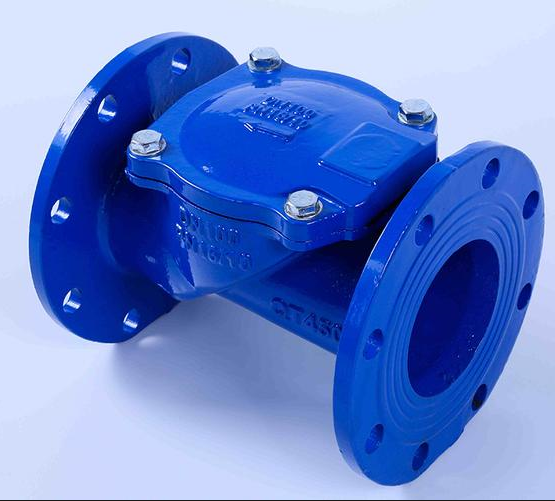
Rubber Plate Design Reduces Hard Metal Impact
In some check valves, the closing part may hit the valve seat strongly when flow reverses. In pump systems, this impact can create noise, vibration, and long-term wear.
A rubber plate design can help soften the closing action. Compared with hard metal-to-metal contact, the rubber plate provides a more flexible sealing surface and can reduce harsh impact during closure.
This is useful in drainage systems where pumps start and stop repeatedly. Each stop may create a flow reversal tendency. If the valve closes with heavy impact every time, the surrounding pipeline, flange connections, and valve sealing area may experience repeated stress.
A rubber plate check valve helps make the closing process less aggressive while still preventing reverse flow.
Where This Valve Is More Suitable
A 45° Rubber Plate Check Valve is commonly used in systems where the medium is not fully clean and backflow control is required.
Typical applications include:
- Sewage pump station discharge pipelines;
- Municipal drainage pressure pipelines;
- Wastewater treatment plant pipelines;
- Industrial wastewater discharge systems;
- Rainwater pumping systems;
- Drainage wells and lifting stations;
- Utility drainage networks;
- Pump outlet pipelines with suspended solids.
These systems often require a valve that can deal with flow reversal while allowing the medium to pass without frequent blockage.
Pump Stations Need Backflow Control After Shutdown
Pump stations are one of the most common places where check valves are used. When the pump runs, wastewater is pushed forward. When the pump stops, water in the discharge line may return if there is no effective backflow prevention.
In a sewage or drainage pump station, this reverse flow may bring water and solids back toward the pump well. Over time, this can affect pump operation, increase sediment accumulation, and make restarting less stable.
A 45° Rubber Plate Check Valve helps by closing when reverse flow begins. Its structure is better suited for drainage media than valves designed mainly for clean water service.
In pump station systems, the valve can help:
- Reduce wastewater returning to the pump side;
- Protect pump discharge pipelines;
- Limit sediment backflow;
- Support more stable pump restart;
- Reduce maintenance caused by repeated reverse flow;
- Improve drainage system reliability.
Why Low Resistance Matters in Drainage Pipelines
Drainage systems often need to move large volumes of water within a limited time, especially during rainfall, industrial discharge, or pump station operation. If the valve creates too much resistance, the pump has to work harder to push the same flow.
A valve with a smoother internal flow path can help reduce unnecessary pressure loss. This does not mean the valve alone determines system efficiency, but it can influence the overall operating condition of the pipeline.
Lower resistance is especially important in:
- Long discharge pipelines;
- High-flow drainage systems;
- Pumped wastewater lines;
- Rainwater pumping systems;
- Systems with frequent start-stop operation.
When the valve allows wastewater to pass more smoothly, the pump system can operate with less unnecessary burden.
Blockage Prevention Depends on Structure and Medium
No valve can completely eliminate blockage risk in all wastewater conditions. If the medium contains large debris, heavy sediment, rags, or fibrous materials, any pipeline component may face maintenance needs.
However, valve structure can reduce or increase the chance of trouble. A 45° Rubber Plate Check Valve is more suitable for dirty water than many clean-water-focused valves because its flow passage and flexible plate design are better aligned with drainage applications.
For long-term operation, several factors matter:
- Solid content in the medium;
- Flow velocity;
- Pump start-stop frequency;
- Pipeline slope and layout;
- Valve installation position;
- Internal coating condition;
- Maintenance access;
- Compatibility between rubber plate and medium.
In drainage systems, good valve performance is not only about sealing. It is also about whether the valve can keep working under imperfect water quality.
Clean Water and Wastewater Use Are Not the Same
In clean water pipelines, check valves mainly need to prevent reverse flow, reduce impact, and maintain sealing. The water contains fewer impurities, so the internal movement of the valve is usually easier to maintain.
In wastewater pipelines, the valve must face more difficult conditions. Sediment, sludge, suspended solids, and corrosive components may affect the valve body, rubber plate, and sealing area.
That is why the same check valve type should not be applied blindly across all systems. Drainage and wastewater projects need valves that match the medium, not only the pipe diameter.
A 45° Rubber Plate Check Valve is more closely related to drainage and wastewater service because its design is intended to handle dirtier water conditions more practically.
RMT 45° Rubber Plate Check Valve for Drainage Systems
RMT provides valves and pipe fittings for water supply, drainage, wastewater, pump stations, and industrial pipeline systems. For systems where wastewater backflow, pump shutdown return flow, sediment movement, and valve blockage are common concerns, the 45° Rubber Plate Check Valve can support more stable drainage pipeline operation.
In sewage pump stations, municipal drainage networks, rainwater pumping systems, industrial wastewater discharge lines, and water treatment plant pipelines, this valve helps control reverse flow while maintaining a more suitable passage for drainage media.
FAQ
1. What is a 45° Rubber Plate Check Valve used for?
It is used to prevent backflow in drainage, wastewater, pump station, and industrial discharge pipelines, especially where the medium may contain sediment or suspended solids.
2. Why is the valve designed with a 45° structure?
The 45-degree structure helps create a smoother flow path, reducing abrupt obstruction and making it more suitable for wastewater and drainage media.
3. Is a rubber plate check valve suitable for dirty water?
Yes, it is more suitable for dirty water than many clean-water check valves, but the actual medium condition still matters. Heavy debris or fibrous materials may require regular maintenance.
4. Where is this valve commonly installed?
It is commonly installed on sewage pump discharge lines, municipal drainage pipelines, wastewater treatment plant pipelines, rainwater pumping systems, and industrial wastewater pipelines.
Conclusion
A 45° Rubber Plate Check Valve is designed for drainage and wastewater systems where backflow prevention must work together with smoother dirty-water passage. Its inclined structure and rubber plate design help reduce hard impact, support flow continuity, and lower the risk of common problems caused by reverse flow.
For sewage pump stations, drainage networks, wastewater treatment plants, and industrial discharge systems, this valve provides a practical solution for pipelines that need reliable backflow control under more demanding water conditions.
Post time: Jul-28-2026