




In industrial and commercial piping systems, the choice of valve type can significantly affect operational efficiency, maintenance requirements, and overall cost. Among the most common options are plug valves and ball valves, both designed to control fluid flow. Understanding why one might choose a plug valve over a ball valve is essential for engineers, procurement teams, and facility managers seeking long-term reliability and performance in their systems.
Key Differences Between Plug Valves and Ball Valves
While both plug valves and ball valves perform similar functions—turning flow on or off—there are distinct differences that can influence their selection:
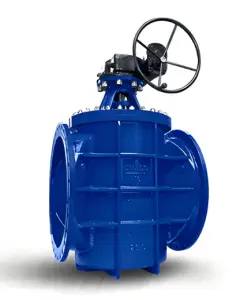
● Design Structure: A plug valve features a cylindrical or conically tapered plug with one or more hollow passageways that align with the flow when rotated. A ball valve, in contrast, uses a spherical ball with a drilled hole to regulate flow.
● Flow Control Precision: Plug valves allow more precise throttling in some applications due to the shape of the plug, whereas ball valves are primarily designed for full-flow on/off operation.
● Maintenance and Durability: Plug valves generally have fewer moving parts exposed to the flow, which reduces wear and makes them ideal for handling abrasive fluids. Ball valves, while robust, may require more frequent maintenance when exposed to slurry or particulate-laden liquids.
Advantages of Using Plug Valves
Choosing a plug valve over a ball valve offers several operational benefits in industrial applications:
● Resistance to Abrasion and Corrosion: The plug design provides a tight seal and is less prone to erosion when transporting abrasive or corrosive fluids. This makes plug valves suitable for chemical plants, wastewater systems, and slurry pipelines.
● Simpler Maintenance: Many plug valves are designed for easy cleaning and repair without disassembling the entire system. Lubricated plug valves, for instance, can be maintained while still in place, reducing downtime.
● Compact and Space-Saving: Plug valves often require less installation space than ball valves of equivalent flow capacity, which can be critical in tightly packed piping layouts.
● Versatility in Flow Direction: Certain plug valve designs allow multi-port configurations (e.g., three-way or four-way valves) that are not as easily implemented with ball valves. This flexibility supports more complex process routing without adding additional piping.
● Long-Term Reliability in High-Temperature Systems: Plug valves can operate effectively under high temperature and pressure conditions where some ball valves may experience seal degradation or excessive torque requirements.
When a Ball Valve Might Be Less Suitable
Although ball valves are widely used for their quick operation and leak-tight performance, they may be less ideal under certain conditions:
● Handling Abrasive Fluids: Ball surfaces can wear quickly when exposed to sand, slurry, or other particulate matter, leading to leakage and increased maintenance costs.
● Frequent Flow Adjustment: Ball valves are primarily designed for simple on/off control. Using them for throttling can damage the ball and seat over time, whereas plug valves can handle moderate throttling more effectively.
● Space Constraints for Multi-Port Routing: Installing multiple ball valves to achieve complex routing increases both cost and system complexity. Plug valves with multiple ports can simplify piping layouts.
Practical Applications of Plug Valves
Plug valves are widely used across industries where durability, low maintenance, and flexible flow control are priorities:
● Chemical Processing: Resistant to aggressive chemicals and high temperatures, plug valves provide reliable service in harsh environments.
● Oil and Gas: Used for crude oil, natural gas, and refined product pipelines where flow control and tight sealing are critical.
● Water and Wastewater Treatment: Abrasive particles in sludge or treated water can erode ball valves quickly, making plug valves a better long-term solution.
● Food and Beverage Industry: Hygienic plug valve designs facilitate cleaning and prevent contamination, making them suitable for fluid handling in production lines.
Conclusion
Selecting between a plug valve and a ball valve depends on the specific requirements of the application. Plug valves excel in handling abrasive or corrosive fluids, providing reliable sealing in high-temperature systems, and offering flexibility in flow routing. While ball valves are excellent for straightforward on/off applications and rapid operation, plug valves deliver long-term durability, easier maintenance, and versatility in complex industrial setups. For procurement teams and engineers aiming for efficiency, reduced downtime, and system longevity, understanding the advantages of plug valves is essential when designing or upgrading piping systems.
FAQ
Q1: Can a plug valve be used for throttling applications?
Yes, plug valves can handle moderate throttling, making them suitable for applications where flow control needs adjustment without damaging the valve.
Q2: Are plug valves more expensive than ball valves?
The initial cost can vary depending on material and design, but plug valves often provide lower long-term maintenance costs, which can offset higher upfront expenses.
Q3: What types of fluids are best suited for plug valves?
Plug valves are ideal for abrasive, corrosive, or high-temperature fluids, including chemicals, slurries, crude oil, and wastewater.
Q4: Can plug valves replace ball valves in existing systems?
In many cases, yes. However, careful consideration of port alignment, piping layout, and operational requirements is necessary before replacement.
Post time: Jan-06-2026