




Air management is one of the most important yet often overlooked aspects of pipeline system design. In water transmission networks, wastewater systems, and industrial pipelines, trapped air can reduce flow efficiency, increase energy consumption, create pressure surges, and even damage equipment. The Ductile Iron Air Valve is specifically designed to solve these issues by automatically releasing accumulated air and allowing safe air intake during system operation.
For B2B engineers, water utility operators, and infrastructure contractors, selecting a reliable ductile iron air valve is essential for maintaining stable pipeline performance and reducing long-term operational risks.
What Is a Ductile Iron Air Valve?
A ductile iron air valve is a specialized valve installed in pipeline systems to remove trapped air pockets and regulate air movement during filling, draining, and normal operation. The valve body is manufactured from ductile iron, a material known for its high strength, impact resistance, and durability under pressure.
Unlike manual venting methods, air valves work automatically by detecting changes in air volume and pressure inside the pipeline.
The valve typically performs two important functions.
● Releases trapped air that accumulates during pipeline operation
● Allows air to enter the pipeline during draining to prevent vacuum formation
Without proper air control, pipelines may suffer from reduced efficiency, unstable pressure, or severe water hammer effects.
Why Air Control Matters in Pipeline Systems
Many pipeline problems originate from trapped air rather than the liquid itself. Air pockets can interfere with fluid movement and create operational instability throughout the system.
Reduced Flow Efficiency
Air accumulation reduces the effective flow area inside the pipe, increasing resistance and lowering system efficiency.
Water Hammer Risk
Sudden movement of trapped air can create pressure surges capable of damaging pumps, valves, and pipe connections.
Increased Energy Consumption
Pumps must work harder when air restricts fluid flow, resulting in higher operational costs.
Vacuum Conditions
When pipelines are drained without proper air intake, vacuum pressure may cause pipe deformation or collapse.
Ductile iron air valves help prevent these issues by maintaining balanced air movement within the system.
Structural Design and Working Principle
The design of a ductile iron air valve focuses on automatic operation, reliable sealing, and long-term durability in demanding environments.
Valve Body
The body is commonly made from high-strength ductile iron with epoxy coating protection against corrosion and moisture.
Float Mechanism
Inside the valve, a float rises and falls according to water level and air accumulation. This movement controls the opening and closing of the exhaust port.
Air Exhaust Port
When air collects in the valve chamber, the float drops and opens the exhaust port, releasing trapped air automatically.
Vacuum Intake Function
During pipeline draining or sudden pressure loss, the valve opens to allow atmospheric air into the system, preventing vacuum damage.
This fully automatic operation makes ductile iron air valves highly efficient for continuous pipeline management.
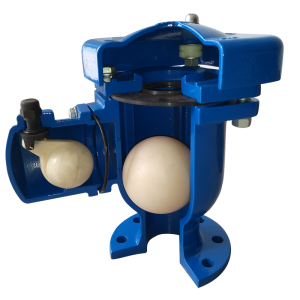
Main Types of Ductile Iron Air Valves
Different pipeline systems require different air management solutions. Several types of ductile iron air valves are commonly used across industrial and municipal applications.
● Single orifice air valve for releasing small accumulated air pockets
● Double orifice air valve for both large air release and vacuum intake
● Combination air valve integrating multiple air control functions
● Kinetic air valve designed for rapid pipeline filling and draining
● Sewage air valve engineered for wastewater systems containing solids and gases
Choosing the correct valve type improves operational efficiency and protects infrastructure performance.
Applications Across Water and Industrial Industries
Ductile iron air valves are widely used in systems where stable fluid movement and pressure management are critical.
Municipal Water Supply Networks
Air valves maintain efficient water distribution and reduce pipeline pressure fluctuations.
Wastewater Treatment Plants
Specialized sewage air valves handle corrosive gases and contaminated water conditions.
Irrigation Systems
Large agricultural pipelines require proper air release to maintain consistent water delivery.
Pumping Stations
Air valves protect pumps from pressure instability and cavitation risks.
Industrial Processing Pipelines
Factories using cooling water or process fluids rely on air valves for smooth system operation.
Their versatility makes them an important component in modern infrastructure projects.
Advantages of Ductile Iron Material
Material selection significantly affects valve durability and operational lifespan. Ductile iron offers several advantages over traditional cast iron materials.
● Higher tensile strength improves pressure resistance
● Better impact resistance reduces risk of cracking
● Excellent durability supports long-term operation
● Cost-effective compared with stainless steel alternatives
● Suitable for underground and outdoor installations
Because of these properties, ductile iron has become one of the most widely used materials for industrial air valves.
Maintenance and Operational Reliability
Although ductile iron air valves are designed for low maintenance operation, regular inspection remains important for long-term efficiency.
● Inspect float movement periodically
● Check sealing surfaces for wear or leakage
● Remove accumulated debris from valve chambers
● Verify proper operation during pipeline startup and shutdown
● Reapply protective coatings if external corrosion appears
Routine maintenance helps prevent blockage and ensures consistent automatic operation.
Future Demand for Ductile Iron Air Valves
As global investment in water infrastructure, irrigation systems, and industrial utilities continues to grow, demand for reliable air management equipment is increasing rapidly. Modern smart water systems also require more efficient pressure control and pipeline protection solutions.
Ductile iron air valves meet these evolving requirements through durable construction, automatic functionality, and compatibility with large-scale infrastructure systems.
For manufacturers, distributors, and project contractors, this growing demand creates strong long-term market opportunities.
Conclusion
The Ductile Iron Air Valve plays a critical role in protecting pipeline systems, improving flow efficiency, and preventing operational damage caused by trapped air and vacuum conditions. Its automatic operation, durable construction, and wide application range make it an essential component in municipal, agricultural, and industrial infrastructure.
For B2B engineers and procurement professionals, investing in high-quality ductile iron air valves supports safer system operation, lower maintenance costs, and improved long-term pipeline reliability. As modern water and industrial systems continue expanding, air management solutions will remain increasingly important for efficient infrastructure performance.
FAQ
1. What is the main purpose of a ductile iron air valve?
It is used to release trapped air from pipelines and allow air intake during draining to prevent vacuum formation.
2. Why is ductile iron commonly used for air valves?
Ductile iron offers high strength, excellent durability, and strong resistance to pressure and impact.
3. Where should air valves be installed in a pipeline system?
They are typically installed at high points where air naturally accumulates.
4. What industries commonly use ductile iron air valves?
They are widely used in municipal water systems, wastewater treatment plants, irrigation projects, and industrial pipelines.
Post time: May-14-2026