




Air management is an important factor affecting the performance and reliability of water pipeline systems. During operation, air can accumulate at high points of pipelines, reduce flow efficiency, increase pressure fluctuations, and create additional challenges for system control. A Double Orifice Air Valve is designed to manage these air-related issues by providing both large-volume air release and small air discharge functions within a single valve structure.
Unlike simple air release devices that focus only on removing small amounts of trapped air, a Double Orifice Air Valve is designed to handle different air conditions throughout the pipeline operation cycle. By improving air movement and maintaining proper hydraulic conditions, it helps pipelines operate more efficiently while reducing the risks associated with air accumulation.
What Is a Double Orifice Air Valve?
A Double Orifice Air Valve is a type of automatic air valve that uses two separate openings to manage air inside a pipeline. One orifice is designed for releasing large amounts of air during pipeline filling, while the smaller orifice continuously removes smaller air pockets that collect during normal operation.
When a pipeline is initially filled with water, large volumes of air must be discharged quickly to allow smooth filling and prevent air compression. The large orifice provides a high-capacity passage for this purpose. Once the pipeline reaches normal operating conditions, the smaller orifice continues to release accumulated air that may otherwise reduce flow performance.
This dual-function design allows the valve to respond to different operating situations. Instead of using separate devices for different air release requirements, a Double Orifice Air Valve combines multiple functions into one compact solution.
Why Does Air Accumulation Affect Pipeline Efficiency?
Air trapped inside a pipeline can significantly influence system performance. Although air may seem harmless compared with the transported liquid, accumulated air pockets can change the way fluid moves through the pipeline.
One major effect is increased flow resistance. When air collects at high points, it reduces the effective water passage area and can interfere with stable fluid movement. This may require additional pumping energy to maintain the expected flow rate.
Air accumulation can also contribute to unstable pressure conditions. Compressed air pockets can expand and contract as system pressure changes, creating fluctuations that affect pipeline operation. In some cases, sudden changes in flow conditions may contribute to pressure surges or water hammer effects.
A Double Orifice Air Valve helps address these issues by allowing unwanted air to leave the system while also allowing air to enter when necessary to prevent excessive negative pressure conditions.
How Does a Double Orifice Air Valve Improve Pipeline Performance?
The main advantage of a Double Orifice Air Valve is its ability to manage air under different pipeline conditions. Its two-orifice structure allows it to perform multiple functions that support more stable operation.
Efficient Air Release During Pipeline Filling
During pipeline filling, large quantities of air must be removed quickly. If air cannot escape effectively, it may become trapped and prevent the pipeline from filling properly. The large orifice in a Double Orifice Air Valve provides a larger opening for rapid air discharge. This reduces filling resistance and helps water enter the pipeline more smoothly. Efficient air removal during startup is particularly important for long-distance pipelines, elevated pipeline sections, and systems with complex layouts where air naturally collects at high points.
Continuous Removal of Small Air Pockets
Even after a pipeline reaches normal operation, small amounts of air can enter the system through dissolved gases, pumps, fittings, or operational changes. Over time, these small air bubbles may accumulate and affect hydraulic performance. The smaller orifice allows continuous automatic air release during normal operation. By removing these smaller air pockets, the valve helps maintain more consistent flow conditions and reduces the possibility of gradual efficiency losses.
Protection Against Negative Pressure Conditions
A Double Orifice Air Valve is not only designed to release air but can also allow air to enter the pipeline under certain conditions. When pipelines drain or experience sudden pressure drops, vacuum conditions may develop.
Allowing air to enter helps reduce the risk of pipeline deformation, damage, or unstable operation caused by excessive negative pressure. This function is especially valuable in systems where flow conditions change frequently.
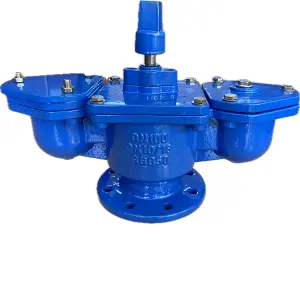
Key Factors When Selecting a Double Orifice Air Valve
Selecting the correct Double Orifice Air Valve requires consideration of the pipeline conditions, operating environment, and required air management performance. A valve that is suitable for one application may not provide the same performance in another.
Important factors include:
-
Pipeline size and flow conditions: The valve size should match the pipeline requirements and expected air release volume.
-
Operating pressure: The valve must be suitable for the system’s minimum and maximum pressure conditions.
-
Installation location: Air valves are commonly installed at pipeline high points where air naturally accumulates.
-
Valve material: Materials should be compatible with the transported medium and environmental conditions.
-
Air release capacity: The valve should provide sufficient capacity for both large-volume air discharge and continuous small-air release.
-
Maintenance requirements: The internal components should allow reliable operation and convenient inspection when necessary.
Proper selection requires evaluating the complete operating condition rather than choosing a valve only based on pipeline diameter.
How Does Valve Design Affect Long-Term Reliability?
The internal design of a Double Orifice Air Valve directly affects its ability to maintain stable performance over time. Components such as floats, sealing mechanisms, valve seats, and internal passages must work together to provide reliable air control.
The float mechanism is particularly important because it controls the opening and closing of the orifices according to water and air conditions. A properly designed float system helps prevent unnecessary water leakage while ensuring effective air discharge.
Sealing performance is another critical factor. If the sealing components cannot maintain proper contact after repeated operation, the valve may experience leakage or reduced efficiency. Material selection, manufacturing precision, and resistance to corrosion all influence long-term performance.
In addition, the valve should be designed to handle the actual water quality and operating environment. Sediments, corrosion, and impurities inside the pipeline can affect moving components, making structural reliability an important consideration.
Common Problems Caused by Improper Air Valve Selection
Using an unsuitable air valve can reduce pipeline performance instead of improving it. One common issue is insufficient air release capacity, where trapped air remains inside the pipeline because the valve cannot handle the required air volume.
Another problem is selecting a valve without considering pressure conditions. A valve designed for lower pressure applications may not provide reliable operation when installed in a higher-pressure pipeline.
Incorrect installation location can also reduce effectiveness. Even a properly designed Double Orifice Air Valve may not perform well if it is installed away from areas where air naturally accumulates.
For these reasons, product selection should consider pipeline design, pressure conditions, flow characteristics, and installation requirements together.
Choosing the Right Double Orifice Air Valve for Your Pipeline
A Double Orifice Air Valve can play an important role in improving pipeline efficiency by controlling air movement throughout different operating stages. However, achieving reliable performance depends on selecting a valve that matches the actual system requirements.
When evaluating a suitable product, consider air release capacity, pressure rating, material compatibility, installation conditions, and long-term maintenance needs. A properly selected valve can help reduce air-related problems, improve hydraulic stability, and support more reliable pipeline operation. For industrial and water management applications, understanding the relationship between valve design and pipeline conditions is essential. The right Double Orifice Air Valve should not only remove trapped air effectively but also provide consistent performance throughout the service life of the system.
Conclusion
A Double Orifice Air Valve improves pipeline efficiency by managing both large volumes of air during filling and smaller air pockets during normal operation. Its dual-orifice design allows it to respond to changing pipeline conditions, helping maintain stable flow and reduce problems caused by trapped air. By considering factors such as pressure conditions, installation location, air release capacity, and valve construction, users can select a suitable air valve for their specific pipeline requirements. Proper air management is a key part of maintaining efficient, reliable, and durable pipeline systems.
Frequently Asked Questions
1. What is the main advantage of a Double Orifice Air Valve?
The main advantage is its ability to handle both large-volume air release and continuous small air discharge. This allows the valve to support different pipeline operating conditions with one device.
2. Where should a Double Orifice Air Valve be installed?
It is usually installed at high points of pipelines where air naturally accumulates. The exact installation location depends on pipeline design and operating conditions.
3. Can a Double Orifice Air Valve prevent water hammer?
It can help reduce risks related to air accumulation and pressure instability, but preventing water hammer depends on the overall pipeline design, flow control, and operating conditions.
4. How often does a Double Orifice Air Valve require maintenance?
Maintenance frequency depends on water quality, operating environment, and manufacturer recommendations. Regular inspection helps ensure that internal components continue to operate properly.
Post time: Oct-10-2026