




In large-scale water and industrial pipeline systems, valve selection is no longer just a matter of opening and closing flow. It is closely linked to system stability, leakage control, energy efficiency, and lifecycle cost management. Among all isolation valves used in modern infrastructure, the Resilient Seated Gate Valve has developed into a core solution because it combines sealing reliability with operational simplicity in a way that traditional metal-seated valves cannot consistently achieve.
For B2B buyers, project engineers, and infrastructure developers, this valve type is not simply a component but a long-term performance guarantee in water distribution and utility networks.
Why Resilient Seated Gate Valves Became an Industry Standard
The widespread adoption of resilient seated gate valves is not accidental, but the result of continuous engineering optimization driven by real operational challenges in water systems. Pipeline networks often face pressure fluctuations, buried installation conditions, and long service cycles without frequent maintenance access, which makes sealing reliability extremely important.
Unlike conventional gate valves that rely on rigid metal contact, resilient seated designs introduce elastic sealing materials that adapt to surface irregularities and pressure changes, ensuring consistent shut-off performance even after years of operation.
This shift in sealing philosophy has fundamentally improved pipeline reliability across multiple industries.
Engineering Structure Behind Stable Performance
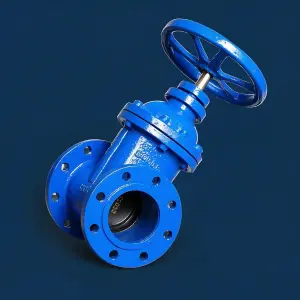
Although the valve appears simple externally, its internal design integrates multiple functional layers that work together to ensure performance stability under different operating conditions.
The structural system typically includes:
● A ductile iron valve body designed to withstand internal pressure and external soil load
● A fully rubber-coated wedge that creates elastic sealing contact
● A corrosion-protected stem that transfers torque smoothly and reliably
● An epoxy-coated internal chamber that isolates the metal body from water exposure
● Precision-machined guiding rails that stabilize wedge movement during operation
Each component is engineered not only for individual performance but also for system coordination, ensuring that the valve operates consistently under varying hydraulic conditions.
Sealing Behavior and Hydraulic Stability
One of the most important engineering advantages of resilient seated gate valves is how the sealing system responds to pressure changes within the pipeline.
When the valve is closed, the rubber-coated wedge is compressed against the valve seat, forming a continuous sealing line that adapts dynamically to pressure variations. This elastic behavior eliminates the micro-gaps that are common in rigid metal-to-metal sealing systems.
From a hydraulic perspective, this design contributes to:
● Stable shut-off performance even under low differential pressure
● Reduced micro-leakage in long-term static conditions
● Lower risk of sediment intrusion affecting sealing surfaces
● More predictable system pressure behavior during isolation operations
This makes the valve particularly suitable for distribution networks where pressure consistency is more important than flow regulation precision.
Operational Characteristics in Real Pipeline Systems
In real-world applications, valves are rarely operated under ideal conditions. They must perform reliably in environments affected by sediment, temperature variation, ground movement, and pressure surges.
Resilient seated gate valves demonstrate strong adaptability in such conditions because of their low-friction movement and simplified mechanical design. The wedge travels vertically with minimal resistance, which reduces torque demand and improves operational consistency.
Key operational characteristics include:
● Smooth opening and closing behavior with reduced mechanical resistance
● Consistent torque performance across long service cycles
● Reduced sensitivity to minor debris compared to rigid sealing systems
● Stable function in both fully buried and above-ground installations
● Compatibility with manual, electric, and automated actuation systems
These characteristics make the valve suitable for both new infrastructure projects and system upgrades.
Application Logic Across Different Industries
Instead of being limited to a single sector, resilient seated gate valves are used in a wide range of infrastructure systems because their design aligns with universal fluid control requirements.
In municipal water distribution systems, they function as isolation points that ensure maintenance can be performed without disrupting entire network segments. In irrigation systems, they support long-distance water delivery where leakage control directly impacts efficiency. In industrial utilities, they provide dependable shut-off capability for cooling water and auxiliary pipelines.
In wastewater systems, their corrosion-resistant construction and sealed design help maintain performance even when exposed to chemically aggressive or particle-rich media.
The adaptability of this valve type is one of the main reasons it has become a default specification in many engineering standards.
Long-Term Performance and Lifecycle Considerations
From a procurement and lifecycle cost perspective, the value of a resilient seated gate valve is not only in its initial purchase cost but in its long-term operational behavior.
Because the sealing system reduces metal wear and internal friction, the valve maintains stable performance over extended periods without frequent recalibration or repair. This reduces maintenance downtime and lowers the total cost of ownership in large pipeline networks.
Lifecycle benefits typically include:
● Extended sealing durability under continuous pressure conditions
● Reduced frequency of maintenance interventions
● Lower probability of emergency leakage repair
● Stable performance over long installation cycles in buried environments
These advantages are particularly important for infrastructure operators managing large distribution networks.
System Integration and Modern Infrastructure Trends
Modern water infrastructure is increasingly moving toward automation, remote monitoring, and intelligent control systems. Within this context, resilient seated gate valves are being integrated into smart pipeline networks through electric actuators and monitoring modules.
Although the valve itself is mechanically simple, its compatibility with automation systems allows it to function as a controllable node within larger digital infrastructure platforms.
This integration supports:
● Remote opening and closing operations
● Real-time system pressure management
● Centralized pipeline control strategies
● Predictive maintenance planning based on usage data
As infrastructure systems evolve, mechanical reliability combined with digital control compatibility becomes increasingly important.
Conclusion
The Resilient Seated Gate Valve represents a practical engineering response to the challenges of modern pipeline systems, where long-term sealing reliability, low maintenance requirements, and operational stability are essential. Its elastic sealing mechanism, corrosion-resistant structure, and adaptable design make it suitable for a wide range of municipal, industrial, and utility applications.
For B2B engineering teams and procurement decision-makers, this valve type offers a balance between performance stability and lifecycle efficiency. As global infrastructure continues to expand and modernize, resilient seated gate valves will remain a foundational component in water and fluid management systems.
FAQ
1. Why is a resilient seated gate valve widely used in water systems?
Because it provides reliable sealing performance, low leakage risk, and stable operation over long service periods.
2. What makes its sealing system different from traditional gate valves?
It uses an elastic rubber-coated wedge instead of metal-to-metal contact, improving sealing adaptability and reducing wear.
3. Is it suitable for underground installation?
Yes, its corrosion-resistant coating and durable structure make it ideal for buried pipeline environments.
4. Can it be used in automated systems?
Yes, it can be equipped with electric or pneumatic actuators for integration into modern automated pipeline networks.
Post time: May-26-2026