




In today’s highly automated industrial systems, valve technology has evolved rapidly with advanced control valves, smart actuators, and high-efficiency flow regulation devices. However, despite all these innovations, the gate valve remains one of the most frequently specified isolation components in pipeline engineering projects worldwide.
The reason is not tradition, but engineering logic. When pipeline systems require long-term stability, full-bore flow performance, and predictable shut-off behavior, gate valves continue to provide a level of operational reliability that more complex valve designs often cannot economically replace.
For B2B buyers, system designers, and EPC contractors, understanding why gate valves are still selected in modern projects is essential for making cost-effective and technically sound decisions.
Why is full-bore isolation still critical in pipeline systems?
In pipeline engineering, every component that creates resistance affects energy consumption and system efficiency. Gate valves are often selected because they provide a nearly unobstructed flow path when fully open, which is a critical advantage in long-distance transport systems.
This design behavior directly supports system performance in several ways:
● Reduces overall head loss in pumping systems
● Improves hydraulic efficiency in large diameter pipelines
● Maintains stable flow distribution in municipal networks
● Minimizes turbulence that can damage downstream equipment
● Supports high-capacity transport without pressure degradation
Because of these characteristics, gate valves are often positioned in main transmission lines rather than control sections.
The engineering logic behind on/off isolation preference
Unlike control valves that regulate flow dynamically, gate valves are engineered for binary operating conditions: fully open or fully closed. This simplicity is not a limitation but a deliberate design choice that aligns with system safety requirements.
In engineering practice, this means:
● Isolation points must be absolutely reliable under pressure
● Leakage risk must be minimized in shut-off conditions
● Flow restriction during operation should be negligible
● Mechanical complexity should be reduced for long-term stability
Gate valves achieve this by using a linear motion wedge that presses against sealing surfaces only during closure, reducing continuous wear during operation.
Why do gate valves perform well in long-life infrastructure systems?
One of the most important considerations in B2B infrastructure projects is lifecycle performance rather than initial purchase cost. Gate valves are widely used because they perform reliably even after long periods of static operation.
Key performance advantages include:
● Stable sealing even after infrequent operation cycles
● Low internal friction during full opening condition
● Reduced risk of internal blockage compared to multi-turn throttling valves
● Strong mechanical tolerance under varying pressure conditions
● Compatibility with buried or hard-to-access pipeline systems
This makes them particularly suitable for underground water networks, fire protection mains, and industrial distribution pipelines where maintenance access is limited.
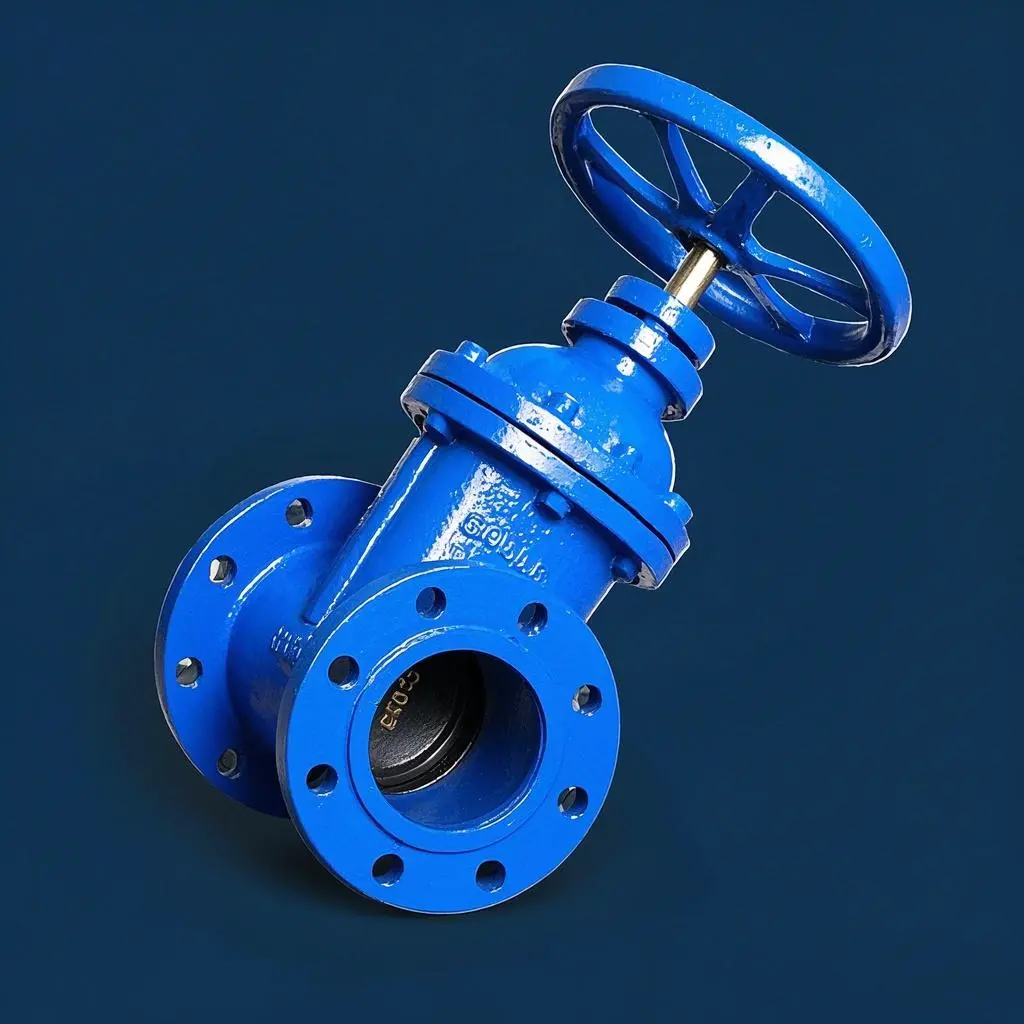
What makes gate valve design suitable for large-diameter pipelines?
Large-scale infrastructure projects require valves that can handle high flow volumes without introducing significant hydraulic loss. Gate valves are structurally well-suited for this requirement due to their straight-through design.
In large diameter systems, engineers prioritize:
● Minimum energy loss across long pipeline distances
● Structural strength under high internal pressure
● Reliable sealing under thermal expansion conditions
● Reduced risk of cavitation in steady-state flow systems
Gate valves meet these requirements effectively, especially in ductile iron and carbon steel configurations used in municipal and industrial networks.
Operational risks engineers consider before selecting gate valves
Although gate valves are widely used, engineers also evaluate certain operational limitations before specification. Understanding these trade-offs is essential in modern system design.
Common engineering considerations include:
● Not suitable for throttling or partial opening conditions
● Slow operation compared to quarter-turn valve types
● Potential wear if used in frequent cycling applications
● Larger installation footprint in confined spaces
● Stem exposure considerations in rising stem designs
Because of these factors, gate valves are typically chosen for isolation rather than active flow control.
Material selection and system compatibility factors
Material engineering plays a significant role in gate valve performance across different industries. Selection is usually based on fluid type, corrosion exposure, and system pressure class.
Typical material configurations include:
● Ductile iron for municipal water distribution networks
● Carbon steel for industrial pressure systems
● Stainless steel for corrosive or chemical environments
● EPDM or NBR sealing systems for long-term leakage prevention
● Fusion-bonded epoxy coatings for internal and external protection
Each material choice directly affects system durability, maintenance intervals, and operational reliability.
Why gate valves remain relevant despite advanced valve technologies
Modern pipeline systems increasingly adopt automation and intelligent flow control devices, yet gate valves continue to appear in baseline design specifications. The reason is not technological limitation but system architecture logic.
Gate valves remain relevant because they provide:
● Predictable mechanical behavior without control dependency
● Independence from electrical or pneumatic systems
● High tolerance in emergency shut-off applications
● Proven long-term field performance across industries
● Standardized design compatibility with global pipeline codes
In critical infrastructure systems, simplicity often translates into reliability.
How engineers integrate gate valves into system architecture
Rather than being used as standalone components, gate valves are strategically integrated into pipeline layouts as isolation points.
Typical engineering integration scenarios include:
● Main pipeline segmentation for maintenance isolation
● Pump station inlet and outlet control sections
● Branch line shut-off points in distribution networks
● Emergency isolation in fire protection systems
● Long-distance transmission pipeline block sections
This strategic placement ensures system flexibility without compromising operational safety.
Conclusion
The Gate Valve continues to play a fundamental role in modern pipeline engineering not because it is outdated, but because it aligns perfectly with core engineering principles such as reliability, hydraulic efficiency, and lifecycle stability.
In B2B infrastructure projects, where long-term performance and operational predictability are more important than technological complexity, gate valves remain one of the most rational and widely specified isolation solutions.
For engineers and procurement teams, the key value of gate valves lies in their ability to deliver consistent performance under real-world operating conditions, especially in large-scale water, industrial, and energy distribution systems.
FAQ
1. Why are gate valves still used in modern pipeline systems?
Because they provide reliable full-bore isolation, low pressure loss, and long service life in large infrastructure networks.
2. Can gate valves be used for flow regulation?
No. Gate valves are designed only for fully open or fully closed operation, not for throttling.
3. Where are gate valves most commonly installed?
They are typically used in municipal water systems, industrial pipelines, fire protection systems, and underground distribution networks.
4. What is the main limitation of gate valves?
Their main limitation is slow operation and unsuitability for frequent switching or flow control applications.
Post time: Jun-09-2026