




In industrial fluid transportation systems, stable operation does not depend only on pumps, control valves, and pipeline design, but also heavily relies on some “simple yet critical” safety components, among which the check valve is one of the most important. Although its structure is not complicated, it plays an irreplaceable role in preventing backflow, protecting equipment, and maintaining system pressure stability.
The core value of a check valve lies in its ability to automatically control one-way flow without any external power supply or manual intervention. In modern engineering projects, whether in municipal water systems or industrial process pipelines, check valves are considered essential protective components that ensure continuous system safety.
Why Does Reverse Flow Become a Major System Risk?
In most pipeline systems, the design is based on a fixed flow direction, and any reverse flow can disrupt the entire operating logic. Especially in pumping systems, once backflow occurs, it may cause the pump impeller to reverse instantly, generating severe mechanical stress and potentially damaging the equipment.
Reverse flow can also trigger water hammer effects, where pressure rises sharply within a very short time, causing significant stress on pipelines, flanges, and sealing structures. In industries requiring high fluid purity, such as chemical or food processing, backflow may also lead to contamination and production instability.
Because these risks are sudden and destructive, the check valve is designed as a passive protection device that continuously ensures unidirectional flow in the system.
How Does a Check Valve Operate Without External Power?
One of the most important features of a check valve is that it operates completely automatically without electricity, compressed air, or manual control. Instead, it relies entirely on the pressure difference within the pipeline.
When forward flow pressure reaches a certain level, the internal disc, flap, or ball is pushed open, allowing fluid to pass through the valve. When the flow slows down or reverse pressure occurs, the internal mechanism automatically returns to its closed position under the influence of gravity, spring force, or back pressure, thereby blocking reverse flow.
This fully self-acting mechanism allows the check valve to continuously operate as a passive safety device under all working conditions.
Key Application Industries of Check Valves
Check valves are widely used in almost all fluid transport systems, but their importance is especially significant in certain industries.
In municipal water supply and drainage systems, they prevent backflow and protect pumping stations. In wastewater treatment facilities, they help avoid contamination caused by reverse flow. In fire protection systems, they maintain stable pressure during emergency operation. In oil, gas, and chemical industries, they ensure process stability and protect critical equipment.
They are also widely used in HVAC systems, power plant cooling systems, and agricultural irrigation systems, where they serve as essential components throughout the entire fluid transportation network.
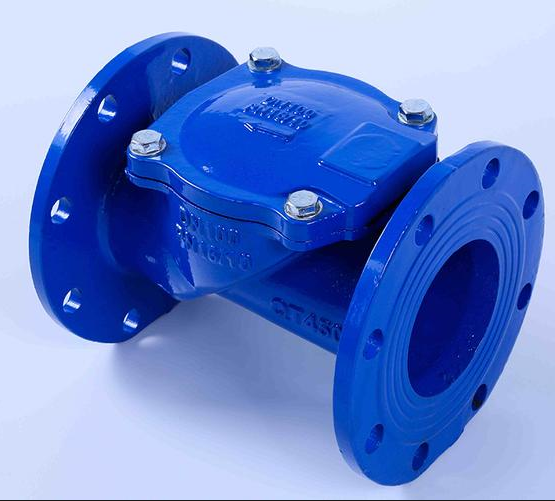
How Do Different Check Valve Types Meet Engineering Requirements?
Check valves are not a single design but come in multiple structural types, each optimized for different operating conditions.
Swing check valves are commonly used in large-diameter pipelines because they provide low pressure loss and smooth flow characteristics. Lift check valves are better suited for high-pressure and clean fluid systems due to their superior sealing performance. Dual plate check valves are widely used in compact systems where space is limited and fast closure is required.
Ball check valves perform well in systems with viscous or contaminated fluids because they are less prone to clogging. Silent check valves are designed for applications where noise reduction and water hammer control are critical, providing smoother and quieter closure performance.
Engineering Value of Check Valves in Reducing Water Hammer
Water hammer is one of the most damaging hydraulic phenomena in pipeline systems, caused by sudden changes in fluid velocity that generate strong pressure waves. If not properly controlled, it can damage pumps, pipelines, and sealing components.
Check valves play a critical role in reducing this risk by responding quickly to reverse flow conditions and controlling the closure process. Non-slam or silent check valve designs are especially effective, as they significantly reduce impact forces during closure, minimize system vibration, and improve overall operational stability.
Why Material Selection Is Critical for Long-Term Reliability
The performance of a check valve is strongly influenced by material selection. In municipal water systems, ductile iron is commonly used due to its strength and cost efficiency. In industrial high-pressure systems, carbon steel is often preferred for its durability.
In corrosive environments such as chemical processing or marine applications, stainless steel is the preferred choice. Sealing materials such as EPDM or NBR are essential for maintaining long-term leakage resistance, while epoxy coatings provide additional corrosion protection for extended service life.
Why Check Valves Remain Essential in Modern Engineering Systems
Although modern fluid control systems are increasingly automated and intelligent, check valves continue to maintain a critical position in global infrastructure. This is mainly because they provide reliable operation without external control and offer immediate protection in emergency conditions.
In large-scale water supply systems, industrial networks, and energy transportation systems, check valves are still fundamental safety components. Their value lies not in complexity but in reliability and simplicity.
Conclusion
Although check valves have a simple structure, they play a vital role in protecting industrial pipeline systems. By automatically preventing reverse flow and reducing water hammer effects, they ensure safe and stable operation of pumps, pipelines, and critical equipment. They are widely used across municipal, industrial, energy, and chemical sectors as essential passive safety components.
For engineering designers and B2B procurement decision-makers, selecting the appropriate check valve type, structure, and material is a key factor in ensuring system safety, efficiency, and long-term operational reliability.
FAQ
1. What is the core function of a check valve?
A check valve prevents reverse flow in pipelines and protects system equipment from damage caused by backpressure.
2. Why does a check valve not require external power?
Because it operates automatically based on pressure differences within the pipeline, without electricity or pneumatic systems.
3. Which type of check valve is best for reducing water hammer?
Silent or non-slam check valves are most effective because they close smoothly and reduce hydraulic shock.
4. What are the most important factors in selecting a check valve?
Key factors include fluid properties, system pressure, flow conditions, and installation environment, all of which determine the appropriate valve type.
Post time: Jun-11-2026