




In many industrial pipeline systems, fluid does not always flow in a perfectly clean condition. Water, oil, chemicals, cooling liquid, process media, and other fluids may carry rust, welding slag, sand, scale, fibers, or solid particles during transportation. If these impurities enter pumps, valves, flow meters, heat exchangers, nozzles, or other precision equipment, they may cause blockage, wear, pressure fluctuation, or even unexpected shutdown.
This is why a T-Type Basket Strainer plays an important role in pipeline protection. It is a practical filtration device installed directly in the pipeline to remove solid impurities from the fluid before they reach downstream equipment. With a strong housing, basket-shaped filter screen, and convenient removable structure, the T-Type Basket Strainer helps improve system reliability, reduce maintenance costs, and extend the service life of key equipment.
For industries such as petroleum, chemical processing, water supply and drainage, power plants, marine systems, and general industrial fluid transportation, a T-Type Basket Strainer is not only a simple filtering product, but also a protective component for long-term stable operation.
What Is a T-Type Basket Strainer?
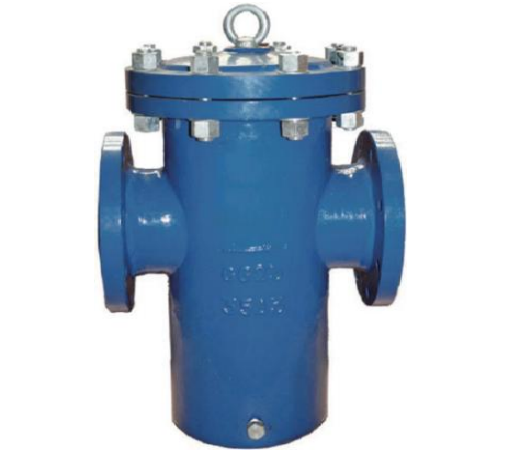
A T-Type Basket Strainer is a pipeline filtration device designed with a T-shaped structure. It is mainly composed of a sturdy housing, a basket-type filter screen, inlet and outlet connections, a cover, sealing parts, and other supporting components.
When fluid enters the strainer through the inlet, it passes through the internal basket screen. Solid particles and larger impurities are intercepted inside the basket, while clean fluid continues to flow through the outlet. The basket can be removed for cleaning or replacement during maintenance, making the product convenient for repeated use.
Compared with some compact strainers, the basket structure usually provides a larger filtering area and stronger impurity-holding capacity. This makes the T-Type Basket Strainer suitable for applications where the flow rate is relatively high or where the medium may contain a certain amount of solid particles.
How Does a T-Type Basket Strainer Work in a Pipeline?
The working principle of a T-Type Basket Strainer is direct and reliable. It does not require complex operation, power supply, or automatic control in most standard applications.
The basic working process includes the following steps:
- Fluid enters the strainer body through the inlet connection.
- The fluid is guided into the basket filter screen inside the housing.
- Solid particles are trapped by the mesh or perforated screen.
- Filtered fluid flows out through the outlet and continues to downstream equipment.
- When impurities accumulate, the basket can be removed and cleaned.
This simple filtration process helps prevent contaminants from entering important components. In many industrial systems, even small particles can gradually damage pumps, valve seats, seals, meters, and spray devices. By installing a T-Type Basket Strainer in the correct position, users can reduce these risks before they become costly problems.
Key Advantages of T-Type Basket Strainers
Strong Housing for Industrial Working Conditions
The outer shell of a T-Type Basket Strainer is designed to withstand pipeline pressure and working stress. Depending on the application, the housing can be made from materials such as cast steel, stainless steel, carbon steel, or other suitable metals.
A strong housing allows the strainer to work in demanding environments, including chemical plants, oil pipelines, water treatment systems, and industrial circulation systems. For users, this means better safety, longer service life, and stable performance under continuous operation.
Basket Screen with Efficient Impurity Collection
The internal filter screen is shaped like a basket, which gives it a larger surface area for filtration. This design helps intercept solid particles while allowing fluid to pass through smoothly.
The basket can be made with different mesh sizes or perforation specifications according to the required filtration accuracy. For coarse filtration, a larger opening size may be selected. For applications requiring better particle control, a finer mesh can be used.
This flexibility makes the T-Type Basket Strainer suitable for many fluid systems with different impurity levels.
Easy Installation and Maintenance
A major advantage of the T-Type Basket Strainer is its simple structure. It can be connected to the pipeline through flanged, threaded, or other connection types, depending on the project requirement.
During maintenance, operators usually only need to open the cover, remove the basket screen, clean the collected impurities, and reinstall the basket. This convenient maintenance method reduces downtime and helps keep the pipeline system running efficiently.
For factories and engineering projects, easy maintenance is especially valuable because it reduces labor time and improves operational efficiency.
Helps Protect Pumps, Valves, and Instruments
Many pipeline failures are not caused by the main equipment itself, but by impurities entering the system. Sand, scale, welding residue, and rust particles may damage sealing surfaces, block small flow channels, or affect measuring accuracy.
A T-Type Basket Strainer acts as a protective barrier before the fluid reaches sensitive equipment. It is often installed before pumps, control valves, flow meters, heat exchangers, pressure-reducing devices, and other important components.
By removing impurities in advance, the strainer helps reduce equipment wear and lowers the frequency of repairs.
Where Is a T-Type Basket Strainer Commonly Used?
The T-Type Basket Strainer has wide application because many industries need reliable impurity removal in pipeline systems.
Common application areas include:
- Petroleum and oil transportation systems
- Chemical processing pipelines
- Water supply and drainage systems
- Industrial circulating water systems
- Power plant auxiliary systems
- Marine pipeline systems
- HVAC and cooling water systems
- Food, beverage, and general process fluid lines
- Pump protection and valve protection systems
In these applications, the main purpose is not only to filter the fluid, but also to protect the full pipeline system from unstable operation caused by contaminants.
Maintenance Tips for Better Strainer Performance
Although a T-Type Basket Strainer is easy to maintain, regular inspection is still important. Good maintenance helps keep pressure stable and ensures continuous filtration performance.
Useful maintenance practices include:
- Check the pressure difference between inlet and outlet regularly.
- Clean the basket screen when pressure drop increases.
- Inspect the filter basket for damage, deformation, or corrosion.
- Replace sealing parts if leakage appears around the cover.
- Make sure the basket is installed correctly after cleaning.
- Choose the right cleaning interval based on impurity level and operating conditions.
For important pipeline systems, users can also prepare spare filter baskets to reduce maintenance time. This allows operators to replace the basket quickly and clean the used one later.
Why Does a T-Type Basket Strainer Improve System Stability?
A pipeline system becomes more stable when impurities are controlled before they reach downstream equipment. The T-Type Basket Strainer helps maintain smooth fluid flow, reduces sudden blockage, and protects expensive components from particle damage.
In real industrial operation, this can bring several practical benefits:
- Lower risk of pump damage
- Fewer valve failures
- More stable flow and pressure
- Less unplanned downtime
- Lower maintenance cost
- Longer service life of pipeline equipment
Because of these advantages, the T-Type Basket Strainer is often regarded as a basic but essential component in many fluid handling systems.
FAQ
1. What is the main function of a T-Type Basket Strainer?
The main function of a T-Type Basket Strainer is to remove solid impurities from fluid in a pipeline. It helps protect pumps, valves, meters, heat exchangers, and other downstream equipment from blockage, wear, and damage caused by particles.
2. What types of fluids can a T-Type Basket Strainer handle?
A T-Type Basket Strainer can be used for water, oil, chemical liquids, cooling water, process fluids, and other compatible media. The exact application depends on the material of the housing, basket screen, sealing parts, pressure rating, and temperature range.
3. How often should the basket screen be cleaned?
The cleaning frequency depends on the impurity content of the fluid and the working condition of the pipeline. If the pressure difference increases or the flow becomes unstable, the basket screen should be checked and cleaned in time.
4. Why choose a basket strainer instead of other pipeline filters?
A basket strainer usually has a larger filtering area and better impurity-holding capacity than some compact filters. It is also easy to remove, clean, and reinstall, making it suitable for industrial pipeline systems that require reliable protection and convenient maintenance.
Conclusion
A T-Type Basket Strainer is a reliable and practical filtration device for industrial pipeline systems. With a strong housing, basket-shaped filter screen, simple structure, and easy maintenance design, it can effectively intercept solid particles in fluid and protect downstream equipment from damage.
For petroleum, chemical, water supply and drainage, industrial circulation, and other fluid transportation systems, choosing the right T-Type Basket Strainer can improve system stability, reduce maintenance costs, and support long-term safe operation.
Post time: Jun-23-2026