




As municipal infrastructure continues to expand and modernize, water utilities and industrial operators are increasingly seeking valve solutions that combine durability, low maintenance requirements, and reliable flow control. Among the many valve standards used in water treatment and distribution systems, the AWWA C517 Plug Valve has earned a strong reputation for its ability to handle demanding operating conditions while maintaining long-term performance.
For engineers, project consultants, municipal authorities, and procurement professionals, understanding the features and advantages of AWWA C517 plug valves can help ensure the selection of equipment that delivers operational efficiency and reduced lifecycle costs.
What Is an AWWA C517 Plug Valve?
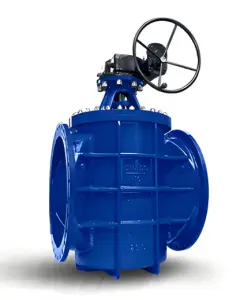
An AWWA C517 Plug Valve is a quarter-turn valve manufactured according to the standards established by the American Water Works Association (AWWA). The standard specifically covers resilient-seated eccentric plug valves used in water supply and wastewater treatment applications.
Unlike gate valves that require multiple turns to open or close, plug valves operate with a simple 90-degree rotation. The valve utilizes an eccentric plug design, which minimizes friction between the plug and seat during operation, resulting in smoother performance and extended service life.
Key characteristics include:
● Quarter-turn operation for fast opening and closing
● Resilient seating system for reliable shutoff performance
● Eccentric plug movement that reduces wear
● Full-port flow path with minimal obstruction
● Robust construction suitable for municipal infrastructure
Because of these features, AWWA C517 plug valves are widely used in applications where reliability and ease of operation are essential.
Why Do Water Utilities Prefer AWWA C517 Plug Valves?
One of the most common questions from engineers is why many municipalities choose plug valves instead of traditional gate valves or butterfly valves.
The answer lies in their operational advantages and maintenance-friendly design.
Benefits include:
● Excellent sealing performance under varying pressure conditions
● Reduced operating torque compared with conventional valve designs
● Ability to handle liquids containing suspended solids
● Long service life even in demanding wastewater environments
● Minimal seat wear due to eccentric plug movement
● Reduced risk of valve seizure after long periods of inactivity
Municipal operators often favor plug valves because they provide dependable performance while lowering maintenance costs over the life of the system.
How Does an Eccentric Plug Valve Work?
The working principle of an AWWA C517 plug valve differs significantly from many other valve types.
The valve contains an eccentrically mounted plug that rotates within the valve body. During opening and closing, the plug lifts away from the resilient seat before rotating, which minimizes friction and mechanical wear.
The operating sequence typically involves:
● The actuator or handwheel initiates plug rotation
● The eccentric mechanism lifts the plug slightly away from the seat
● The plug rotates through a quarter turn
● The flow passage becomes fully open or fully closed
● During closure, the plug gently compresses against the resilient seat to achieve a tight seal
This design helps maintain consistent performance even after thousands of operating cycles.
Where Are AWWA C517 Plug Valves Commonly Used?
The versatility of AWWA C517 plug valves makes them suitable for a wide range of municipal and industrial applications.
Typical installations include:
● Drinking water treatment facilities
● Wastewater treatment plants
● Raw water transmission systems
● Pumping stations
● Sludge handling systems
● Industrial water distribution networks
● Stormwater management facilities
● Reclaimed water systems
Their ability to handle both clean water and media containing suspended solids makes them particularly valuable in wastewater environments where traditional valves may experience excessive wear.
Advantages Over Other Valve Types
When comparing valve technologies, many engineers evaluate plug valves against gate valves and butterfly valves.
Several characteristics allow AWWA C517 plug valves to stand out.
Compared with Gate Valves
● Faster quarter-turn operation
● Lower risk of jamming due to debris accumulation
● Reduced maintenance requirements
● Better performance in wastewater applications
Compared with Butterfly Valves
● Superior shutoff performance in certain conditions
● Better handling of abrasive or solids-laden media
● Lower seat wear in demanding environments
● Enhanced reliability for isolation applications
These advantages make plug valves a practical solution for systems requiring dependable isolation and flow control.
Material Construction and Durability
AWWA C517 plug valves are designed for long-term service in challenging environments.
Common construction materials include:
● Ductile iron valve bodies for structural strength
● Stainless steel shafts and hardware for corrosion resistance
● Resilient elastomer seats for reliable sealing
● Fusion-bonded epoxy coatings for internal and external protection
● Nickel-coated or rubber-faced plugs for enhanced wear resistance
This combination of materials enables the valve to withstand moisture, chemicals, pressure fluctuations, and environmental exposure over many years of operation.
Why Are AWWA C517 Plug Valves Becoming More Popular?
As infrastructure owners increasingly focus on total lifecycle costs rather than initial purchase price, plug valves are gaining wider acceptance.
Reasons for growing adoption include:
● Longer service life
● Lower maintenance expenses
● Improved reliability in wastewater applications
● Better performance in systems containing solids
● Reduced operational downtime
● Compliance with recognized AWWA standards
These advantages make AWWA C517 plug valves an attractive choice for municipalities, engineering firms, and industrial facilities seeking long-term value.
Conclusion
The AWWA C517 Plug Valve has become a trusted solution for water and wastewater infrastructure because it combines reliable shutoff performance, robust construction, and low maintenance requirements. Its eccentric plug design minimizes wear, improves operating efficiency, and allows the valve to perform effectively in applications where other valve types may struggle.
For municipalities, consulting engineers, contractors, and industrial operators, investing in high-quality AWWA C517 plug valves can improve system reliability, reduce maintenance costs, and support long-term operational success. As water infrastructure continues to evolve, these valves will remain an important component in modern flow control systems.
FAQ
1. What does AWWA C517 cover?
AWWA C517 is a standard developed by the American Water Works Association that specifies requirements for resilient-seated eccentric plug valves used in water and wastewater systems.
2. What is the advantage of an eccentric plug design?
The eccentric plug lifts away from the seat before rotating, reducing friction, minimizing wear, and extending valve service life.
3. Can AWWA C517 plug valves handle wastewater?
Yes. They are widely used in wastewater treatment facilities because they can effectively handle fluids containing suspended solids and debris.
4. How long can an AWWA C517 plug valve last?
With proper installation and maintenance, an AWWA C517 plug valve can provide reliable service for decades in municipal and industrial applications.
Post time: Jun-04-2026