




A Double Orifice Air Valve is often selected for water supply pipelines, pump stations, wastewater systems, irrigation lines, and long-distance water transmission projects because air problems are most noticeable during pipeline filling, commissioning, drainage, and restart. In many pipeline projects, users do not only need a valve that can “release air”; they need a valve that can help the pipeline fill smoothly, reduce trapped air at high points, prevent vacuum during drainage, and support stable operation after the system enters normal working pressure.
During a new pipeline project, air inside the pipe is unavoidable. Before water enters the system, the pipeline is full of air. When water starts to fill the line, this air must leave quickly through suitable exhaust points. If the air discharge speed is too slow, the pipeline may fill unevenly, flow may become unstable, and large air pockets may remain inside the system. These air pockets can later cause pressure fluctuation, flow loss, pump vibration, and maintenance problems.
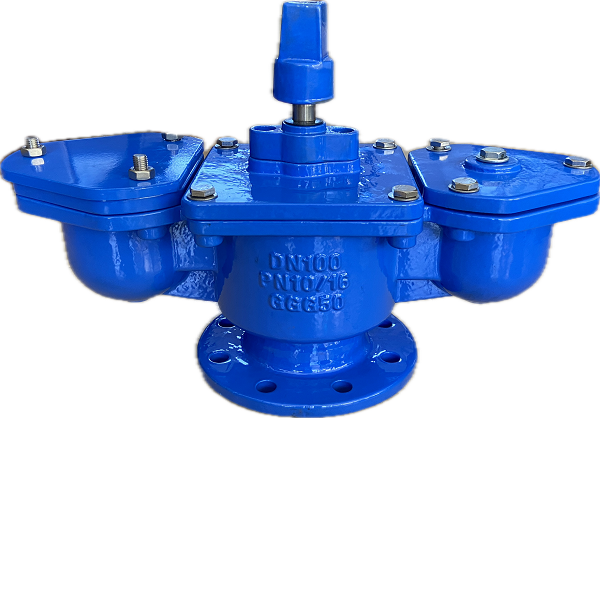
This is where the Double Orifice Air Valve becomes useful. Its large orifice is designed for rapid air discharge and air intake during filling and drainage, while its small orifice is used to release accumulated air during pressurized operation. This makes it more suitable for systems that experience different working stages instead of only one operating condition.
Pipeline Filling Is the First Test of an Air Valve
In many water pipeline projects, the first serious test happens before the system begins normal operation. When the pipeline is filled with water for the first time, a large amount of air must be pushed out. This process may look simple, but it directly affects commissioning quality.
If the air is not discharged correctly, several problems may appear:
- Water may not fill the pipe evenly;
- Air pockets may remain at high points;
- Pressure may rise and fall during filling;
- Pumps may experience unstable load;
- Flow testing results may become inaccurate;
- Operators may need repeated venting and inspection;
- Commissioning time may become longer.
The large orifice of a Double Orifice Air Valve is designed for this stage. It allows a large volume of air to escape quickly as water enters the pipeline. When water reaches the valve chamber, the float rises and closes the valve to prevent water discharge. This automatic process helps reduce manual venting work and supports a smoother commissioning process.
For long-distance transmission pipelines or pipelines with elevation changes, this function is especially important because trapped air can collect in multiple high points along the route.
The Small Orifice Handles Air After the Pipeline Is Pressurized
Many users think air problems end after the pipeline is filled, but this is not true. Even during normal operation, small amounts of air can still appear inside the pipeline. Air may separate from water due to pressure changes, temperature changes, pump operation, or turbulence around bends and valves.
Once the pipeline is under pressure, the large orifice is usually closed by water pressure and float movement. At this stage, the small orifice becomes important. It releases small accumulated air without allowing large amounts of water to escape.
This small air release function helps reduce:
- Local air pockets at high points;
- Flow resistance caused by trapped air;
- Pump efficiency loss;
- Unstable flow readings;
- Noise inside the pipeline;
- Repeated manual air discharge work.
For pump stations, water treatment plants, and municipal networks, this function can improve daily operation because the valve continues to manage air after commissioning is completed.
Drainage and Shutdown Conditions Need Fast Air Intake
A Double Orifice Air Valve does not only discharge air; it also admits air when the pipeline is drained or when negative pressure occurs. This is a critical function that is often ignored during product introductions.
When water leaves a pipeline quickly, the internal pressure can drop. If air cannot enter the pipeline fast enough, vacuum conditions may form. In large-diameter water pipelines, this can create strong external pressure on the pipe wall and may lead to deformation, joint stress, or damage in weak sections.
Air intake is especially important in these situations:
- Pipeline drainage before maintenance;
- Pump shutdown;
- Sudden flow interruption;
- Valve closure in long pipelines;
- Downhill pipeline sections;
- Long transmission pipelines with elevation changes;
- Large-diameter municipal pipelines.
The large orifice allows outside air to enter the pipeline rapidly, helping balance the pressure difference between the inside and outside of the pipe. This protects the pipeline structure and reduces the risk of vacuum-related damage.
Why Double Orifice Design Is Better for Changing Pipeline Conditions
A single-function air valve may work well for one stage, but many water systems do not operate under only one condition. They go through filling, pressure operation, drainage, repair, restart, and sometimes emergency shutdown.
The double orifice design is useful because each orifice responds to a different air control requirement:
- The large orifice supports fast air discharge during filling.
- The large orifice also supports fast air intake during drainage.
- The small orifice releases small accumulated air during normal operation.
- The valve structure helps reduce the need for several separate air control devices.
For pipeline designers and contractors, this means the valve can simplify air management at important pipeline points. For owners and operators, it means fewer air-related problems during long-term use.
Practical Installation Points in Water Projects
The performance of a Double Orifice Air Valve depends heavily on installation position. The valve should not be installed randomly. It should be placed where air naturally collects or where pressure changes may create vacuum risk.
Typical installation points include:
- High points of main water pipelines;
- Long rising pipeline sections;
- Pump outlet pipelines;
- Pipeline peaks after slope changes;
- Long-distance transmission lines;
- Before or after control valves where pressure changes may occur;
- Sections that are frequently drained for maintenance;
- Pipeline endpoints or isolated branch lines.
In a long pipeline with changing terrain, one valve is usually not enough. Several air valves may be required at different high points to control air along the entire route. During design, engineers usually evaluate pipeline profile, elevation changes, flow direction, filling speed, and drainage conditions before deciding valve locations.
Common Mistakes in Air Valve Selection
Some pipeline problems happen not because the air valve is unnecessary, but because the valve is not selected or installed correctly.
Common mistakes include:
- Choosing a valve size too small for the pipeline filling speed;
- Ignoring air intake demand during drainage;
- Installing the valve away from the actual high point;
- Not considering wastewater impurities;
- Using an unsuitable sealing material;
- Ignoring flange standard matching;
- Not leaving enough space for maintenance;
- Treating all air valves as the same product.
These mistakes may cause poor exhaust performance, leakage, blockage, difficult maintenance, or continued air pocket problems after installation.
Maintenance Focus for Long-Term Operation
A Double Orifice Air Valve is automatic, but it still needs periodic inspection. This is especially true in wastewater, untreated water, or pipelines with sediment.
Maintenance should focus on:
- Whether the air outlet is blocked;
- Whether the float moves smoothly;
- Whether sediment has accumulated inside the valve chamber;
- Whether the small orifice can release air normally;
- Whether the sealing surface is damaged;
- Whether the flange bolts and gasket remain tight;
- Whether the valve remains vertical after pipeline settlement;
- Whether leakage appears after repeated operation.
For municipal water systems, regular inspection helps maintain stable air control. For wastewater systems, cleaning frequency may need to be higher because solids and deposits can affect internal movement.
FAQ
1. What is the main purpose of a Double Orifice Air Valve?
The main purpose of a Double Orifice Air Valve is to manage air during different pipeline stages. It releases large air volumes during filling, releases small accumulated air during normal operation, and admits air during drainage or negative pressure conditions.
2. Why is the large orifice important during pipeline filling?
The large orifice allows air to leave the pipeline quickly when water enters the system. Without enough air discharge capacity, the pipeline may fill unevenly and air pockets may remain at high points.
3. Why does the valve still need a small orifice after the pipeline is full?
After the pipeline is pressurized, small air bubbles can still separate from water and collect at high points. The small orifice releases this air gradually without causing large water discharge.
4. What information should be confirmed before selecting a Double Orifice Air Valve?
Buyers should confirm pipeline diameter, working pressure, medium, installation position, flange standard, valve material, sealing material, coating, and required air discharge or intake capacity.
Conclusion
A Double Orifice Air Valve is most valuable in pipeline systems that go through filling, operation, drainage, maintenance, and restart. Its double orifice structure allows it to handle large air movement during filling and drainage while also releasing small accumulated air during normal pressurized operation.
For municipal water supply, wastewater pipelines, pump stations, irrigation systems, and long-distance water transmission projects, choosing the right Double Orifice Air Valve can make commissioning smoother, reduce trapped air problems, protect against vacuum conditions, and support more stable pipeline operation.
Post time: Jul-03-2026